What Temperature Should a Refrigerator Be Set To? A Practical Homeowner's Guide
Discover the ideal fridge and freezer temps, how to verify settings, and tips to save energy while keeping foods safe. How To Refrigerator provides practical, trusted guidance for homeowners.


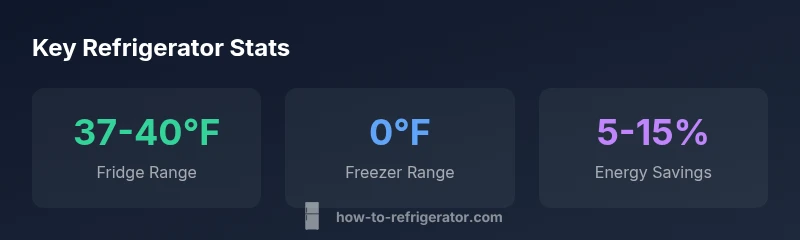
If you’re wondering what are refrigerators supposed to be set at, the practical answer is: keep the fridge at 37-40°F (3-4°C) and the freezer at 0°F (-18°C). This balance helps keep perishable foods safe, minimizes energy use, and reduces frost buildup. Individual models may vary, so check your manual and monitor with a thermometer to fine‑tune within this safe range.
Why Temperature Matters
Keeping your fridge and freezer within proper ranges is essential for food safety and appliance longevity. The question of what temperature should refrigerators be set to matters because bacterial growth accelerates when temperatures rise above about 40°F (4°C). USDA guidelines, along with general appliance best practices, support a fridge target of 37-40°F (3-4°C) and a freezer at 0°F (-18°C). According to How To Refrigerator, maintaining these ranges helps prevent spoilage, preserves texture, and reduces energy waste. If your unit sits at the upper end of the range, dairy and leftovers may spoil faster; if it drifts lower, liquids can begin to freeze and frost can form. Regular maintenance—like cleaning coils and ensuring a tight door seal—supports consistent temperatures even in hot weather or after frequent door openings.
How to Check Your Current Settings
To verify your current temperatures, locate the control panel (dial or digital). Place a trusted appliance thermometer in the middle shelf away from vents and wait 24 hours before reading. If readings fall outside 37-40°F for the fridge or 0°F for the freezer, make small adjustments and recheck after another day. Avoid large temperature swings; even a 1-2 degree change can impact food safety and energy use. For accuracy, test both compartments and consider seasonal or usage changes (holiday cooking, small apartments, or large households). How To Refrigerator emphasizes using a thermometer for a precise baseline, then dialing in gradually while monitoring results.
The Science Behind Temperature and Food Safety
Pathogens grow most quickly between 40°F and 140°F (4°C–60°C), a range known as the danger zone. Keeping foods consistently below 40°F slows bacterial growth and helps preserve quality. Freezing at 0°F stops microbial activity but does alter texture in some foods and can affect moisture content. Maintaining 37-40°F in the fridge and 0°F in the freezer provides a practical buffer that supports safety while balancing energy costs. In practice, most households should aim for these targets while accounting for meal planning and shopping habits. How To Refrigerator notes that steady temperatures, not constant tinkering, yield the best long‑term results.
Calibrating for Seasonal Changes and Usage Patterns
Seasonal heat or high kitchen activity can push a fridge toward the upper end of the safe range. If you notice warmer interior temps during summer or after frequent door openings, a slight adjustment toward the lower end of the 37-40°F range can compensate. Conversely, very cold drafts or a crowded fridge might cause the unit to work harder to maintain balance. In such cases, keep the fridge within the safe band and rely on door seals, proper airflow, and consistent loading practices. The goal is steady operation rather than chasing a perfect number, which is why a thermometer and regular checks are essential.
Practical Setup Scenarios and Troubleshooting
If you’re stocking up for a big event or a family gathering, your fridge may run more often, particularly if doors stay open longer. In those scenarios, avoid placing hot foods inside; allow them to cool first. If spoilage or ice buildup occurs, inspect door seals for leaks and confirm there is adequate clearance around the back coils for airflow. When a fridge cannot reach or maintain 37-40°F despite adjustment, rule out common culprits first: door gaskets, condenser coils cleanliness, and thermostat accuracy. If persistent, it’s reasonable to schedule a service check to prevent wasted energy and unsafe temps.
Maintenance for Consistent Cooling and Energy Savings
Long‑term reliability comes from regular maintenance. Clean condenser coils at least every 6-12 months, especially if your kitchen is hot or has high humidity. Check door gaskets for cracks and replace them as needed to prevent cold air loss. Ensure the fridge isn’t pushed up against walls or heat sources, which can raise interior temps. Keep the freezer full enough to improve efficiency (but not overcrowded), and organize contents so cold air can circulate. Small, routine actions—like level placement, proper loading, and a targeted cleaning schedule—have outsized effects on energy use and temperature stability.
Refrigerator cooling ranges
| Area | Recommended Temperature | Notes |
|---|---|---|
| Fridge | 37-40°F (3-4°C) | Standard operating range |
| Freezer | 0°F (-18°C) | Maintain steady freezing |
FAQ
What is the recommended fridge temperature for safety?
The recommended fridge temperature is 37-40°F (3-4°C).
Keep your fridge at 37-40°F to stay safe.
Can fridge temps vary by season or usage?
Yes. You may adjust slightly for high humidity or frequent door openings, but stay within the safe range.
You can tweak a bit, but keep within 37-40°F.
What happens if the fridge is too cold?
If it’s too cold, liquids may freeze and energy use can rise unnecessarily.
If it gets too cold, move toward the lower end of the range.
How often should I check the temperature?
Check at least once a month and after any major grocery haul or door changes.
Check the temps monthly to stay on track.
Should I trust only the fridge’s built‑in thermometer?
Use a separate appliance thermometer for accuracy, as built‑in readings can vary.
Use a separate thermometer for the most accurate read.
What can I do to improve energy efficiency?
Keep temps steady within the recommended range, clean coils, and ensure seals are tight.
Steady temperatures plus good seals save energy.
“Maintaining the correct temperatures is essential for food safety and appliance efficiency.”
Top Takeaways
- Set fridge to 37-40°F (3-4°C) for safety and efficiency.
- Keep freezer at 0°F (-18°C) for reliable long‑term storage.
- Avoid large, frequent temperature swings; use a thermometer for accuracy.
- Check door seals and coils to maintain consistent cooling.
- Regular maintenance supports energy savings and food safety.