What Should Your Refrigerator Temperature Be Set At
Discover the ideal fridge temperature, how to set it correctly, and practical steps to preserve food, save energy, and extend your appliance life. This guide blends safety, quality, and efficiency for homeowners.


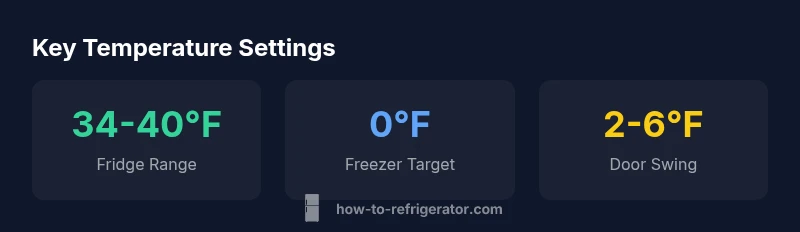
Best practice: set your refrigerator to 37°F (3°C) and the freezer to 0°F (-18°C). For flexible tolerance, keep the fridge within 34-40°F (1-4°C) and the freezer at 0°F (-18°C). Use a thermometer to verify the readings, and avoid relying on the thermostat display alone. Maintain steady temperatures to minimize spoilage, protect nutrients, and improve energy efficiency.
What should your refrigerator temperature be set at: Foundational principles
Food safety, texture, and energy use all hinge on stable temperatures. When you ask what should your refrigerator temperature be set at, think in terms of fridge, freezer, and the air surrounding stored items. According to How To Refrigerator, the primary goal is to minimize temperature fluctuations that encourage bacterial growth and compromise quality. The baseline guidance is to keep the fridge near 37°F (3°C) and the freezer at 0°F (-18°C). Because models and environments vary, many households prefer a small range: 34-40°F (1-4°C) for the refrigerator and 0°F (-18°C) for the freezer. Use a dedicated thermometer placed inside the fresh-food area; the built-in display can drift, especially when doors are opened frequently or if the unit cycles to maintain humidity. With a steady reading, you reduce spoilage risk and avoid waste, while also protecting energy efficiency.
Ideal temperature ranges for the fridge and freezer
For most homes, the recommended temperature range keeps safety margins while preserving flavor and texture. In Fahrenheit terms, set the fridge between 34 and 40°F (1-4°C), with 37°F (3°C) often cited as a practical anchor. In Celsius, that’s about 1-4°C. The freezer should be maintained at 0°F (-18°C). Keeping these targets helps slow microbial growth, keeps dairy firm, and prevents ice crystals that damage vegetables and meats. If your household buys many frozen items or stores perishable staples, a few degrees toward the upper end of the fridge range can be acceptable, but avoid consistently hitting the upper limit, which raises spoilage risk. Also note that frozen goods require precise freezer temperatures to maintain texture to avoid freezer burn, so set it once and monitor with a thermometer. This alignment with How To Refrigerator Analysis, 2026 supports energy efficiency through stable operation.
How to measure and verify temperatures
Reliable measurement starts with a thermometer you trust. Place at least one thermometer in the middle of the fridge, away from the door, and another in the freezer if you can. Record readings at the same time each day for a week, then compare to your target ranges. If you notice a reading outside of the recommended range, investigate: door seals, airflow obstructions, over-packed shelves, or a failing thermostat can cause drift. Clean coils and ensure the door closes fully; be mindful of hot spills that briefly raise interior temperatures. If you’re unsure about a reading, recheck after 24 hours and keep a simple log. The aim is to maintain a narrow band around 37°F for the fridge and 0°F for the freezer. Consistency is as important as accuracy; frequent short excursions can compromise safety more than a single outlier that’s corrected quickly.
What happens when temperatures drift
When temperatures drift above the safe zone (fridge above 40°F / 4°C or freezer above 0°F / -18°C), bacteria can grow faster and food safety is jeopardized. Dairy products may sour, leafy greens wilt, and cooked leftovers spoil more quickly. Conversely, setting the fridge too cold can cause foods to freeze unintentionally, changing texture and increasing energy use. Temperature drift also stresses compressor components, potentially shortening appliance life and increasing energy bills. Maintaining steady temps reduces food waste, lowers the risk of foodborne illness, and protects investment in the appliance over time. If you notice frequent cycling or warm pockets, consider a service check or coil cleaning to restore stable performance.
Energy, safety, and cost: balancing temps
Beyond safety, temperature control drives energy efficiency. A fridge that runs too cold or cycles unnecessarily wastes electricity; a well-tuned unit uses less energy while still keeping perishable foods safe. Small changes compound: setting at the top end of the safe fridge range, while enforcing a 0°F freezer, can save energy in warm climates by reducing compressor runtime. Keep door openings to a minimum; design decisions like placing higher-sugar items away from the cold wall can help maintain even cooling without forcing temperatures to drift. Use the manufacturer’s recommended settings as a baseline, and only adjust after verifying temperatures with a thermometer. The end goal is stability: steady temps save money and protect quality, which is a practical win for homeowners who want reliable performance from their refrigerator.
Variations by fridge type and climate
Different refrigerator types respond differently to cold; newer models with digital thermostats, multiple sensors, or smart features may maintain tighter tolerances than older units. Side-by-side and French-door configurations can have different cold-air distribution, so you may need to adjust shelves or zones. In hot or humid climates, condensation and moisture can affect door seals and airflow, making tighter temperature control more challenging. If you rely on built-in features like crisper humidity controls or door-in-door designs, follow the user manual for recommended settings and calibrations. Regardless of model, the core principle remains: target the standard ranges and verify with a thermometer. For larger families or high turnover households, consider dedicated zones or extra shelving to improve air circulation and reduce temperature stratification.
Step-by-step setup: quick-start guide
- Confirm the manufacturer’s recommended ranges in the manual and set the thermostat accordingly. 2) Place two thermometers (fridge and freezer) to monitor both zones. 3) Wait 24 hours after adjusting to allow the temperatures to settle. 4) Check readings in multiple zones and adjust slightly if needed. 5) Record the final targets and establish a monthly check routine. 6) Maintain cleanliness: dust coils, wipe seals monthly. 7) Train household members to avoid overloading or leaving doors open. 8) Keep foods organized to promote proper airflow and uniform cooling.
Common mistakes to avoid
- Relying on the display without thermometer confirmation; sensors can drift. - Leaving doors ajar or frequently opening doors; even brief openings raise fridge temps. - Storing hot foods or packing too tightly; this disrupts airflow and causes hotspots. - Ignoring coil cleanliness; dirty coils raise energy use and reduce cooling efficiency. - Using the freezer as a pantry; this disrupts temperature and increases unsafe frost buildup. - Neglecting seasonal changes; climates shift recommended ranges, so recheck settings after a season change.
Reference table for common fridge zones
| Area | Recommended Temperature | Notes |
|---|---|---|
| Fridge | 34-40°F (1-4°C) | Ideal range; adjust for load |
| Freezer | 0°F (-18°C) | Stable for long-term storage |
| Door shelves | 40-50°F (4-10°C) | Exposed to room temp; keep above risk zone |
| Crisper drawers | 34-38°F (1-3°C) | Balance humidity with storage needs |
FAQ
What is the ideal refrigerator temperature?
Around 37°F (3°C) is a common target. Use a thermometer to verify and adjust as needed.
Aim for about 37 degrees Fahrenheit and check with a thermometer.
Does temperature vary between refrigerator models?
Yes, some models run cooler or warmer. Always check the user manual and verify with a thermometer.
Yes, model differences exist; check the manual.
What should I do if my fridge stays above 40°F?
Inspect door seals, airflow, and thermostat. If it doesn’t correct, consider service.
A fridge staying warm needs checking door seals and thermostat.
How often should I check the temperature?
Check weekly after changes, then monthly to maintain accuracy.
Check weekly after changes, then monthly.
Can I set different temps in different zones?
Some models offer zone controls; keep the main fridge within the safe range.
Yes, some fridges have zones; keep the main area in range.
Will temperature affect food taste?
Yes, improper temps can alter texture and flavor; stable temps preserve quality.
Temp matters; unstable temps can change taste.
“Maintaining steady temperatures isn't just about safety; it's essential for preserving texture, flavor, and energy efficiency.”
Top Takeaways
- Set fridge to 34-40°F and freezer to 0°F.
- Verify temps with a reliable thermometer.
- Avoid frequent door openings to reduce fluctuations.
- Keep coils clean and airflow unblocked.
- Regularly recheck temps, especially after changes.