What temperature should a refrigerator be set to
Discover the exact fridge and freezer temperature targets, how to test temps, and practical steps to maintain stability for safety, food quality, and energy efficiency.


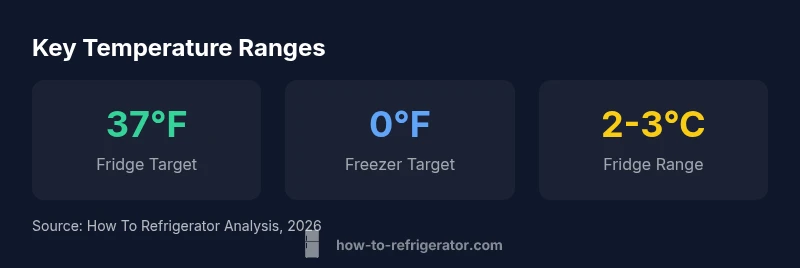
To keep perishable foods safe and energy costs reasonable, set the refrigerator to 37°F (3°C) and the freezer to 0°F (-18°C). If you prefer a range, aim for 35-38°F (2-3°C) in the fridge and 0°F (-18°C) in the freezer. Use a fridge thermometer, avoid wide swings, and check after door openings.
What temperature should a refrigerator be set to
The central question many homeowners ask is what temperature should a refrigerator be set to. The widely accepted targets balance food safety with energy efficiency. In practical terms, aim for about 37°F (3°C) inside the main compartment and 0°F (-18°C) in the freezer. If you prefer a broader window, 35-38°F (2-3°C) for the fridge and 0°F (-18°C) for the freezer are both acceptable depending on your climate and daily usage. These ranges align with standard food safety guidance and are supported by the How To Refrigerator Analysis, 2026 findings. Regular checks help ensure you stay within these bounds, even after busy holiday periods or frequent door openings.
Why temperature control matters for safety and quality
Maintaining the correct temperature is essential for preventing foodborne illness and preserving quality. Bacteria multiply fastest between 40°F and 140°F (4°C to 60°C), so keeping the fridge well below 40°F (4°C) slows microbial growth. The freezer should stay at 0°F (-18°C) to keep food in a safe, frozen state. Small deviations can affect texture, moisture, and nutrient retention. For families with infants, elderly members, or individuals with compromised immunity, strict adherence to the target range is even more important.
How to measure and test your fridge temperature accurately
Use a certified fridge thermometer placed in the middle shelf away from the door seam to avoid false readings from cold air drafts. Check temperatures after 24 hours of steady conditions, including a few door openings. Record the readings and adjust in small increments, typically 1–2 degrees at a time, then recheck after another 24 hours. For best results, verify both the fridge and freezer compartments on separate days, and consider a weekly check during heat waves or holidays when usage spikes.
Common mistakes that push temps off target and how to fix them
Several routine habits push temperatures out of spec. A common culprit is frequent door openings or leaving the door ajar. Overloading the fridge blocks air circulation; keep vents clear and avoid pushing items tightly against the back. Cold air must circulate freely to maintain an even temperature. Frost buildup or a clogged condenser coil can also impair cooling efficiency, causing the thermostat to work harder and create fluctuations. Regular cleaning and vent clearance help maintain stability.
Temperature zones: What to set in the fridge vs the freezer
Understanding temperature zones supports consistent performance. The fridge zone benefits from a stable 35-38°F (2-3°C), with the door shelves slightly warmer due to frequent access. The freezer should be kept at 0°F (-18°C) to maintain a solid freeze on most foods. If you notice frost on foods or a buildup around the freezer door, it may indicate a sealing issue or moisture ingress. In that case, inspect door gaskets and insulation.
How to adjust settings without sacrificing safety
When adjusting a thermostat, do so gradually and test after 24 hours. Mechanical thermostats respond slowly to changes, while digital controls offer faster feedback. If your fridge displays a higher reading than your thermometer, recalibrate by adjusting in small steps and rechecking. For smart fridges, use built-in monitoring dashboards but rely on physical thermometers for an independent check to avoid reliance on display readings alone.
Seasonal adjustments and energy considerations
Ambient temperature affects appliance efficiency. In hot climates or during heat waves, a fridge may work harder, causing more temperature drift. Conversely, in cooler rooms, the unit might run less, leading to gentler cycling. The key is to monitor seasonal shifts and validate that readings remain within target ranges. Slight temperature deviations have energy implications, so a stable setting reduces spikes in energy consumption over time.
Maintenance and monitoring tips to stay on target
Establish a routine: quarterly seal checks, monthly thermometer verifications, and annual condenser coil cleaning if accessible. Replace faulty gaskets promptly to prevent warm air infiltration. Keep a simple log of dates, readings, and any adjustments. For households with pets or children, consider additional protection to prevent tampering with controls. A proactive approach keeps temperatures aligned with safety guidelines and energy goals.
Special cases: medications, infant formula, and dairy storage specifics
Certain items may require stricter handling. Some medications and infant formulas are temperature sensitive and should be stored within narrow ranges. Dairy products particularly benefit from stable cold temps and limited exposure to warm air. If you store these items, consider an extra thermometer in the primary dairy area and avoid storing them in door shelves where temperature fluctuations are greatest. Always follow product-specific storage recommendations.
What to do if you suspect your fridge is not maintaining target temperatures
If readings consistently fall outside target ranges, start with the door seals and airflow vents. Check for frost buildup or ice on the back wall. Confirm condenser coils are clean and unit is level. If adjustments and cleaning do not restore stability, it may be time to contact a professional technician to rule out compressor or refrigerant issues. Timely intervention protects food safety and appliance longevity.
Temperature targets for fridge and freezer with practical notes
| Area | Recommended Temp | Notes |
|---|---|---|
| Fridge | 35-38°F (2-3°C) | Ideal all-round range; adjust for door openings |
| Freezer | 0°F (-18°C) | Keeps items safely frozen; monitor for frost buildup |
| Thermostat tips | N/A | Calibrate if readings differ from the thermometer |
FAQ
What is the ideal temperature for the fridge?
The ideal fridge temperature is about 37°F (3°C). Many households find 35-38°F (2-3°C) comfortable while maintaining safety and freshness.
Aim for 37°F, or around 3°C, for the fridge to keep foods safe and fresh.
Is 40°F acceptable for the fridge?
40°F (4°C) is on the upper end of the recommended range and may increase spoilage risk for sensitive items. If ambient conditions are warm, you may need to adjust closer to 37°F.
40°F is possible but not ideal; aim closer to 37°F for safety.
How can I test my fridge temperature effectively?
Place a thermometer in the middle shelf, away from the door, and check after 24 hours. Repeat on different days and after door openings.
Put a thermometer in the middle shelf and recheck after a day.
Why does my fridge feel warm near the top shelf?
Airflow and vent placement can create temperature gradients. Ensure vents aren't blocked and items are spaced for airflow.
Uneven airflow can make the top feel warmer; keep vents clear.
Can temperature affect food safety?
Yes. If temperatures drift above safe levels, bacteria can grow quickly. Maintaining targets minimizes risk.
Yes, proper temps keep food safe and reduce risk of illness.
Do smart fridges require different temperature care?
Smart fridges provide alerts, but you should verify readings with a separate thermometer and follow manufacturer guidance for maintenance.
Smart fridges help monitor temps, but still verify with a thermometer.
“Accurate fridge temperatures are essential for safety and energy efficiency, and small, regular checks prevent costly spoilage.”
Top Takeaways
- Set fridge to 37°F (3°C) for safety and balance.
- Keep freezer at 0°F (-18°C) for solid freezing.
- Test temperatures after door openings and seasonal changes.
- Use a dedicated thermometer for accuracy, not just the display.
- Regular maintenance reduces temperature drift and energy use.