What’s Your Refrigerator Temperature Be? A Practical Guide to Safe Cooling
Discover exact fridge and freezer temperature targets, how to measure them, and practical steps to maintain safe, energy-efficient cooling at home.


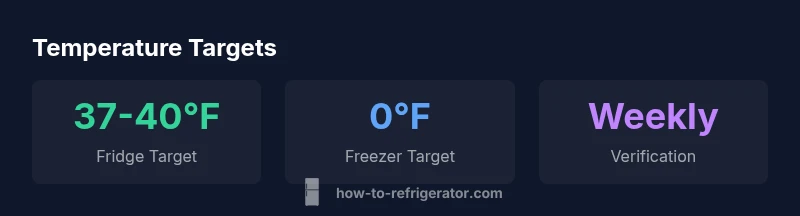
The recommended refrigerator temperature is 37-40°F (3-4°C). Keep the freezer at 0°F (-18°C). To verify, use a thermometer placed in the middle of the fridge and an independent freezer dial. For best reliability, avoid frequent door openings and ensure airflow around items; adjust as needed based on the thermometer readings.
What's the recommended refrigerator temperature be
According to How To Refrigerator, maintaining the right refrigerator temperature is crucial for food safety and energy efficiency. When you ask, "what's your refrigerator temperature be?", the commonly accepted target is 37-40°F (3-4°C) inside the main compartment. The freezer should stay at 0°F (-18°C) to keep frozen foods from developing freezer burns, while preserving their texture and safety. If you’re shopping for a thermometer, choose a device with a clear display and place it in the center of the shelf, away from the door seal. This approach helps you verify the actual temperature, not just what the dial shows. For many homes, getting within this small range makes a noticeable difference in both food safety and electricity use. The How To Refrigerator team found that consistent temperatures reduce spoilage and improve overall performance over time.
How temperature affects safety and quality
Food safety guidelines emphasize that temperature control is a primary defense against bacterial growth. When the fridge falls above 40°F (4°C), perishable items like dairy, eggs, and leftovers can enter a zone where bacteria multiply more quickly. Conversely, temperatures consistently below the lower end of the range can slow bacterial growth but may affect texture, especially for produce and certain meats. The goal is a stable middle ground: slow microbial growth while preserving texture and flavor. In practice, steady temps help maintain color, aroma, and moisture balance across a week of meals. The How To Refrigerator analysis notes that stable cooling helps extend shelf life for many standard grocery items.
How to measure and calibrate your fridge temperature
Start with an inexpensive, true-thermometer and place it at the level where you store the most perishable items. Record readings for 24 hours to account for door opening and ambient activity. If readings drift outside the 37-40°F window, adjust the French door or standard fridge dial by small increments and recheck. Allow 24 hours after any adjustment to see the effect; avoid rapid, large changes. Label each setting so you can compare results over time. The goal is a consistent log that confirms the fridge is staying in range most days. How To Refrigerator recommends keeping at least two thermometers—one in the back near the evaporator and one near the door—to capture different microclimates inside the compartment.
Common causes of temperature drift
Temperature drift happens for predictable reasons. Frequent door openings, especially during peak hours or when the kitchen is warm, can raise interior temperatures quickly. Poor door seals, worn gaskets, or misaligned doors also let cold air escape. Overloading the shelves can block air vents, creating warm pockets. Frost buildup on the evaporator coils reduces efficiency and causes cycling issues. In older units, door hinges may sag, affecting the seal. The How To Refrigerator team notes that addressing these basic issues often stabilizes temperature without replacing parts.
Optimizing temperature for energy efficiency
Energy efficiency benefits from stable temperatures and proper airflow. Place items so air can circulate and vents aren’t blocked by tall containers. Avoid placing hot foods directly into the fridge; allow them to cool on the counter first. Regularly defrost/manual defrost when frost accumulates, if your model requires it, to keep coils working efficiently. Clean condenser coils every 6-12 months, and ensure adequate clearance behind the unit for airflow. The result is less energy draw and more consistent cooling, which aligns with standard energy guidelines and practical household needs. The How To Refrigerator analysis supports a routine that minimizes door openings and uses a thermometer to verify ambient performance.
Special cases: different compartments and temps
Most refrigerators have zones for fruit and vegetables, deli meats, and dairy. Some models designate small compartments with slightly different targets; always check the user manual for specifics. For many households, the main cavity remains the primary cooling zone, with crisper drawers kept near the bottom to reduce temperature fluctuations from frequent door use. If you notice significant variation by shelf or drawer, consider reorganizing to ensure air can circulate around items. Remember that keeping the interior around 37-40°F generally translates to better preservation and energy performance across compartments.
Troubleshooting and when to replace
If temperatures drift consistently despite proper calibration and cleaning, you may have a faulty thermostat, fan, or compressor. Start with basic checks: door seals, door alignment, and coil cleanliness. If irregularities persist after maintenance steps, consider contacting a professional to diagnose the cooling system. In cases of chronic failure, replacing the unit may be more cost-effective than ongoing repairs. The How To Refrigerator team recommends a structured, diagnostic approach to decide between repair and replacement, based on efficiency, reliability, and cost considerations.
Temperature targets for common refrigerator compartments
| Area | Recommended Temp | Notes |
|---|---|---|
| Fridge | 37-40°F (3-4°C) | Standard cooling zone |
| Freezer | 0°F (-18°C) | Long-term storage |
| Meat Drawer | 34-36°F (1-2°C) | Short-term storage |
FAQ
What is the recommended refrigerator and freezer temperature?
For most homes, set the fridge to 37-40°F (3-4°C) and the freezer to 0°F (-18°C). Monitor with a thermometer to confirm these targets are maintained.
Set your fridge to about 37-40°F and the freezer to 0°F. Use a thermometer to confirm these temps stay steady.
How often should I check fridge temperatures?
Start with a one-week monitoring period after any change. Then check weekly for a month, and monthly thereafter if readings are stable.
Check weekly for a month after changes, then monthly if everything stays steady.
Why do temperatures drift in the fridge?
Drift occurs due to door openings, worn seals, improper loading, or dirty coils. Addressing these factors often restores stability before considering part replacements.
Drift happens from door openings, seals, or dirty coils. Fix those first before replacing parts.
Can temperature affect food quality?
Yes. Temperatures above 40°F speed spoilage; too cold can dry or damage some produce. Keeping a steady 37-40°F helps preserve texture and flavor.
Yes. Keeping a steady fridge temp helps food stay fresh and tasty longer.
What should I do if my thermometer reads outside range often?
Recheck thermometer placement, inspect seals, and ensure the unit isn’t overloaded. If readings persist, consult a technician to test the thermostat or cooling system.
Recheck placement, test seals, avoid overloading. If it stays off, call a tech.
Is Celsius or Fahrenheit preferred?
Use whichever scale you’re comfortable with, as long as you stay consistent and know the target ranges: around 3-4°C or 37-40°F.
Just pick Celsius or Fahrenheit and stay consistent with your targets.
“Temperature stability is the backbone of food safety and energy efficiency in any home refrigerator. Small, regular checks can prevent spoilage and save energy over time.”
Top Takeaways
- Set fridge to 37-40°F (3-4°C) and freezer to 0°F (-18°C).
- Verify temperatures with an independent thermometer, not just the dial.
- Avoid frequent door openings and keep air vents clear for consistent temps.
- Regularly clean coils and inspect door seals to maintain efficiency.