What Temperature to Set a Refrigerator: A Homeowner's Guide
Learn the exact temperatures for fridge and freezer, how to measure, adjust settings, and maintain safe, energy-efficient operation for reliable food preservation.


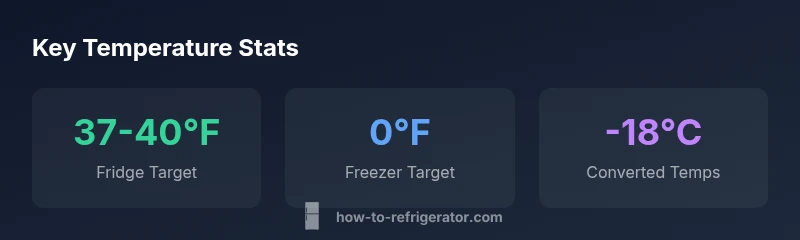
For most households, the recommended temperatures are 37-40°F (3-4°C) in the refrigerator and 0°F (-18°C) in the freezer. Keeping your fridge within this range slows bacterial growth, preserves food quality, and minimizes energy use. If your unit runs warmer or colder, adjust toward the midpoints, then verify with an accurate thermometer placed inside the main compartment.
Core Temperature Guidelines
If you're wondering what temperature to set a refrigerator, the standard targets are widely agreed upon in home maintenance guidance. According to How To Refrigerator, aim for 37-40°F (3-4°C) inside the main refrigerator compartment and 0°F (-18°C) in the freezer. These ranges balance food safety with energy efficiency, keeping dairy, meat, and produce fresh without the risk of freezing delicate items. Place a reliable thermometer in the fridge to verify accuracy, and adjust your thermostat toward the middle of the range if readings drift. Regular checks—at least monthly—help catch gradual shifts before they affect quality. In practical terms, this is the baseline most households should adopt, and it aligns with general consumer advice for everyday kitchen reliability.
In our analysis, this approach minimizes bacterial growth while keeping textures and flavors intact. If you’re troubleshooting specific foods or ingredients that spoil quickly, you may fine-tune within this window; for example, soft dairy products might benefit from a slightly higher reading, while leftovers may do better closer to 38°F. Across models, the principle remains the same: consistency beats extreme fluctuations. The How To Refrigerator team emphasizes that a stable temperature is more important than chasing a single “perfect” number, especially when the door is opened frequently.
Beyond the numbers, remember that variables like door opening frequency, the size of the fridge, and ambient room temperature can influence actual temperatures. The goal is to maintain the target range most of the time, not to obsess over minor, momentary excursions. With a digital thermometer, you can observe trends over days or weeks and adjust accordingly. This evidence-based approach reduces waste and supports reliable food safety.
Verifying Temperatures: Tools and Methods
A thermometer is your best friend for ensuring correct temperatures. If your fridge lacks a built-in display, place a digital thermometer in the center of the fresh-food compartment, away from the door seam and vents. Record readings after 24 hours to account for normal temperature fluctuations caused by door openings and item load. For freezers, insert the probe toward the interior, not in contact with the freezer wall, to avoid false readings caused by cold air pockets.
To maintain accuracy, calibrate or replace any thermometers that drift more than a few degrees over a short period. In hotter homes or seasonal transitions, recheck weekly during the first month of adjustment. If you’re using a smart thermometer, ensure the device is connected and syncing with the fridge’s thermostat so you can monitor remotely. Consistency and verification are essential to achieving the recommended ranges without guesswork.
Brand-wise, How To Refrigerator recommends keeping a simple log—date, observed temperature, and any changes made. This habit helps homeowners correlate settings with real-world results and supports quick troubleshooting when issues arise. A small, low-cost thermometer placed correctly can save you from food waste and unexpected trips to the supermarket.
Zones and How They Interact with Temperature
Most refrigerators divide space into zones with slightly different cooling needs. The primary fresh-food compartment should stay within 37-40°F (3-4°C). The crisper drawers maintain humidity to preserve produce but still benefit from the same temperature range. The door shelves are more prone to temperature variation due to frequent opening, which makes them a poor primary storage zone for perishable items. If your model has a dedicated meat drawer or a produce + dairy section, these areas generally share the main compartment’s thermostat, but some high-end units offer minor adjustments.
When organizing food, place high-risk perishables (raw meat, poultry, dairy) toward the back of the middle shelves where airflow is steadier. Keep ready-to-eat items in the upper shelves, which are typically a touch warmer but still within the safe range. If you notice frost build-up or unusual ice crystals in the freezer, or if produce wilts quickly, re-evaluate both the ambient temperature and door seal integrity. A well-organized interior reduces the frequency of door openings and helps maintain stable temperatures across zones.
Common Pitfalls and Misconceptions
Several myths can lead homeowners to incorrect temperatures. One common misconception is that colder is always better; setting a fridge too cold can freeze items like lettuce, tomatoes, and even dairy, while wasting energy. Another pitfall is relying on room-temperature checks rather than internal readings; the fridge can feel cool to the touch but still be out of spec. Also, frequent door openings, hot ambient rooms, and poorly sealed doors push the thermostat to work harder, causing temperature drift.
To avoid these problems, keep the door gasket clean and intact, avoid propping the door open for long periods, and place hot or warm foods in the fridge only after they reach near-room temperature. When upgrading appliances, choose models with precise digital thermostats and consistent air circulation. Remember: consistent temperatures are more important than any single pinpoint reading. If you suspect a persistent drift, consult a technician and reference the model’s official guidelines for calibration.
How to Adjust Settings on Common Fridge Types
Most homeowners can safely adjust temperatures using the built-in thermostat dial or a digital control panel. For standard top-freezer or bottom-freezer models, start by dialing up or down by 1°C (or 2°F) increments and allow 24 hours to stabilize before rechecking. French-door and side-by-side models may feature separate zones; in this case, aim for the center range across zones and use the user manual to fine-tune if the zones drift differently.
If your fridge has a dedicated quick-chill or vacation mode, use these sparingly, as they can temporarily alter temperatures. Always verify changes with a thermometer in the main compartment, not near the door seal, and reassess after 24 hours. For specialty appliances or built-in units, consult the manufacturer’s recommendations, as temperature tolerances may vary slightly by model. The key is to move gradually and confirm with a second reading before concluding the adjustment.
Maintenance, Seasonal Adjustments, and Safety
Seasonal changes can influence cooling efficiency. In hot climates or during heatwaves, ambient temperature pushes the compressor to work harder; ensure your fridge is not placed near heat sources like ovens or direct sunlight. Clean condenser coils at least twice a year to maintain proper airflow and prevent overheating, which can cause temperature drift. Check door seals monthly and replace worn gaskets promptly.
If you notice unusual noises or a persistent shift away from the target range, consider a professional inspection. Regular maintenance extends appliance life and helps ensure food safety across all seasons. As always, use a thermometer-based measurement plan and keep a log to track stability over time. How To Refrigerator recommends prioritizing consistent cooling performance to protect both health and wallet.
Temperature targets for different fridge zones
| Zone | Target Temperature | Rationale |
|---|---|---|
| Fresh-food compartment | 37-40°F / 3-4°C | Limits bacterial growth and preserves texture |
| Freezer compartment | 0°F / -18°C | Prevents ice crystals and preserves shelf life |
| Maintenance note | Check thermometer monthly | Ensures ongoing accuracy |
FAQ
What is the ideal temperature for a refrigerator?
The ideal fridge temperature is 37-40°F (3-4°C). This range slows bacterial growth and preserves texture. Use a thermometer to verify readings.
Aim for 37 to 40 degrees in the fridge and check with a thermometer.
Can I set different temperatures for different compartments?
Some models offer separate zones; if yours does, follow the manufacturer’s guidance for each zone. If not, keep the main compartment within the standard range.
Only if your fridge has separate zones; otherwise stick to the main range.
What happens if the fridge is too cold?
Fridge items can freeze or lose texture, and energy use can rise. Adjust toward the mid-range and verify with a thermometer.
If it’s too cold, it can freeze foods—adjust gradually and recheck.
Is 34°F safe for dairy?
Dairy should generally be kept around 38°F (3°C) or below 4°C; 34°F is not ideal for all dairy, which can vary by product.
Keep dairy around 38 degrees to avoid freezing.
How often should I replace the thermometer?
Check batteries annually for digital thermometers and replace if readings become unstable. Calibrate as recommended by the manufacturer.
Check the thermometer regularly and replace batteries yearly.
Does ambient temperature affect fridge temps?
Yes. High room temperatures can push the compressor harder. Ensure proper clearance and avoid heat sources near the unit.
Hot rooms mean the fridge works harder—keep it away from heat and give it space.
“Maintaining the recommended temperature range is the simplest, most effective step to keep food safe and energy use reasonable.”
Top Takeaways
- Set fridge to 37-40°F (3-4°C) and freezer to 0°F (-18°C).
- Use a thermometer and verify readings monthly.
- Avoid heating foods by reserving proper storage zones.
- Make small adjustments and recheck after 24 hours for accuracy.