What Are Refrigerator Temperatures? A Complete Guide for Homeowners
Learn the ideal refrigerator and freezer temperatures, how to measure them, and practical maintenance tips to keep food safe and energy-efficient.


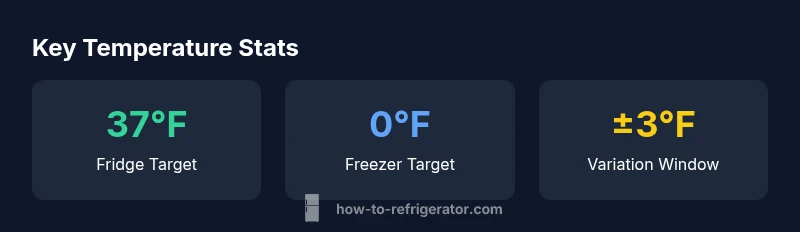
To keep perishable foods safe, set your refrigerator to 35-38°F (2-3°C) and your freezer to 0°F (-18°C). These targets slow bacterial growth while preserving texture. Use an inexpensive thermometer to verify, and account for door openings, crowded shelves, and frequent use to maintain consistent temps.
What are refrigerator temperatures and why they matter? In this guide we answer what are refrigerator temperatures and why they matter for safety and energy use. The interior temperature of your fridge and freezer dictates how quickly bacteria can grow and how well food maintains its texture and flavor. Keeping the fridge in the 35-38°F (2-3°C) range and the freezer at 0°F (-18°C) is the baseline many households rely on. Temperatures outside these targets can lead to faster spoilage, uneven cooling, or ice crystals that affect quality. The How To Refrigerator team emphasizes that small deviations over time can compound, so understanding the intended ranges helps you troubleshoot, plan for busy weeks, and maintain consistent performance. Homeowners should also consider climate, door usage, and load size when evaluating whether temperatures stay within safe bands.
How temperatures are defined in everyday use. Temperature labels on thermostats or digital displays often provide a range rather than a single value. In practice, you’re not chasing a perfect number every minute; you’re aiming for a stable zone. For most households, the recommended fridge zone is just above freezing to slow bacterial growth while preventing texture damage from ice formation. The freezer should stay firmly frozen; even brief warm spells can cause partial thawing that degrades quality and safety. This section also clarifies common confusions between Celsius and Fahrenheit and why a thermometer matters more than the dial on older models.
Measuring temperatures accurately at home. The most reliable way to verify temps is to place a fridge thermometer in the middle of the fridge shelf and another in the freezer section. Do not rely on the door pocket display alone, since warm air from opening doors can skew readings. Leave the thermometer for at least 24 hours to capture typical fluctuations and record the lowest and highest readings you observe. If you have multiple zones (crisper drawers, shelves), place thermometers at representative spots to map consistency across the compartment. Remember to calibrate sensors after a power outage or a new filter change.
Factors that influence interior temperatures in real life. Several variables can push temps out of their target bands. Door openings, frequent usage, crowded shelves restricting air flow, and warm ambient temperatures all raise the fridge’s interior. Poor door seals or a dusty condenser coil reduce cooling efficiency. A malfunctioning evaporator fan or thermostat can allow temperature drift, especially in the freezer, where thick frost buildup can insulate and reduce effectiveness. Understanding these drivers helps you pinpoint whether the issue is routine variance or a sign of equipment trouble.
How to adjust and maintain correct temperatures. After identifying the target ranges, adjust the thermostat or digital control gradually, then verify with a thermometer after 24 hours. Keep the fridge organized to maximize air circulation, avoid overpacking, and locate foods away from the door to reduce temperature swings. Regularly clean the condenser coils and check door seals for cracks or warping. If you observe persistent deviations, consult the appliance manual or contact a qualified technician to ensure no refrigerant or sensor problems exist.
Common issues and practical fixes. If the fridge is too warm, check the door gaskets, ensure vents aren’t blocked, and confirm the compressor is running. If food is freezing in the fridge, raise the setting by a notch and verify after a day. Frost buildup in the freezer may indicate a defrosting issue or a humid environment; defrost if necessary and inspect the door seal. For persistent problems, document temperatures, door usage, and noise patterns to share with a repair technician.
Typical temperature targets and notes for common refrigerator zones
| Area | Recommended Temp | Notes |
|---|---|---|
| Fridge Main Compartment | 35-38°F | Keep away from door edge to avoid warm pockets |
| Freezer | 0°F | Maintain solidly frozen state; avoid defrost cycles when not needed |
| Vegetable Drawer (Specialty Zone) | 32-40°F | Warmer microclimate; not all units have this zone |
FAQ
What is the recommended fridge temperature in Celsius and Fahrenheit?
For fresh food, keep the fridge at about 3-4°C (37-39°F). The freezer should be at 0°C / -18°C (0°F). These ranges balance safety and quality.
Set your fridge to around 3 to 4 degrees Celsius and the freezer to zero, which is about 32 to 39 degrees Fahrenheit for the fridge.
How do I check my fridge temperature accurately?
Place a thermometer in the middle of the fridge and another in the freezer. Leave it for at least 24 hours to capture typical fluctuations, then adjust if needed.
Put a thermometer in the middle of the fridge and another in the freezer, wait a day, and adjust accordingly.
Why might my fridge be warm even after setting the correct range?
Common causes include a broken door seal, blocked vents, heavy loading, or a malfunctioning compressor. Inspect seals and airflow first, then consider service if temperatures stay high.
If it’s still warm, check the door seal and airflow first; if it doesn’t fix, you may need service.
Can I use the freezer to compensate for a warm fridge?
No. Freezers and fridges are separate zones. Using the freezer to compensate can cause quality and safety problems; focus on correcting the fridge temperature directly.
No, don’t rely on the freezer to fix a warm fridge. Address the fridge temperature instead.
Is there a big difference between Fahrenheit and Celsius temps?
Both scales track the same targets. In practice, 35-38°F is about 2-3°C. Use the scale your thermometer provides and convert if needed.
Fahrenheit and Celsius show the same targets; just use the scale your thermometer uses.
How often should I check temperatures for safety?
Check initially after installation and after any door or load changes. Then verify at least once per quarter to ensure consistency.
Check temperatures after setup and after big changes, then a quarterly check helps maintain safety.
What maintenance helps keep temperatures stable?
Clean condenser coils, inspect door seals, and ensure proper airflow around shelves. Regular maintenance reduces energy use and temperature drift.
Keep coils clean, doors sealing well, and air flowing; it helps temps stay steady.
“Stable refrigerator temperatures are the backbone of food safety and appliance efficiency, so regular verification matters as much as the initial setup.”
Top Takeaways
- Aim for fridge 35-38°F (2-3°C) and freezer at 0°F (-18°C).
- Verify temperatures with a dedicated thermometer, not just the built-in display.
- Account for door openings and load size to minimize temperature drift.
- Regular maintenance (coils, seals) supports stable temps and energy efficiency.
- If temps drift long-term, consult a technician rather than guessing.