What Temperature for Refrigerator: Optimal Cooling Guidelines
Learn the exact refrigerator temperature you should set for safe storage, how to measure it accurately, and practical steps to keep food fresh while saving energy. This guide covers ideal fridge and freezer temps, testing with a thermometer, common mistakes, and seasonal tips from How To Refrigerator.


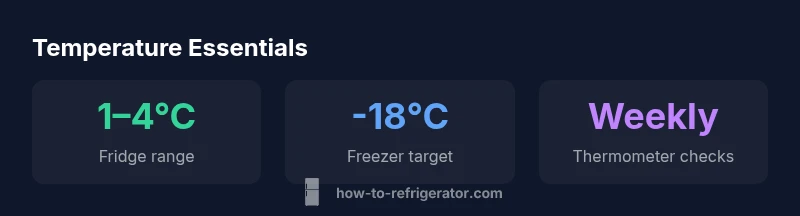
Definition: The ideal refrigerator temperature is a cool, safe zone: keep the fridge at about 1–4°C (34–40°F) and the freezer at -18°C (0°F). Sticking to these ranges minimizes bacterial growth while preserving freshness. Check that your appliance maintains these temps consistently, not just when the door is closed. Use a thermometer for accuracy and monitor regularly.
Understanding the Right Temperature Range
Understanding the right temperature range is foundational for safe storage and energy efficiency. The primary guideline is fridge 1–4°C (34–40°F) and freezer -18°C (0°F). Small deviations, even within a few degrees, can affect the shelf life of dairy, meat, and produce. For homeowners, consistency matters more than occasional peak performance. External factors like hot kitchens, frequent door openings, and large containers can push temps higher. A dedicated thermometer helps, especially if your model lacks a precise display. If your fridge is older, readings can wander, making regular checks essential. Remember to place the thermometer away from the door so you measure air temperature, not the brief surge when you open the door. Regular checks catch drift early and prevent spoiled leftovers.
Temperature and Food Safety: What the Numbers Mean
Food safety guidelines define the temperature danger zone as roughly 4°C to 60°C (40°F to 140°F). Keeping the fridge in the 1–4°C range minimizes rapid bacterial growth, while freezing at -18°C (0°F) halts most bacterial activity. These ranges aren’t just about safety; they help preserve texture and nutrition. Perishable foods should be stored on shelves where temperature is most stable, typically away from the door. When you plan meals, think in terms of hours within the safe zone: longer exposure increases risk of spoilage and foodborne illness. Following these ranges consistently reduces waste and supports overall kitchen hygiene.
How to Measure Temperature Accurately
Use a dedicated thermometer placed in the center of the fridge and another for the freezer, ideally not touching walls or shelves that can skew readings. Check temperatures at least once a week, especially during heat waves or after shopping binges. If your appliance shows a digital readout but the thermometer disagrees, trust the thermometer and adjust. Calibrate annually if your unit allows it. Avoid placing the thermometer next to a heat-producing item like a pot simmering on the stove, which can falsely raise readings. For seasonal changes, re-check after installing new shelves or reorganizing the interior layout.
How to Set Your Refrigerator and Freezer Temperatures
Most modern fridges offer digital controls; older models use a dial. If you’re unsure of the exact numbers, aim for the mid-range settings and adjust in small increments. For a typical fridge, target 3°C (37°F) and set the freezer to -18°C (0°F). After changing settings, wait 24 hours and re-check with a thermometer. Don’t rely on a single reading; track the last 3–5 readings to ensure stability. Consider zone placement: dairy and meats on back shelves at the middle height for the most stable temperatures. If your fridge runs unusually warm in the summer, consider cleaning coils, checking door seals, and ensuring adequate airflow around the unit.
Troubleshooting Common Temperature Problems
Common issues include a leaky door seal, condenser coils that are dirty, or overloading the shelves which blocks airflow. A warm room can also cause gradual warming inside the compartment. Start by cleaning the condenser coils and inspecting door gaskets for cracks or warping. Make sure the fridge isn’t placed near the oven or under a sunny window, and avoid keeping hot leftovers inside. If you notice frost buildup or frost-free cycles that feel irregular, check the defrost drain and interior vents for blockages. Small changes—like closing the door promptly and organizing items—can stabilize temperature without expensive repairs.
Energy Efficiency and Temperature: Balancing Freshness and Cost
Maintaining correct temps reduces energy waste by avoiding overcooling and repeated cooling cycles. When your fridge runs at or near the recommended range, you’ll experience steadier temperatures with less strain on the compressor. That translates to lower energy bills and longer appliance life. If you’re calculating savings, consider a consistent mid-range setting rather than extremes; this approach provides a practical balance between preserving freshness and controlling energy use. Regular maintenance, including clean coils and sealing doors, contributes to efficiency over time.
Seasonal Adjustments and Special Scenarios
Seasonal shifts demand attention to temperature stability. In hot climates or during heat waves, ambient temperatures rise and can push interior temps upward unless the unit compensates. During holidays or parties, when doors open frequently, monitor temps more closely and adjust as needed. If you store infants’ milk, baby foods, or left-overs in larger quantities, freeze portions in advance to reduce thermal load. For wine storage or delicate beverages, treat those as separate from the main fridge temperature strategy. In multi-zone fridges, you may have to adjust zones differently; always verify stability with a thermometer after changes.
Quick Fixes You Can Do Today
- Place thermometer on the middle shelf and check both compartments.
- Clean condenser coils (unplug, gently vacuum, or brush).
- Inspect door seals for cracks and clean the gasket groove.
- Avoid overcrowding; leave space for air to circulate.
- Cool hot dishes before placing in the fridge to prevent temperature spikes.
- Reorganize items so that perishable foods stay toward the back and center.
- Relocate items that cause frequent temperature fluctuations away from the door.
When to Call a Technician and Final Checks
If temps remain outside the safe range after cleaning coils and checking seals, or if the unit runs continuously without stabilizing, it’s time to bring in a professional. A technician can test the compressor, refrigerant levels, and thermostat accuracy. While waiting, keep perishable foods in a cooler and minimize open-door time. Regular maintenance—coils, seals, and proper airflow—can prevent most common issues.
Temperature guidance by compartment
| Compartment | Recommended Temperature | Notes |
|---|---|---|
| Main fridge | 1–4°C | Keep dairy and meats in stable zones |
| Freezer | -18°C | Freeze foods solid and avoid thawing cycles |
| Optional secondary zone | 5–7°C | For fresh produce or beverages (if present) |
FAQ
What is the ideal refrigerator temperature?
The ideal fridge temperature is 1–4°C (34–40°F). This range minimizes bacterial growth while preserving texture and flavor. Use a thermometer to verify stability across the shelf, not just on the display.
Aim for 1–4°C in your fridge. Use a thermometer to check stability and keep meats and dairy in the back for consistency.
How often should I check the temperature?
Check temperatures at least weekly, and after any large shopping trip or seasonal change. If readings drift, adjust controls and re-test. Consistency is more important than a single perfect reading.
Check weekly and after big changes. If it drifts, readjust and re-check.
Can temperatures vary at different shelves?
Yes. Warmer air tends to rise at the top and near the door, so place perishable items toward the back middle shelves where temps stay steadier.
Yes, shelf position matters. Put perishables toward the back middle shelves for steadier temps.
What if my thermometer and display disagree?
Trust the thermometer for accuracy. If it shows a different range than the display, adjust to bring both into the recommended 1–4°C fridge range and -18°C freezer range.
If they disagree, follow the thermometer and adjust to 1–4°C for the fridge and -18°C for the freezer.
Do I need a separate thermometer?
A separate thermometer is recommended for accurate readings, especially in older models or when the display is unreliable. It helps catch drift that the built-in sensor might miss.
Yes, a separate thermometer helps you verify temps accurately.
Is -18°C safe for all foods?
Yes, -18°C (0°F) is the standard for long-term freezing. It halts most microbial growth and preserves quality when foods are properly sealed.
Freezing at -18°C is standard for long-term storage when foods are sealed well.
“Temperature control is not optional—it's essential for safety and freshness. With regular checks, most fridge issues can be caught early and corrected.”
Top Takeaways
- Set fridge to 1–4°C and freezer to -18°C
- Use a thermometer for accurate monitoring
- Avoid frequent door openings and overloading
- Regularly clean coils and inspect seals for efficiency