Optimal Refrigerator and Freezer Temperature Settings
Learn how to set, monitor, and maintain safe refrigerator and freezer temperatures with practical steps, tips, and troubleshooting advice for homeowners.


Keeping your refrigerator and freezer temperatures stable prevents foodborne illness and saves energy. Target fridge temperature: about 37°F (3°C); target freezer: 0°F (-18°C). After setting, use a thermometer to verify, minimize door openings, and avoid placing hot foods inside. According to How To Refrigerator, small fluctuations can undermine safety and freshness.
Why Temperature Control Matters
Temperature control is foundational to food safety, appliance health, and energy use. When refrigerator and freezer temperatures drift, food may spoil or develop bacteria, and ice crystals may form that damage textures. Spikes in temperature can also increase energy consumption as the compressor runs longer to bring temps back down. According to How To Refrigerator, stability in the refrigerator and freezer temperature regime is more important than reaching a single target reading for a moment in time. The team explains that small, repeated fluctuations—such as after a door is opened or during a heavy-load period—accumulate over days and weeks, eroding safety margins and leading to higher food waste. Homeowners should treat temperature as a continuous parameter to monitor, not a one-off check. The goal is a steady baseline that protects perishables, dairy, and leftovers while extending the life of the appliance. In this guide, we’ll break down practical steps you can take, from simple dial tweaks to routine maintenance.
Recommended Temperature Ranges for Fridge and Freezer
Setting targets is easier when you know the normal range. For most upright refrigerators, aim for 34–38°F (1–3°C) with a preferred midpoint around 37°F (3°C). For freezers, keep a constant 0°F (-18°C). If you have a garage or outdoor unit, you may need slightly different baselines to account for ambient heat, but try to stay within the core ranges. Convert to Celsius if needed: fridge around 1–3°C, freezer at -18°C. Note that some models display temperatures in Celsius only on digital panels; use an external thermometer to cross-check. Maintaining these ranges supports safe storage for dairy, meats, produce, and prepared foods while reducing energy use. Always consider that changes in load, door openings, or room temperature can transiently shift readings; plan for small adjustments rather than large jumps.
How to Measure Temperature Accurately
Reliable readings come from the right placement and timing. Place a dedicated refrigerator/freezer thermometer in the center of the fridge, not on the door shelf, and away from the back wall where cold air pools. Do the same for the freezer if you use a separate unit or a dual-compartment design. Leave the thermometer in place for 24 hours to account for cycling and fluctuations, then record the average. Check at different times of day—morning and evening—to capture typical performance. If you notice a mismatch between the thermometer and the built-in display, trust the external thermometer for decisions. Maintain even loads and keep air vents unobstructed to avoid cold spots.
How to Adjust Your Refrigerator Temperature
Most models use a dial or digital control panel. To make an adjustment, start with small changes in 1–2 degree increments, then wait 24 hours to evaluate the effect. If the fridge reads too warm, lower the setting; if it’s too cold, raise it. For dual-compartment units, keep the freezer temperature stable while you fine-tune the fridge. After adjustment, re-check using the thermometer in the middle of the shelf. Keep in mind that large changes can cause condensation and affect humidity control, so moderate steps are best.
Common Causes of Temperature Drift
Temperature drift happens for many reasons. Door gaskets wear with age and let cold air escape; shelves become overcrowded, blocking air flow; condenser coils accumulate dust, reducing heat rejection; warm room or sunlight-on-panel effects can push temps upward; frequent door openings raise the average temperature inside. Additionally, inconsistent defrost cycles on frost-free models can create short-lived warm spells. Based on How To Refrigerator analysis, these factors are among the most common culprits in everyday homes. Regular cleaning and mindful loading are simple, effective fixes that don’t require major repairs.
Seasonal and Usage Considerations
Your kitchen environment and how you use the fridge influence temperatures. In hot climates or garages, set temperatures a touch higher for the fridge or lower for the freezer to compensate for ambient heat, but avoid straying far from recommended ranges. If you’re hosting a party or stocking up for a big meal, plan for temporary drift and then return to baseline after the event. For multi-zone units, use the designated zone settings; for single-compartment fridges, avoid overloading the door with heavy items that push warm air into the cold section. When the door is opened frequently, temps rise transiently—resist propping doors or leaving them ajar.
Energy Efficiency and Temperature
Temperature stability is a key driver of energy efficiency. A fridge that runs constantly to chase a moving target will consume more electricity, wear out components sooner, and create frost or condensation issues. The Energy Star program emphasizes maintaining a steady temperature and minimizing door openings. You can further improve efficiency by not placing hot foods inside, using proper containers, and avoiding overfilling shelves that obstruct airflow. Small, incremental temperature adjustments can yield meaningful energy savings over weeks and months, especially if you compare month-to-month energy usage.
Maintenance Tips to Keep Temperatures Steady
Maintenance is the quiet foundation of consistent temperature. Clean condenser coils at least twice a year, using a vacuum or brush to remove dust. Inspect door gaskets for cracks and replace them if the seal is compromised. Ensure air vents inside the fridge remain clear and not blocked by items. If your unit has a defrost drain, clear any clogged lines per the manual. Use a thermometer to verify temps after any service, and record the results for future reference. Keep the fridge in a cool, shaded location if possible, away from heat sources. A well-ventilated, clean appliance naturally maintains steadier temperatures.
Troubleshooting Not-Cooling or Not-Cold Scenarios
Not-cooling problems require careful, safe checks. First, confirm the unit is powered and the thermostat is not set too high. Then inspect the door seals and interior air flow; ensure items aren’t blocking vents, and confirm that the coils are free of dust. If temperatures remain off after 24 hours of testing, consider professional service or warranty support. In frost-free models, a defrost heater issue or clogged drain can mimic not-cold symptoms; consult the manual before attempting repairs on electrical components. If you notice unusual noises, check for compressor or fan problems. When in doubt, contact a qualified technician.
Tools & Materials
- Digital thermometer (fridge/freezer)(Monitors both compartments; probe should reach mid-levels.)
- Owner manual / model-specific thermostat guide(Helps interpret controls and settings.)
- Soft cloth + mild detergent(For seals, shelves, and gaskets.)
- Notebook or log app(Record temps over time and notes.)
- Spare batteries(If thermometer uses replaceable power.)
- Step stool or flashlight(To inspect coils and vents safely.)
- Measuring tape(To ensure clearances around coils.)
Steps
Estimated time: 25-45 minutes
- 1
Check current temps
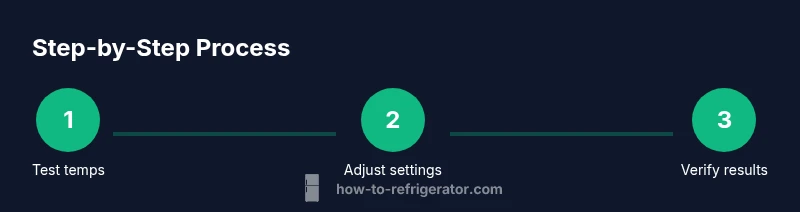
Place the thermometer in the center of the fridge and in the freezer if possible. Wait 24 hours to get an accurate baseline before making adjustments. Record the readings to compare against target ranges.
Tip: Keep the fridge and freezer closed as much as possible during the first 24 hours to get stable readings. - 2
Read the controls
Identify whether you have a dial or digital display and understand the increments. Some models allow temperature changes in 1–2 degree steps, others use larger jumps. Know which increments your unit uses before adjusting.
Tip: If you’re unsure, start with a small adjustment and test for 24 hours. - 3
Adjust fridge in small increments
If the fridge is above 38°F, reduce the setting by 1–2 degrees. If it’s below 34°F, increase by 1–2 degrees. Do not overshoot in a single change.
Tip: After adjusting, avoid multiple tweaks at once to prevent overshooting. - 4
Re-check center temperatures
After 24 hours, re-measure the fridge and freezer centers. Compare with your targets and log any drift. Use the external thermometer as the reference.
Tip: Document the base readings for future reference. - 5
Inspect airflow and seal
Openings should have clear airflow; ensure shelves are not blocking vents. Check door seals for cracks or gaps that could allow air to escape.
Tip: Gently clean seals with a damp cloth and check for tightness. - 6
Clean condenser coils (if accessible)
Dusty coils reduce cooling efficiency and can cause temperature drift. Unplug the unit if you need to access coils and clean gently with a brush or vacuum.
Tip: Do not use water directly on electrical components. - 7
Verify with a second reading
Place a second thermometer in the fridge and the freezer to ensure readings are consistent. Cross-check with the built-in display if available.
Tip: If discrepancies persist, rely on the more accurate external thermometer. - 8
Document results and set a routine
Record target temps and the steps you took. Schedule regular checks, especially after door-heavy events or seasonal changes.
Tip: Set a monthly reminder to review temperatures. - 9
Know when to call a pro
If temps remain out of range after adjustments and cleaning, the issue may be a faulty thermostat, compressor, or defrost system. Seek professional service or warranty support.
Tip: Don’t attempt electrical repairs beyond basic maintenance.
FAQ
What is the ideal temperature for a refrigerator?
Aim for about 37°F (3°C) in the main compartment. Slight variations are fine, but consistently warmer temps increase food safety risks.
Aim for about 37 degrees Fahrenheit, or 3 Celsius, for your fridge.
What should the freezer temperature be?
Keep the freezer at 0°F (-18°C) to maintain frozen texture and prevent ice crystals. Periodic checks help catch drift.
Keep your freezer at zero degrees Fahrenheit.
How often should I check temperatures after adjustments?
Check at least weekly after adjustments, then monthly once you’ve established a stable baseline.
Check once a week after changes, then monthly when things stay steady.
Why does my fridge feel warm even when the thermostat is set correctly?
Common causes include a leaking door seal, overcrowded shelves blocking airflow, or warm room conditions. Inspect seals and ensure vents are clear.
If it feels warm, check the door seal and airflow first.
Can I store hot leftovers in the fridge to cool them quickly?
No. Hot foods can raise fridge temperature and create condensation. Let foods cool to room temperature before refrigerating.
Let hot foods cool first before putting them in the fridge.
What should I do if the freezer won't freeze?
Check that the door seals are intact, avoid overloading, and inspect the defrost system if present. If the problem persists, seek service.
Check seals, don’t overload it, and consult a technician if needed.
Watch Video
Top Takeaways
- Set fridge to 37°F (3°C) and freezer to 0°F (-18°C).
- Verify with an external thermometer and adjust after 24 hours.
- Check door seals and airflow to prevent drift.
- Avoid overpacking; maintain clear air paths for even cooling.
- The How To Refrigerator team recommends regular maintenance for consistent temps.