What should refrigerator and freezer be set at
Learn the ideal temperatures for your fridge and freezer to keep food safe, reduce energy use, and extend appliance life. A practical guide with step-by-step setup and verification.


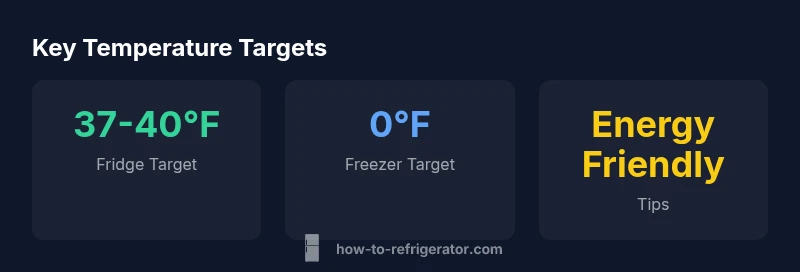
According to How To Refrigerator, if you're asking what should refrigerator and freezer be set at, aim for 37-40°F (3-4°C) in the refrigerator and 0°F (-18°C) in the freezer. After changing settings, allow 24 hours to stabilize, then verify with a thermometer. Avoid overpacking and check door seals to prevent temperature drift. Those targets help reduce spoilage, minimize energy usage, and extend appliance life. If you have a compact fridge, adjust within the manufacturer range.
Why temperature accuracy matters
Food safety hinges on stable, appropriate temperatures. When fridge and freezer temps drift, bacteria can multiply in the fridge and ice crystals can degrade quality in the freezer. The How To Refrigerator team emphasizes that consistent temperatures protect both food safety and energy efficiency. A two-zone system means changes in one compartment can affect the other through door openings and air leaks. Keeping temps steady minimizes these interactions and reduces the likelihood of spoilage. Regular checks also extend appliance life by reducing compressor cycles and wear on gaskets. In short, correct temperatures are the foundation of a reliable, energy-smart kitchen.
The recommended temperature targets for refrigerator and freezer
For most households, the standard targets balance safety, quality, and energy use. The refrigerator should sit around 37-40°F (3-4°C) to inhibit bacterial growth while maintaining texture and humidity control. The freezer should be set at 0°F (-18°C) to keep most foods safely frozen for extended periods. Real-world variations occur: warmer climates, frequent door openings, or large family sizes may justify slight adjustments. How To Refrigerator analysis, 2026, notes that mid-range targets generally offer the best compromise between safety and energy efficiency. After adjusting settings, allow the system to stabilize for 12-24 hours and verify with a thermometer on the middle shelf of the fridge and near the center of the freezer.
How to adjust temperatures on different fridge types
Different fridge configurations respond to adjustments differently. A standard top-freezer or bottom-freezer unit typically uses a simple dial or digital control. French-door and side-by-side models may have separate controls for each zone and even extra features like adaptive defrost. Start with small changes: move from 37°F to 38°F on the fridge and from 0°F to -1°F on the freezer, then wait 24 hours before rechecking. If your unit includes a display, follow the manufacturer’s guidance to avoid overshooting. For compact or apartment refrigerators, set within the manufacturer’s recommended range and monitor for stability.
How to verify temperatures accurately
Use a reliable thermometer placed in the center of the fridge and in the top shelf for a representative reading. Place the fridge thermometer at least 2 inches away from the back wall to avoid wall-cooling effects. For the freezer, position it at the center of the meat/ice section or near the fan if accessible. Check temperatures at least once a day for the first week after a change, then weekly after stability. Record readings to identify drift patterns and confirm that the ambient kitchen temperature or heavy door use isn’t causing fluctuations.
Common mistakes and fixes that affect temps
Common issues include overpacking, which obstructs cold air flow; warm foods placed directly into the fridge; misadjusted door seals or gaskets; and dirty condenser coils that reduce cooling efficiency. Regularly clean coils and ensure doors seal completely when closed. If you notice frost buildup in the fridge, it may indicate a defrost or air-seal problem; consult the manual to diagnose the feature and consider professional service if the issue persists. Small changes in placement and organization can significantly improve temperature stability.
Seasonal considerations and practical tips
Seasonal shifts in house temperature and humidity can subtly influence appliance performance. Keep the fridge away from heat sources and direct sunlight; in hot weather, a slightly cooler fridge may be necessary, while in cold seasons a slight compromise may suffice. Don’t neglect energy-saving habits such as allowing hot foods to cool before refrigerating and defrosting frozen foods in the fridge overnight, which helps maintain stable temperatures. For households that store medicines or beverages in the fridge, precise temps become even more important and warrant closer monitoring.
Quick-start checklist: set temps today
- Confirm targets: fridge 37-40°F, freezer 0°F
- Place thermometers in both compartments
- Check door seals and clean condenser coils if needed
- Adjust in small increments and recheck after 24 hours
- Maintain consistent door usage and avoid overpacking
- Document readings for ongoing monitoring
Temperature targets for common fridge configurations
| Area | Recommended Temp (F) | Notes |
|---|---|---|
| Refrigerator | 37-40 | Keeps perishable foods safe and reduces moisture loss |
| Freezer | 0 | Preserves texture and prevents bacterial growth |
| Mini-fridge/Compact | 35-38 | Check manufacturer range and stabilize |
FAQ
What happens if the fridge is too warm?
Warm fridge temperatures can allow bacterial growth and spoilage, leading to unsafe food and faster loss of quality. It can also trigger more frequent compressor cycles, increasing energy use. If you notice warm air or rising temperatures, check door seals, airflow, and consider a thermometer reading to guide adjustments.
If your fridge feels warmer than usual, it's best to check the door seals and airflow, and verify the temperature with a thermometer. Adjust settings gradually and monitor for improvements.
Can I rely on the fridge's built-in display for accuracy?
Built-in displays are helpful, but they can drift over time. Use an independent thermometer to confirm actual temperatures in the middle of the shelves. If readings differ consistently, calibrate the thermostat or consult the manufacturer.
Use a separate thermometer to confirm actual temps, then adjust based on that reading if the built-in display seems off.
How often should I test temperatures?
Test temps after adjusting settings and then monitor weekly for stability. In the first week after changes, check daily, then move to a weekly cadence once readings are steady and within target ranges.
Keep an eye on temps weekly after initial changes, especially during the first week.
What about storing medications or beverages in the fridge?
If medications require strict temps, use a dedicated thermometer and maintain the precise range indicated by the pack. For beverages, ensure temps stay within the safe range and avoid mixing with raw foods.
If you store medicines, use a thermometer to keep their specific temps stable.
Does seasonal weather affect fridge temps?
Extreme seasonal temperatures can influence cabinet temperature and door seal performance. In hotter seasons, consider a slightly cooler fridge setting and ensure airflow around the unit. In milder seasons, verify that temperatures stay within the target range.
Hot weather can push temps up a bit; monitor and adjust as needed.
Should I adjust temps for high-usage holidays or parties?
During high-usage periods, avoid opening doors repeatedly and keep items organized to maximize airflow. If the kitchen is busy, temporarily ensuring a stable baseline temp is more important than minor tweaks.
Keep temps stable and minimize door openings during busy days.
“Getting the temperatures right is the foundation of safe food storage and energy efficiency.”
Top Takeaways
- Set fridge to 37-40°F and freezer to 0°F for safety and quality
- Use a thermometer to verify temps and adjust as needed
- Avoid overpacking and ensure good door seals
- Regularly check temps to catch drift early
- Follow manufacturer guidance for unique fridge types