What Temperature Should Your Refrigerator Be in Celsius?
Discover the ideal Celsius temperatures for refrigerators and freezers, with practical steps to measure, adjust, and maintain safe, energy-efficient cooling in your kitchen.


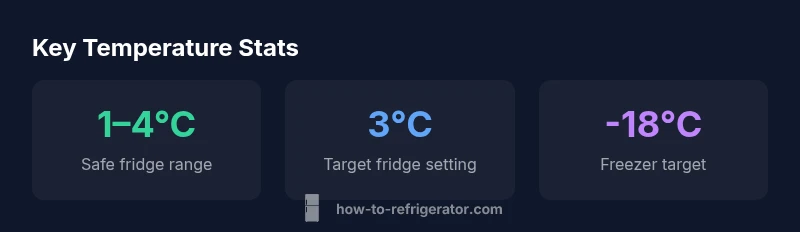
According to How To Refrigerator, the safe and efficient fridge temperature in Celsius is typically between 1°C and 4°C, with the freezer kept at -18°C. For energy savings, aim for about 3°C in the fridge and ensure consistent readings with a calibrated thermometer. Keep door openings to a minimum to maintain this range.
What Celsius Temperature Is Safe for a Refrigerator?
A modern household refrigerator should hold food at a temperature that slows bacterial growth while preserving taste and texture. In Celsius terms, a safe and practical target for most kitchens is a fridge temperature between 1°C and 4°C, with 3°C often cited as a balanced setting for safety and energy efficiency. This range works well for dairy, leftovers, meats, and produce when stored properly in their respective shelves. If your model offers more granular control, keep a steady read near the middle of this range and avoid frequent changes. To help homeowners, the How To Refrigerator team emphasizes that consistent readings matter more than chasing a single “perfect” number. A digital thermometer placed in the middle shelf can help verify that the thermostat is functioning correctly and that day-to-day use doesn’t drift outside the target range. Remember that ambient kitchen temperature, door openings, and load size can nudge temps, so monitor periodically.
How to Measure and Validate Temperature in Celsius
Begin with a reliable fridge thermometer (digital preferred for precision). Place the probe toward the center of the fridge, away from the door seal and vents, and away from direct airflow. Allow at least 24 hours after a temperature adjustment before taking an accurate reading, then log the daily average for a week to identify drift. If temperatures sit high (above 4°C) or vary by more than 1–2°C, check seal integrity, thermostat calibration, and condenser coils. For best results, calibrate your thermometer and set the controls to the recommended target, then re-check after a few days. Consistency is the key to safety and energy efficiency, and small adjustments can yield meaningful savings on energy use.
Temperature Control in Different Compartments
Not all compartments share the same cooling performance. The middle shelves generally track fridge temperature most closely, while the door compartments tend to be a touch warmer due to frequent opening. Crispers and dairy storage areas can have slight variations, but keeping the overall fridge near 3°C helps maintain safety for perishable items. If you notice fruit and vegetables wilting or milk nearing spoilage sooner than expected, reassess by moving items to more stable zones and confirming the overall temperature remains within the safe range. Some models offer zone-specific sensors; if yours does, enable them to optimize cooling without overworking the compressor.
Impact of Temperature on Food Safety
Food safety is highly temperature-dependent. Perishable foods should be kept at temperatures that slow bacterial growth and preserve quality. In Celsius terms, aim to keep most items at or below 4°C; the danger zone (4–60°C) should be avoided during storage. This is especially important for dairy, eggs, meat, and prepared foods. Regularly inspecting foods for spoilage, date labeling, and proper storage containers complements temperature control. While occasional minor fluctuations are normal, sustained deviations require action to prevent foodborne illness. The guidance aligns with general food safety principles circulated by major health organizations.
Energy Efficiency and Maintenance Tips
Maintaining the correct temperature is a major contributor to energy efficiency. Keep the fridge well organized to maximize cold air circulation, avoid overstuffing, and minimize door openings. Regularly inspect door seals for cracks or gaps and replace them if needed. Clean condenser coils every 6–12 months (more often in dusty environments) to improve heat transfer and reduce compressor load. If your model supports it, enable energy-saving modes and keep the unit away from heat sources like ovens or sunlight. A stable temperature not only saves energy but also extends the life of your appliance.
Practical Scenarios and Troubleshooting
If you notice your fridge consistently runs warmer than 4°C or the thermometer reads above the target, first verify the thermometer’s accuracy. Then check door gaskets and the door alignment. Clean or reposition items to allow air to circulate and prevent hotspots. Inspect the condenser coils and ensure proper airflow around the unit. If temperatures remain high after adjustments, consult the manufacturer’s manual for reset options or contact a professional technician. Seasonal changes or variable loads can necessitate a thermostat recalibration or minor repairs.
Expanded Guidance for Special Situations
In very warm climates or during power outages, temperatures may drift. In such cases, avoid storing sensitive foods in the main fridge until you can verify stability again. For households with children or pets, position the fridge away from drafty areas and ensure that door seals remain intact. If you upgrade to a smart fridge, use its built-in temperature history to track trends and catch early drift before it affects safety or energy bills. The overarching goal is to maintain a consistent Celsius reading within the safe range while minimizing energy use.
Recommended Celsius targets for refrigeration
| Aspect | Recommended Celsius | Notes |
|---|---|---|
| Fridge temperature | 1–4°C | Keep around 3°C for safety and freshness |
| Freezer temperature | -18°C | Maintain consistent -18°C for long-term storage |
| Thermometer accuracy | ±0.5°C | Use a calibrated fridge thermometer |
FAQ
What is the ideal refrigerator temperature in Celsius?
The generally accepted fridge temperature in Celsius is 1–4°C, with 3°C often recommended for a balance of safety and efficiency. Use a thermometer to verify.
The ideal fridge temperature is between one and four degrees Celsius; aim for about three degrees and check with a thermometer.
How can I check my fridge's temperature accurately?
Place a calibrated thermometer on a middle shelf, away from the door, and wait 24 hours after any setting change before recording the reading.
Put a fridge thermometer in the middle shelf, away from the door, and wait a day to confirm the temperature.
Is 0°C too cold for a refrigerator?
0°C is at the lower end of the safe range and may start freezing certain items. For most foods, 1–4°C is a safer and more consistent target.
0°C can start freezing some foods; it's safer to aim for 1–4°C.
Can temperature affect food safety?
Yes. Keeping foods at or below 4°C slows bacterial growth and reduces spoilage risk, while higher temps increase the chance of illness.
Yes. Keeping foods under 4°C slows bacteria and helps prevent spoilage and illness.
What should I do if my fridge is warmer than 4°C?
Check thermometer accuracy, inspect door seals, reduce door openings, and ensure proper airflow. If the issue persists, calibrate the thermostat or contact a technician.
If it's warmer than 4°C, check the seal, don’t open the door often, and calibrate or call for service if needed.
Do fridge temperatures vary by zone?
Yes. Different compartments may run slightly warmer or cooler; aim to keep the overall unit around 3°C and use shelves to position sensitive items accordingly.
Zones can vary; keep the whole fridge around 3°C and place sensitive items on shelves accordingly.
“Stable, accurate temperatures are the backbone of safe, energy-efficient refrigeration.”
Top Takeaways
- Set fridge to around 3°C for safety and efficiency
- Keep freezer at -18°C for safe long-term storage
- Use a thermometer to verify and adjust temperatures
- Minimize door openings to prevent temperature drift