What Temperature Should a Refrigerator Be Set To? A Practical Guide
Discover the ideal refrigerator and freezer temperatures, why correct settings matter for safety and energy efficiency, and practical steps to test and maintain your appliance for consistent food quality.


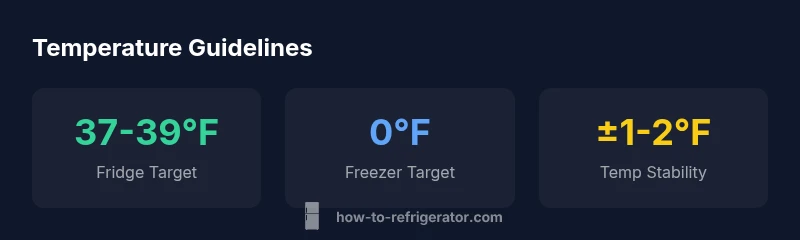
Maintain the fridge at a steady 37-39°F (3-4°C) and the freezer at 0°F (-18°C). This range minimizes bacterial growth and keeps foods fresh. Use an appliance thermometer to verify, avoid frequent door openings, and allow air to circulate freely. If you store highly perishable items, consider the lower end of the range.
Understanding Temperature Basics
Temperature control is fundamental to food safety, energy efficiency, and overall appliance performance. The question what should refrigerator be set at is best answered by aiming for a stable cool zone that keeps perishable items out of the danger zone for bacterial growth. In practical terms, most food safety guidelines converge on a fridge temperature around 37°F (3°C) and a freezer at 0°F (-18°C). Temperature consistency matters more than a single perfect number; drafty doors, frequent openings, and crowded shelves can cause fluctuations that degrade quality. For homeowners, understanding these basics helps set a baseline you can validate with a thermometer and routine checks. In this article, we’ll break down the safest ranges, how to calibrate, and how to adapt settings for different loads and seasons. The guidance here aligns with How To Refrigerator Analysis, 2026 and is designed for homeowners troubleshooting appliance issues.
How to Set Your Refrigerator to the Right Temperature
Setting the right temperature is a simple, repeatable process. Start by locating the thermostat or control panel, then note the current setting. Use a reliable appliance thermometer placed in the center of the fridge and, for best accuracy, in the middle shelf away from the door. If your readings are consistently above 39°F, lower the setting in small increments (1°C or 1°F at a time) and recheck after 24 hours. For the freezer, aim for 0°F (-18°C). After adjusting, avoid placing large warm dishes inside and allow the air to circulate; this speeds up stabilization. If you use craft or deli items requiring extra cooling, consider slightly lower fridge temps within the safe range, but never below 33°F (0.5°C) to avoid freezing perishable items.
Common Mistakes That Push Temps Off
Human habits and appliance placement often push temperatures out of range. Common mistakes include leaving the door ajar, overfilling shelves that block air flow, placing hot foods directly into the fridge, and neglecting door seals that lose cold air. Additionally, placing items in crisper drawers without proper air circulation can create microclimates that vary by zone. Another pitfall is ignoring coil cleanliness; dirty condenser coils force the compressor to work harder, which can impact temperature stability and energy use. Finally, relying on pantry room temperatures to set the thermostat is unreliable—aim for near-ambient internal temperatures rather than outdoor conditions.
Using Thermometers and Smart Features
Thermometers are the most reliable way to verify temperatures. Digital thermometers with min/max memory help you see fluctuations during the day. If your fridge has smart features, enable temperature alerts and set reminders for periodic checks. Use the thermometer readings to calibrate your thermostat within the manufacturer’s recommended range. For many users, a quick routine—check once a week, then monthly—ensures ongoing accuracy. Consistency in temperature helps extend shelf life, preserve texture, and minimize waste.
Temperature Zones Inside a Refrigerator
Refrigerators aren’t a single cool box; they have zones with different ideal temps. The main body tends to be slightly warmer than the shelves near the back, while the top shelf may be more prone to temperature fluctuations due to frequent door openings. Produce drawers often sit at a slightly higher humidity level, which is useful for certain fruits and vegetables but can raise ethylene sensitivity in others. The door shelves are the warmest part of the fridge and should hold items less sensitive to temperature shifts. Understanding zone-specific nuances helps you place items more effectively, reducing spoilage and maintaining a uniform environment.
Seasonal and Usage Considerations
Seasonal changes alter how your fridge behaves. In hot weather or when frequently opening the door, temperature fluctuations can be more pronounced. If you host gatherings or store large quantities of cold beverages, your internal temperatures may drift temporarily. In these cases, verify temps after the event and readjust to the standard ranges once the overload subsides. For energy efficiency, avoid setting the unit too cold; the system will cycle more frequently to reach the setpoint, consuming more power without proportional benefits.
Maintenance Checklist for Temperature Control
A regular maintenance routine supports accurate temperatures. Create a monthly mini-checklist: 1) verify fridge and freezer temps with a thermometer, 2) inspect door seals for cracks or gaps and replace if needed, 3) clean condenser coils (unplug first) to maintain efficiency, 4) ensure air vents aren’t blocked by items, 5) review whether defrost drains are clear, and 6) test door alignment after moving items. If any readings stray beyond the safe range, recalibrate or service as needed. Regular checks reduce food waste and extend appliance life.
Troubleshooting If Not Cooling Properly
If your fridge fails to maintain the target temperatures, start with the basics: verify the door is sealing correctly, check the thermostat setting, and ensure there’s adequate space around the back for airflow. Listen for unusual noises that may indicate a failing compressor or fan. If the temperature continues to drift, consider scheduling a service check, as electrical or refrigerant issues require professional attention. While some fixes are DIY, others demand expert calibration to restore proper function and energy efficiency.
What to Do If Doors Remain Warmer Than Expected
Persistent warm sections near the door often signal air leaks or improper air circulation. Start by inspecting the door seals for cracks or a loose fit; clean the gasket carefully and replace if necessary. Rearrange items to avoid blocking vents, and avoid overpacking the fridge, which limits airflow. For many households, a simple routine—ensuring the door closes completely, keeping the back clear, and validating temps with a thermometer—proves effective in maintaining consistent cooling. If issues persist, you may need a professional diagnostic to check the compressor and refrigerant levels.
Structured temperature guidelines for common fridge configurations
| Area | Recommended Temp | Notes |
|---|---|---|
| Fridge interior | 37-39°F | Maintain steady temps for safety and quality |
| Freezer interior | 0°F (-18°C) | Keep food frozen and maintain texture |
| Thermostat calibration | 12 months | Verify accuracy with a thermometer |
| Door seals | Variable | Check for leaks and replace if needed |
FAQ
What should refrigerator be set at?
For most homes, set the fridge to 37-39°F (3-4°C) and the freezer to 0°F (-18°C). This range supports safety and quality while balancing energy use. Always verify with a thermometer and adjust gradually.
For most homes, keep the fridge at 37-39°F and the freezer at 0°F. Verify with a thermometer and adjust gradually.
Does temperature vary with the seasons?
Seasonal changes can affect cooling needs. Hot weather and frequent door openings may cause brief temperature fluctuations. Check temps after heat waves or gatherings and recalibrate if needed.
Seasonal heat and door usage can cause fluctuations. Check temps after heat waves and recalibrate.
Can I use energy-saving mode to lower temps?
Energy-saving features can help, but rely on actual thermometer readings to set the correct baseline. If your model supports adaptive defrost or smart alerts, enable them to maintain efficiency without compromising safety.
Energy-saving features help, but use a thermometer to set safe baselines and enable alerts if available.
What if my fridge isn’t cooling after adjusting the thermostat?
First, confirm the door seals are intact and there’s adequate airflow around the back coils. If temps remain high after 24 hours, consult a professional to inspect for compressor or refrigerant issues.
Check seals and airflow first; if still warm after a day, call a professional.
How often should I test fridge temperatures?
Test temperatures at least once a month with a calibrated thermometer. After any service or door changes, re-check within 24 hours to ensure stability.
Test temps monthly with a thermometer, re-check after service.
Are there differences in temperature between shelves and door bins?
Yes. Door bins are warmer due to door opening. Place items sensitive to cold in the main body and keep door items less temperature-sensitive.
Door shelves stay warmer; use main shelves for sensitive items.
“Consistent temperature control is the single most effective factor in preserving food quality and reducing energy use.”
Top Takeaways
- Set fridge to 37-39°F and freezer to 0°F for safety and quality.
- Use a thermometer to verify temps and calibrate monthly.
- Avoid common mistakes: keep doors shut, don't overload shelves, clean coils.
- Understand zones to place items appropriately and maintain even cooling.