When Refrigerator Stops Working: Troubleshooting Guide
Learn how to diagnose and fix a refrigerator that stops working. This step-by-step guide covers power checks, common causes, safe inspections, and when to call a professional. Includes a diagnostic flow, quick fixes, and prevention tips.


Most refrigerator failures start with a simple fault: power or a cycling issue. First, verify the outlet is live, the power cord is plugged in, and the circuit breaker hasn’t tripped. If the light comes on but cooling doesn’t, check door seals, listen for the compressor or fan, and confirm the condenser coils are not dirty. If cooling still fails, follow the diagnostic flow below.
Symptoms and Safety Essentials
When a refrigerator stops working, it can trigger panic, but a calm, methodical approach works best. Common signs include a non-cooling interior, uneven cold, or frost on the floor of the freezer. Before you do anything, prioritize safety: unplug the unit, avoid touching exposed metal parts, and keep liquids away from wiring. If you smell burning or see sparking, leave the area and call a professional. In many cases, the issue is a simple power or airflow problem that you can fix with basic checks. When refrigerator stops working, you start with power checks, then move to cooling system checks. This guide from How To Refrigerator walks homeowners through a practical, step-by-step process to diagnose and fix the most common causes, while keeping safety and efficiency in mind. You’ll learn how to test outlets, reset breakers, inspect seals, and decide when a technician is needed. By staying organized, you can often restore proper cooling without a costly repair.
Symptoms and Safety Essentials
When a refrigerator stops working, it can trigger panic, but a calm, methodical approach works best. Common signs include a non-cooling interior, uneven cold, or frost on the floor of the freezer. Before you do anything, prioritize safety: unplug the unit, avoid touching exposed metal parts, and keep liquids away from wiring. If you smell burning or see sparking, leave the area and call a professional. In many cases, the issue is a simple power or airflow problem that you can fix with basic checks. When refrigerator stops working, you start with power checks, then move to cooling system checks. This guide from How To Refrigerator walks homeowners through a practical, step-by-step process to diagnose and fix the most common causes, while keeping safety and efficiency in mind. You’ll learn how to test outlets, reset breakers, inspect seals, and decide when a technician is needed. By staying organized, you can often restore proper cooling without a costly repair.
Steps
Estimated time: 45-60 minutes
- 1
Power safety check
Unplug the refrigerator, inspect the power cord for damage, and plug it back in. If the outlet still shows power, test it with a simple device to confirm it’s live. If the breaker tripped, reset it and re-test. This step isolates a basic power issue that most homeowners can fix safely.
Tip: Always unplug before touching any internal components. - 2
Reset controls and verify settings
Check the thermostat and temperature settings, ensuring the fresh-food compartment sits around 37–40°F (3–4°C) and the freezer at 0°F (-18°C). Replace any blown fuses or tripped GFCI if applicable. After resetting, wait 15–30 minutes to see if cooling begins to resume.
Tip: If the display is unresponsive, consult the manual for a reset sequence. - 3
Inspect airflow and interior layout
Make sure nothing is blocking the vents inside the fridge or freezer. Overpacked shelves, tall bottles, or containers can obstruct air circulation. Rearrange items to restore proper airflow and re-check cooling after 1–2 hours.
Tip: Leave some space around items to allow air to move freely. - 4
Check condenser coils and fan
Unplug the unit and locate the coils (usually at the back or underneath). If dirty, clean gently with a soft brush or vacuum. Listen for the condenser fan when the compressor runs; if you don’t hear it, that may indicate a faulty fan or relay.
Tip: Keep a safe distance when cleaning to avoid pulling on wires. - 5
Test defrost components
If your model has a defrost function, ensure the defrost drain isn’t blocked and the heater/timer isn’t stuck in defrost. A blocked drain can cause frost and poor cooling. Use the manual test steps or call a pro if you suspect a defective defrost system.
Tip: Defrost issues often require professional diagnosis if you’re not sure how to test the timer or heater. - 6
Decide on professional help
If the fridge still doesn’t cool after these checks, you likely need a technician to test refrigerant pressure, sealed system integrity, or electrical components. Gather model info, purchase receipts, and symptom history to streamline service.
Tip: Ask about diagnostic fees, parts warranty, and whether replacement is more cost-effective.
Diagnosis: Fridge stops cooling or temperature rises above setting
Possible Causes
- highPower issue (outlet, cord, or breaker trip)
- mediumDirty condenser coils
- lowDefrost system failure
Fixes
- easyCheck outlet, reset breaker, and ensure the fridge is properly plugged in
- easyClean condenser coils and ensure proper airflow around the appliance
- mediumInspect defrost timer/heater or consult a technician if defrost issues are suspected
FAQ
Why is my fridge not cooling even though the light is on?
A light on, but no cooling often points to a cooling subsystem issue rather than a purely electrical problem. Check the thermostat, door seals, and condenser coils first, then listen for the compressor and fan. If these steps don’t restore cooling, a technician may need to test the sealed system.
If the light is on but it’s not cooling, start with the thermostat and door seals, then check the condenser and listen for the compressor.
What should I check first if the fridge stops cooling?
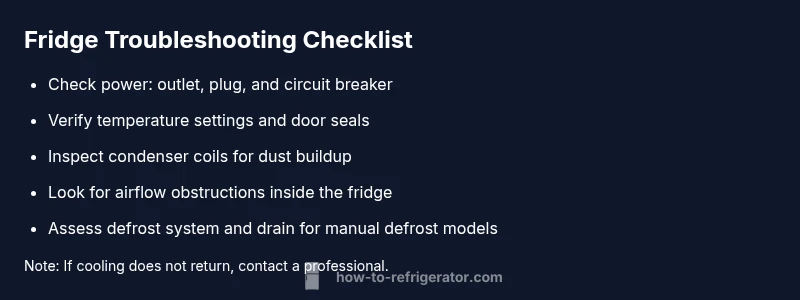
Begin with power: outlet, plug, and circuit breaker. Then verify temperature settings and door seals. Finally, check for airflow blockages inside the compartments and inspect condenser coils for dust buildup.
Start with power, then temperature settings and seals, followed by airflow and coil checks.
Can a defrost timer cause a fridge to stop cooling?
Yes. If the defrost timer is stuck or the defrost heater is failed, frost can block airflow and stop cooling. This often requires professional testing or part replacement.
A stuck defrost timer can stop cooling by blocking airflow; a technician can confirm and fix it.
Is it safe to clean condenser coils myself?
Yes, unplug the unit first and use a soft brush or vacuum to remove dust. Avoid using water directly on electrical parts and never shake off dust near the compressor. If coils are hard to reach, call a professional.
Yes—unplug first, then gently clean the coils with a brush or vacuum.
When should I call a professional for a refrigerator that stops working?
If basic checks don’t restore cooling, or you notice signs like refrigerant leaks, loud noises, or persistent frost buildup, contact a licensed technician. They will diagnose with proper tools and provide a repair or replacement plan.
Call a professional if basic checks fail or you suspect leaks or a sealed-system problem.
Top Takeaways
- Power checks first to rule out outlet/breaker issues
- Clean coils and verify airflow for effective cooling
- Know when to call a pro for refrigerant or sealed-system problems
- Maintain a routine to prevent future outages