When Refrigerator Not Cooling But Freezer Works: Troubleshoot
Urgent troubleshooting guide for homeowners: learn why your refrigerator isn't cooling while the freezer still runs, with safe steps, diagnostic flow, and clear fixes. Includes when to call a pro and prevention tips.


Most likely, the fridge isn’t cooling due to a defrost system failure, a faulty evaporator fan, or blocked condenser coils—while the freezer still operates. Quick fix: unplug, inspect evaporator coils for heavy frost, and clean condenser coils at the back. Verify the evaporator fan spins freely, clear the air intake, and ensure doors seal. If symptoms persist, contact a professional.
Why not cooling when the freezer works — what it means
When the freezer continues to run but the refrigerator compartment stays warm, the issue is almost always related to airflow, frost buildup, or the cooling components in the fridge side. According to How To Refrigerator, the most common culprits are a clogged evaporator due to frost, a malfunctioning evaporator fan, or debris/dust on condenser coils. The two compartments share refrigerant and a defrost cycle, but problems don’t always affect both areas equally. Recognizing the symptom “when refrigerator is not cooling but freezer works” helps you target airflow paths, seals, and the defrost mechanism rather than replacing the entire unit. As you troubleshoot, keep notes of what you observe to help a technician diagnose faster and avoid unnecessary parts replacement.
Key takeaway: focus first on airflow and frost issues, then on defrost components and condenser cleanliness. This approach often resolves the problem without costly repairs.
Quick Checks You Can Do Safely
Before you reach for tools, unplug the unit to avoid electrical hazards. Start with the simplest checks and work toward more involved steps:
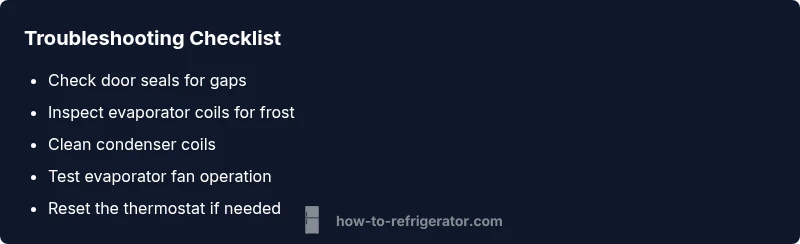
- Inspect doors and gaskets for cracks or gaps that could let warm room air in and disrupt cooling balance.
- Check the freezer and fridge doors to ensure they seal firmly when closed.
- Look at the evaporator coils in the freezer (usually behind a panel) for heavy frost or icing. If frost is excessive, the defrost cycle or heater may be failing.
- Clean the condenser coils at the back or underneath the fridge from dust and lint buildup—blocked coils reduce cooling efficiency.
- Listen for the evaporator fan in the freezer. If it’s silent or obstructed by ice, airflow to the fridge compartment may be interrupted.
If these checks don’t restore cooling, proceed with the diagnostic flow below. Always consider calling a professional if you notice refrigerant hisses, loud buzzing, or high temperatures that persist after basic maintenance.
Diagnostic Flow: Symptom to Diagnosis
This workflow helps you decide whether the issue is simple or requires a professional repair. Start with the most probable and least invasive causes:
- Symptom: Not cooling in the fridge, freezer intact
- Likely cause: Defrost system failure
- Likelihood: high
- Fixes: Inspect defrost timer and heater; defrost safely; test after a cycle
- Symptom: Frost buildup on evaporator coils
- Likely cause: Defrost timer/heat element malfunction
- Likelihood: high
- Fixes: Manually defrost if safe; replace failed components if needed
- Symptom: Evaporator fan not running
- Likely cause: Faulty fan motor or ice blockage
- Likelihood: high
- Fixes: Clear ice, replace fan if motor is dead
- Symptom: Dirty condenser coils
- Likely cause: Reduced heat rejection
- Likelihood: medium
- Fixes: Clean coils thoroughly; ensure proper airflow
- Symptom: Door gasket leaks air
- Likely cause: Worn or damaged seal
- Likelihood: low
- Fixes: Replace gasket; test with a dollar bill check
Note: If you detect a refrigerant smell, oil leaks, or hissing sounds, stop and call a professional. Refrigeration work involves specialized knowledge and safety considerations.
Step-by-Step: Detailed Fixes for the Most Common Cause
- Power down and safety check
- Title: Power cycle and safety
- Description: Unplug the unit, locate the service panel, and wait 5–10 minutes before plugging back in to reset control boards. This simple power cycle can clear minor control faults that prevent cooling. If you feel unsure at any point, skip to professional help.
- Tip: Always unplug before opening panels; keep children away from the area during troubleshooting.
- Inspect evaporator frost and defrost system
- Title: Check evaporator and frost buildup
- Description: Remove the freezer panel to inspect the evaporator coils for heavy frost. If ice blocks air from circulating, the defrost timer or heater may be faulty. Defrost the area safely with a hair dryer on a cool setting at a distance, and recheck after a cycle.
- Tip: Do not use sharp tools to chip ice; frost buildup often signals a faulty defrost component.
- Test the evaporator fan
- Title: Evaporator fan test
- Description: With the freezer panel removed, attempt to spin the evaporator fan manually. If it’s stiff or makes grinding noises, the motor or blades may be damaged and require replacement. After replacement, verify air movement toward the fridge compartment.
- Tip: A non-spinning fan typically prevents proper cooling even if the freezer is cold.
- Clean condenser coils and airflow paths
- Title: Clean coils and vents
- Description: Gently vacuum and brush condenser coils to remove dust and lint. Ensure the intake grille and fan housing are free of obstructions. Dirty coils reduce heat rejection and can cause uneven cooling between compartments.
- Tip: Do this every 6–12 months as part of routine maintenance for best efficiency.
- Check door seals and seals integrity
- Title: Inspect door seals
- Description: Close each door on a folded dollar bill test to see if it holds firmly. Replace damaged gaskets to restore airtight seals. Poor seals lead to warm air seeping in and may explain why the fridge won’t cool while the freezer remains cold.
- Tip: Keep doors closed as much as possible during testing to avoid unnecessary temperature swings.
- Recheck and reset temperature controls
- Title: Temperature settings review
- Description: Ensure the fridge is set within the manufacturer’s recommended range (typically around 37–40°F in the fridge). After completing the prior steps, allow 4–6 hours to gauge if levels stabilize. If not, plan a professional evaluation.
- Tip: Use a thermometer in the fridge to monitor stable temps; rely less on the appliance’s built-in display during troubleshooting.
Estimated total time: 45–90 minutes depending on access and component checks.
Tips & Warnings
- Safety first: unplug before opening panels or touching electrical components.
- Do not attempt refrigerant work yourself; it requires a licensed technician.
- If you smell burning or see oil around connections, power down immediately and call a pro.
- Regular maintenance, including coil cleaning and door seal checks, can prevent this issue from recurring.
Key Takeaways
- Not cooling in the fridge with a working freezer is usually airflow or defrost-related.
- Start with simple checks: gaskets, frost on evaporator, and condenser cleanliness.
- If safe fixes don’t work, call a professional for a precise diagnosis and repair.
FAQ: Common Troubleshooting Questions
- Why is my freezer cold but the fridge warm? The evaporator may be iced over or the evaporator fan could be failing, restricting airflow to the fridge.
- Could a faulty defrost timer stop cooling in the fridge? Yes; a timer stuck in defrost can prevent regular cooling.
- Can dirt on condenser coils cause this? Yes; dirty coils reduce heat rejection and can affect fridge performance.
- Is it safe to unplug and reset the fridge? Yes, as a first step, but avoid repeated resets if the problem persists.
- When should I call a professional? If you suspect refrigerant leaks, compressor failures, or if basic fixes don’t resolve the issue within a day.
Steps
Estimated time: 45-90 minutes
- 1
Power cycle and safety check
Unplug the unit, wait 5-10 minutes, then plug back in and monitor. This resets controls that may block cooling.
Tip: Always unplug before panel access; keep liquids away from outlets. - 2
Check evaporator frost
Remove freezer panel and inspect evaporator coils for heavy frost. If ice is present, perform a safe defrost test and check defrost components.
Tip: Avoid using metal tools on ice; gently melt with warm air. - 3
Test evaporator fan
Look for free movement and audible operation of the evaporator fan in the freezer. Replace if it’s dead or obstructed by ice.
Tip: A bad fan is a common reason for fridge warmth. - 4
Clean condenser coils
Disconnect power and thoroughly vacuum the coils; remove dust and lint to restore heat rejection.
Tip: Do not bend fins; use a coil brush to avoid damage. - 5
Inspect door seals
Examine gaskets for tears or gaps; perform the dollar-bill test and replace if needed.
Tip: Proper seals save energy and maintain proper temps. - 6
Reset controls and monitor
Set fridge to recommended temperature, then observe for 4–6 hours for stabilization.
Tip: Use an independent thermometer to verify temps.
Diagnosis: Refrigerator not cooling while freezer works
Possible Causes
- highDefrost system failure
- highEvaporator fan failure
- mediumBlocked condenser coils
- lowDoor gasket air leaks
Fixes
- easyPower cycle the unit and verify thermostat reset
- easyInspect evaporator frost and test the evaporator fan
- easyClean condenser coils and clear airflow paths
- easyReplace damaged door gaskets and improve seals
FAQ
Why is my freezer cold but the fridge not cooling?
This typically points to evaporator frost blocking airflow, a faulty evaporator fan, or defrost system issues. Inspect those areas and test airflow before calling a pro.
If your freezer is cold but the fridge is warm, start by checking the evaporator and defrost components to restore airflow.
Can a faulty defrost timer cause the fridge to stop cooling?
Yes. A timer stuck in defrost can prevent regular cooling cycles. Inspect and replace the timer or related heater if cycling is irregular.
A malfunctioning defrost timer can stop cooling—checking and replacing it may fix the issue.
Should I clean the condenser coils, and how often?
Yes. Dirty coils hinder heat rejection and can cause uneven cooling. Clean coils at least every 6–12 months or when you notice reduced cooling efficiency.
Clean the condenser coils regularly to keep both fridge and freezer cooling efficient.
Is it safe to unplug and reset the fridge?
Unplugging is safe as a first step if you take precautions. Do not repeatedly reset if the issue persists; seek professional help after initial resets.
Unplugging is okay as a first step, but if it doesn’t help, a professional should check it out.
When should I replace the door gasket?
If the gasket is torn or doesn’t seal properly, replacement is warranted to prevent warm air intrusion and restore cooling balance.
If the door seal is damaged, replace it to prevent warm air entering the fridge.
Watch Video
Top Takeaways
- Identify the symptom early: not cooling while freezer works.
- Start with airflow, frost, and condenser cleanliness checks.
- Use a safe power cycle before deeper diagnostics.
- Call a professional for refrigerant, compressor, or persistent issues.