If Refrigerator Is Not Cooling: Troubleshooting Guide
Urgent guide for homeowners: if refrigerator is not cooling, start with thermostat, seals, and condenser coils. Learn safe checks, diagnostic flow, and when to call a pro.


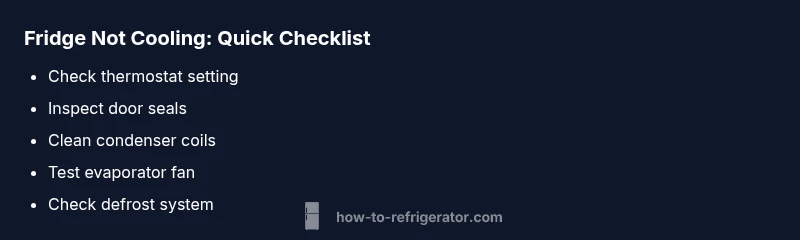
The most likely cause is a thermostat or condenser issue, not a compressor failure. Start by checking the thermostat setting, door seals, and the condenser coils. If these basics are fine, inspect the fan and defrost system. For safety, unplug before testing, and call a pro if you hear unusual noises.
Common causes of refrigerator not cooling
If you notice that your fridge isn’t cooling properly, the root causes are usually straightforward and fixable with basic checks. According to How To Refrigerator, the top culprits are an incorrect thermostat setting, dirty condenser coils, and worn or damaged door seals. Even when the compressor runs, these issues can keep cold air from circulating where it’s needed. Other frequent culprits include a failing evaporator fan, a defective defrost system, or a minor airflow blockage near the back of the unit. While some problems need professional attention, many cooling issues start with simple fixes you can do safely at home. Understanding these common causes helps you diagnose quickly and avoid unnecessary replacements.
Quick checks you can do safely
Before you start any hands-on troubleshooting, unplug the fridge if you need to perform any internal checks. Here are quick, safe steps to narrow down the issue:
- Verify the thermostat is set between 0°C and 4°C (32°F–39°F) for the fresh-food compartment and that the freezer is at the recommended setting.
- Inspect door gaskets for cracks, tears, or gaps; a poor seal lets warm air inside and can make the freezer work harder.
- Clean the condenser coils, which are usually located at the back or beneath the unit; dust and lint buildup impedes heat dissipation.
- Listen for the evaporator fan when you open the freezer door; a silent fan often indicates a fault.
- Check for frost buildup on the evaporator coils, which can signal a defrost system problem.
How To Refrigerator analysis shows that the most frequent fixes start with thermostat, seals, and coils. If these basics don’t restore cooling, move to more involved checks or professional help.
How the cooling cycle works and what to test
A refrigerator cools by circulating refrigerant through a compressor, condenser coils, and evaporator coils. Heat is removed from inside the cabinet and expelled outside via the condenser coils. The evaporator coil absorbs heat from the interior, while the fan distributes cool air. If any part of this cycle is disrupted, cooling suffers. Test the following components:
- Thermostat: Ensure it’s calibrated and not reading temperatures too high.
- Condenser coils: Look for dust, pet hair, or lint; clean gently with a soft brush or vacuum.
- Evaporator fan: Confirm it runs when the door is opened and listen for a hum or steady breeze inside the fridge.
- Defrost system: If frost builds up excessively on the evaporator, the defrost timer or heater may be failing.
Identifying which part is not functioning will guide you to the appropriate fix.
Diagnosing condenser airflow and external conditions
Even when the interior components seem fine, airflow around the fridge matters. Obstructions can trap heat near the condenser and reduce cooling efficiency. Consider:
- Ensuring at least a few inches of clearance around the back and sides of the unit for proper heat release.
- Keeping the kitchen temperature stable; extreme ambient heat can push the fridge to work harder.
- Checking the placement of the fridge; avoid direct sun exposure or proximity to heat-producing appliances.
- Inspecting the coil housing for dirt or debris and removing any dust buildup carefully.
Poor airflow is a common reason for poor cooling. Cleaning coils and improving ventilation often yields immediate improvements.
Safety-first fixes and when to stop
Safety is paramount. Never attempt electrical repairs beyond basic inspections. If you notice a burning smell, buzzing or chattering noises, ice-dense frost, or oil-like fluid near electrical components, stop immediately and unplug the unit. These signs indicate more serious problems that require professional service. For many homeowners, the quickest non-invasive fixes are thermostat adjustments, gasket replacements, and coil cleaning. If you can’t locate a fix after these steps, it’s time to seek help.
Step-by-step overview of common fixes (at-a-glance)
- Step 1: Reset and recheck the thermostat setting.
- Step 2: Inspect and replace worn door seals.
- Step 3: Clean condenser coils; improve airflow around the unit.
- Step 4: Test the evaporator fan operation.
- Step 5: Inspect the defrost system if there’s frost buildup.
- Step 6: If issues persist, call a professional.
Use this quick reference to guide your hands-on work and avoid unnecessary disassembly.
Prevention tips to avoid future cooling issues
Regular maintenance is the best defense against recurring cooling problems. Implement a simple routine: clean coils every 6–12 months, inspect door gaskets for wear, and ensure proper placement and airflow around the appliance. Periodically verify thermostat accuracy with an external thermometer. By staying proactive, you reduce the risk of sudden failures and extend the life of your fridge.
Common mistakes to avoid when troubleshooting
Avoid turning the thermostat up to extremely cold settings to compensate for poor cooling; this wastes energy and can damage food. Don’t attempt to defrost or repair sealed refrigerant lines yourself. Never use metal tools on condenser fins or touch electrical components with wet hands. If in doubt, stop and contact a qualified technician.
When to call a professional and what to expect
If basic checks don’t resolve the issue, speaking with a repair professional is wise. A tech will typically assess refrigeration seals, defrost components, the compressor, and electrical wiring. They can diagnose refrigerant leaks or compressor problems with specialized tools. Expect a diagnostic fee and, if needed, parts replacement or a service call to address more complex failures.
Steps
Estimated time: 60-90 minutes
- 1
Power cycle the fridge
Unplug the unit for 5–10 minutes to reset the control board. Plug back in and monitor performance for several hours. This simple reset fixes many electronic glitches.
Tip: Keep doors closed during the reset to avoid introducing warm air. - 2
Check thermostat and temperature settings
Set fresh-food to 1–3°C (34–37°F) and freezer to -17°C (0°F). Allow 24 hours to reach the target temps if you’ve reset or adjusted the settings. Use a fridge thermometer to verify.
Tip: If the thermometer reads off, recalibrate or replace the thermostat if needed. - 3
Inspect door seals and gaskets
Close the door on a piece of paper; if it pulls out easily, the seal is worn. Replace damaged gaskets and ensure a tight seal with proper alignment.
Tip: Clean gasket channels to prevent debris from creating gaps. - 4
Clean condenser coils
Unplug the fridge, locate the coils (back or underneath), and carefully remove dust with a brush or vacuum. Reconnect and run the unit for several hours, checking for improved cooling.
Tip: Be gentle with fins to avoid bending them. - 5
Test evaporator fan and defrost system
Open the freezer and listen for the evaporator fan. If you don’t hear it, or if frost accumulates, the defrost cycle may be blocked. Inspect the defrost timer and heater if accessible.
Tip: If you suspect frost buildup, do not chip away with metal tools; a professional should handle defrost system repairs. - 6
Evaluate airflow and placement
Ensure several inches of clearance around the appliance and avoid locating it near heat sources. Poor airflow reduces cooling efficiency and forces the compressor to run longer.
Tip: Move items away from vents to maintain even cooling. - 7
Call a pro for persistent issues
If cooling remains inadequate after the above steps, a licensed technician can diagnose refrigerant leaks, compressor problems, or sealed-system failures.
Tip: Note model and serial numbers for faster service.
Diagnosis: Fridge won’t cool to safe temperatures
Possible Causes
- highThermostat set incorrectly or faulty
- highCondenser coils dirty or blocked
- mediumDoor seals not sealing properly
- mediumFaulty evaporator fan
- lowDefrost system failure
- lowCompressor failure
Fixes
- easyCheck and adjust thermostat; verify with a thermometer
- easyClean condenser coils and ensure airflow
- easyInspect door gaskets; replace if damaged
- easyTest evaporator fan operation and room airflow
- mediumTest defrost timer/heater for frost buildup
- hardConsult a pro for suspected compressor or refrigerant issues
FAQ
Why is my fridge not cooling even though the light is on?
The light being on doesn’t guarantee cooling. Common causes include thermostat miscalibration, dirty condenser coils, or a faulty door seal. Start with those checks, then test the fan and defrost system if needed.
If your fridge light is on but it isn’t cooling, check the thermostat, seals, and coils first. If that doesn’t solve it, inspect the fan and defrost system.
How can I tell if the door seals are failing?
Inspect seals for cracks, tears, or gaps. Perform a simple paper test: close the door on a sheet of paper and pull it out. If it slips easily, replace the gasket.
Test the door seals by pulling a paper from the door edge; if it slips, the gasket should be replaced.
Is it safe to manually defrost my fridge?
Manual defrost can be safe with careful handling, but never use sharp tools to remove ice. Turn off the freezer, allow ice to melt naturally, and clean any water afterwards. If frost recurs quickly, call a pro.
You can defrost slowly by turning off the freezer and letting ice melt; avoid prying ice with tools.
How often should condenser coils be cleaned?
Clean condenser coils every 6–12 months depending on usage and environment. More dust or pet hair means more frequent cleaning to maintain efficiency.
Clean coils a few times a year, especially if your kitchen is dusty or you have pets.
What if I hear buzzing or clicking noises?
Buzzing or clicking can indicate a failing compressor or relay. If noises persist after basic checks, stop, unplug, and contact a professional.
Persistent buzzing or clicking usually means a component is failing; get a professional check.
When should I call a repair technician?
Call a technician if cooling hasn’t improved after thermostat, gasket, and coil maintenance or if you suspect refrigerant leaks or compressor issues.
If basic steps don’t fix it, or you hear unusual noises, call a professional.
Watch Video
Top Takeaways
- Start with thermostat, seals, and coils.
- Unplug before testing; be safe with electrical work.
- Listen for the evaporator fan and test defrost function if frost is present.
- The How To Refrigerator verdict: start with basics, escalate as needed.