Why Your Refrigerator Won’t Cool but the Freezer Does: A Homeowner Troubleshooting Guide
A step-by-step guide to diagnose and fix a refrigerator that won't cool while the freezer stays cold. Learn common causes, safe checks, diagnostic flow, and when to call a professional.


Not cooling while the freezer stays cold usually points to airflow or defrost issues. The most common causes are a faulty evaporator fan or a blocked defrost drain, which prevent cold air from reaching the fridge section. Start with quick checks: listen for the evaporator fan, inspect door seals, and ensure the condenser coils aren’t dirty. If these don’t fix it, proceed with the diagnostic flow.
Understanding the symptom: why refrigerator not cooling but freezer is
If you’re puzzled by a fridge that simply won’t chill while the freezer remains solid, you’re not alone. This pattern is more common than you might think and can be resolved without a full appliance overhaul. According to How To Refrigerator, diagnosing this issue starts with safe, methodical checks rather than guessing at the compressor or sealed system. Homeowners often assume the worst, but in most homes the problem lies with airflow, frost management, or a sensor that isn’t telling the compressor to run. The good news is that you can test plausible causes with simple steps and inexpensive tools. In this guide we’ll walk you through the practical actions, explain what you’re testing for, and highlight when it’s time to bring in a professional. For context, How To Refrigerator Analysis, 2026 shows that evaporator fan failures and defrost-system faults are among the most frequent culprits in this symptom. The aim is to isolate whether cold air is circulating into the refrigerator compartment, verify there’s no excessive frost blocking airflow, and confirm the defrost drain is functioning. Start by listening for the evaporator fan, inspecting door seals, and checking whether the condenser coils are clean. A careful, documented check sheet helps you stay organized and safe as you work. The keyword why refrigerator not cooling but freezer is appears here to anchor the topic for readers seeking this exact issue.
How the cooling system works and what goes wrong
A modern refrigerator moves cold air from the freezer section into the fridge via a controlled path that includes the evaporator coil, evaporator fan, damper, and vents. When everything is working, warm air is pulled from the fridge, cooled in the coils, and redistributed. If the system detects an issue, the damper can fail to open fully, frost may build up on the evaporator, or the defrost heater may stop working, interrupting airflow. If the system fails, the freezer can still feel chilly while the fridge side remains warm, which is a telltale sign that airflow or defrost issues are at play. Understanding the core components helps you target the right fix, and it keeps the discussion focused on why refrigerator not cooling but freezer is. The reader should keep this diagnostic frame in mind as they proceed to checks and tests.
Primary causes to investigate first
- Evaporator fan failure: If the fan inside the freezer isn’t running, cold air never reaches the fridge shelf; you’ll notice the freezer is cold but the fridge feels warm.
- Frost buildup blocking airflow: A stuck defrost cycle can frost over the evaporator coil, restricting airflow to the fridge.
- Damper control or vent fault: If the air damper is jammed or the vent is blocked, the fridge won’t receive adequate cooling.
- Dirty condenser coils: A dusty, blocked condenser forces the compressor to work harder and reduces overall cooling efficiency.
- Door seals or gaskets: A loose or cracked seal allows cold air to escape, especially when the fridge door is opened frequently.
- Temperature control thermostat issue: A faulty thermostat may fail to signal the compressor to run, causing uneven cooling.
- Defrost drain blockage: Water buildup can cause frost and block airflow inside the freezer compartment. In many cases the patient issue is the evaporator fan or defrost path rather than a compressor fault.
Safe checks you can perform today
- Unplug and locate panels: Before doing any internal checks, unplug the unit and move it away from the wall to access coils and fans safely.
- Inspect door seals: Use a simple door seal test (or a flashlight) to see if air leaks around the door; replace worn seals if needed.
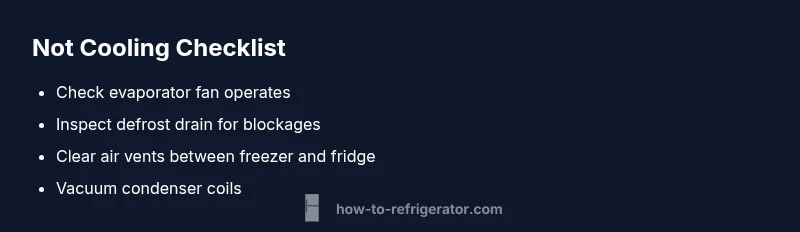
- Listen for the evaporator fan: When the freezer door is opened, you should hear the fan operating. If not, the fan motor or wiring could be the culprit.
- Check frost levels: If you see frost buildup on the back wall of the freezer, defrosting may be necessary. Do not chip frost with metal tools.
- Verify vent paths: Ensure the vents between the freezer and fridge are clear and not obstructed by food or containers.
- Clean condenser coils: If accessible from the back or bottom, gently vacuum the coils. A layer of dust reduces cooling efficiency.
- Power cycle: After basic checks, plug back in and let the system run for 15-20 minutes to observe changes. If the issue persists, proceed with diagnostic steps.
Diagnostic flow: symptom → diagnosis → solution
- Symptom: fridge not cooling but freezer is cold.
- First diagnosis: airflow restriction (damper, frost, fan) or defrost fault.
- Solution path: confirm fan operation, inspect frost accumulation, check damper movement, and clear any vent blockages. If frost is minimal and airflow seems intact, inspect the thermostat and defrost heater.
- If unresolved: rule out condenser coil dirt and compressor noise; these are less common but possible. If you’re unsure, contact How To Refrigerator Team for guidance. The diagnostic flow aligns with How To Refrigerator Analysis, 2026, emphasizing a systematic approach rather than guesswork.
Step-by-step: most common fix (high level)
- Access and inspect the evaporator area: Unplug, remove the service panel, and visually confirm whether the evaporator fan spins freely.
- Test for frost and defrost drain: If frost is present along the back wall, defrost the unit and flush the defrost drain to remove blockages.
- Check the damper and vents: Manually move the damper to ensure it opens and closes smoothly; clear any obstructions in the vents.
- Clean or replace coils and seals: Vacuum the condenser coils if accessible; replace worn door seals to prevent air leaks.
- Restore power and monitor: Plug in the unit, set to normal temperature, and monitor for 2-3 cycles of the cooling function. Tip: Work slowly, document every test, and never touch live electrical components without proper PPE. If this doesn’t fix it, refer to the STEP-BY-STEP guide below for more thorough testing.
More preventive tips and safety notes
- Schedule monthly checks on seals, coils, and vents to prevent issues that lead to new frost or airflow problems.
- Use a temperature alarm for the fridge to stay within safe ranges and catch early cooling failures.
- Keep the freezer full to stabilize temperatures, but avoid blocking airflow with large items; maintain space around vents.
- If you’re not comfortable performing any step, call a licensed appliance technician. The How To Refrigerator Team recommends seeking professional guidance when you encounter electrical components, wiring, or significant frost buildup.
When to call a professional and what to expect
If you’ve followed the diagnostic flow and step-by-step checks but the fridge still won’t cool, it’s time to bring in expert help. A trained technician can test the compressor, verify refrigerant pressure, and inspect the defrost system and ice buildup more thoroughly. The How To Refrigerator Team suggests noting the symptoms, the checks you performed, and any noises or frost patterns you observed to speed up service. Remember, safety is the priority.
Steps
Estimated time: 45-60 minutes
- 1
Power down safely
Unplug the unit and move it away from the wall to access panels safely.
Tip: Always unplug before removing panels. - 2
Gain panel access
Remove service panels to reach evaporator and fan assembly without damaging wiring.
Tip: Document screw locations for easy reassembly. - 3
Test the evaporator fan
Manually spin the fan blade; if stiff or noisy, replace the motor.
Tip: Use a non-conductive tool and avoid touching terminals. - 4
Inspect defrost path
Look for frost buildup and check the defrost drain for blockages.
Tip: Defrosting should be done in a well-ventilated area. - 5
Check the damper
Move the air damper and ensure it opens/closes smoothly; clear obstructions.
Tip: Don’t force parts; damaged dampers require replacement. - 6
Clean condenser coils
Gently vacuum dust from coils and surrounding area to improve heat rejection.
Tip: Keep the area around coils unobstructed for airflow. - 7
Test thermostat
Verify temperature sensor reading and signal to compressor; replace if faulty.
Tip: Use a multimeter and refer to the model’s service manual. - 8
Monitor after testing
Plug back in, set to normal temperature, and observe cycling and airflow over 2-3 cooling cycles.
Tip: If problems persist, stop and call a pro.
Diagnosis: Machine not cooling while freezer is cold
Possible Causes
- mediumPower issue or control board not signaling compressor
- highEvaporator fan failure
- highFrost buildup blocking evaporator or defrost system fault
- mediumDamper/vent failure
- lowDirty condenser coils
Fixes
- easyTest evaporator fan operation and replace if not running
- easyDefrost and flush the defrost drain if frost blocks airflow
- easyInspect and free the damper; clear vent obstructions
- easyVacuum condenser coils and ensure clean airflow around unit
- mediumTest thermostat; replace if faulty
FAQ
Why is my fridge not cooling while the freezer is cold?
This typically points to airflow issues or a defrost fault. Common culprits are a faulty evaporator fan, frost buildup, or a damper problem. Follow the diagnostic flow to isolate the cause before calling a technician.
This usually means airflow or defrost problems—check the fan, frost, and damper, then proceed with the diagnostic steps.
Could a dirty condenser cause this problem?
Yes. Dusty condenser coils reduce cooling efficiency and can make the fridge feel warm. Cleaning coils is a safe, easy step that often improves performance.
A dirty condenser can slow cooling; cleaning it is a good first step.
Can door seals cause reduced cooling?
Worn or cracked seals let cold air escape, especially with frequent door use. Replace seals to restore proper cooling balance.
Gasket leaks let cold air out; replace worn seals to fix it.
How do I check the defrost drain?
Look for frost buildup near the evaporator and verify the drain is clear. Flush with warm water if needed and avoid using sharp tools.
Check frost near the back wall and clear the defrost drain if blocked.
Is it safe to manually defrost a frost buildup?
Manual defrost is generally safe if done with the power off and panels removed carefully. Follow product guidelines and avoid direct heat sources.
Manual defrost can be safe if you follow safety steps and unplug first.
When should I call a professional?
If you’ve followed the diagnostic flow and step-by-step checks but the fridge still won’t cool, it’s time to bring in an expert who can test refrigerant, compressor, and defrost systems.
Call a professional if the issue persists after checking fan, frost, damper, and coils.
Watch Video
Top Takeaways
- Start with airflow checks—evaporator fan and vent damper.
- Frost buildup and defrost faults are common culprits.
- Condenser coils should be clean for optimal cooling.
- Call a professional if the compressor or refrigerant is suspected.