What to Do If Refrigerator Freezing Food: Quick Fix
Urgent, step-by-step troubleshooting to stop a refrigerator from freezing food. Learn fast checks, a diagnostic flow, and safe fixes to restore proper temperatures and protect your groceries.


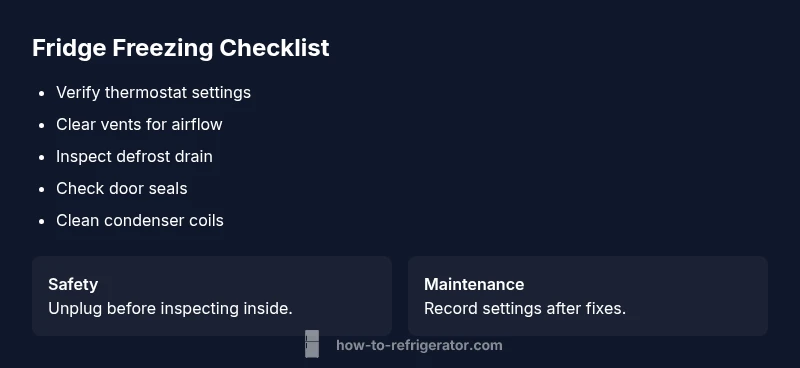
Most likely, your refrigerator is freezing food due to an overly cold thermostat, blocked airflow, or a defrost system issue. Start with simple checks: confirm the temperature settings are within manufacturer recommendations, clear vents, and inspect the defrost drain for frost or blockages. If these don’t help, follow the diagnostic flow for deeper fixes.
Understanding Why Refrigerators Freeze Food
According to How To Refrigerator, fridge freezing happens when cold air is misdirected, or when thermostat, vents, and defrost components aren’t coordinating. Common triggers include a thermostat set too low, vents blocked by shelves, frost buildup on the evaporator, a clogged defrost drain, and a compromised door seal. When air can’t circulate properly, the cold air reaches the fresh-food compartment, chilling items more than intended. This section unpacks each factor and explains how it contributes to frosting, so you can target the fix with confidence.
Quick Checks You Should Do First
Before diving into diagnostics, perform fast checks you can do safely in minutes:
- Confirm the fridge and freezer temperature controls are set according to the user manual.
- Open and close the doors to observe how quickly they seal; look for cracks or gaps in gaskets.
- Check for vents that are blocked by tall containers or overstuffed shelves.
- Inspect for frost buildup near the evaporator or defrost drain.
- Ensure the door isn’t left ajar or opened too frequently. If any of these reveal a problem, correct it and re-check. If the issue persists, continue with the diagnostic flow described below.
Diagnostic Flow Overview
A systematic diagnostic flow helps isolate the cause without guesswork. Start with simple, reversible steps and move to more involved checks only if needed:
- Symptom: food in the fridge section freezes or becomes icy.
- Quick clues: unusual frost, high humidity, or inconsistent temperatures.
- Hypotheses: thermostat setting, airflow blockage, defrost failure, or door seal leak.
- Tests: adjust temperature, inspect vents, check defrost drain, and evaluate door seals. Proceed from easy to harder tests and document the results. Caution: unplug before handling electrical components.
Step-by-Step Fixes for Common Causes
The fixes below cover the most frequent reasons for freezing in the fridge. Always unplug before working inside the unit and use a flashlight to inspect hard-to-see areas. Start with the simplest fix and escalate if needed. If frost persists after attempts, a professional service visit may be required to address defrost timer or control board issues.
Safety Tips When Working on Your Refrigerator
Working with appliances can pose shocks, burns, or cuts. Follow these safety guidelines:
- Unplug the unit before any internal inspection.
- Use insulated gloves when handling icy components.
- Avoid metal tools that could damage coils or liners.
- Do not bypass safety features or replace components with mismatched parts.
- If you notice burning smells, buzzing from the compressor, or leaking refrigerant, discontinue work and call a technician immediately.
Maintenance to Prevent Freezing Issues
Preventive care reduces future calls. Implement these habits:
- Schedule periodic coil cleaning and vent clearance.
- Replace weathered door seals promptly.
- Keep the interior organized to avoid blocking airflow.
- Periodically test the defrost system and listen for unusual noises.
- Record fridge settings after any adjustment to monitor performance.
When to Call a Technician
Most fixes can be done by homeowners, but certain symptoms require professional help:
- Persistent frost despite proper vent clearance.
- Continual temperature fluctuation or a nonfunctional defrost system.
- Ice buildup around the condenser coils or refrigerant smells.
- Background humming that worsens or a hot surface warning. If in doubt, contact a licensed appliance technician to diagnose electrical or refrigerant problems.
How to Verify Your Fix Works
After performing repairs, give the fridge several hours to stabilize, then re-check the temperatures in both compartments. Confirm no visible frost forming on the evaporator. Monitor for several days and adjust as needed. Keep a simple log of settings and outcomes to detect drift early.
Common Mistakes to Avoid
Avoid overloading shelves, blocking vents, or placing hot items directly into the fridge. Keep door gaskets clean and dry to maintain a tight seal. Don’t ignore unusual noises or frost patterns that appear after a fix, as they can indicate ongoing issues.
Steps
Estimated time: 40-60 minutes
- 1
Verify thermostat settings and airflow
Check that the thermostat is in a mid-range position per the manual. Clear any items that block air vents and ensure air can circulate freely around the shelves.
Tip: Take a photo after moving shelves to help restore the layout later. - 2
Inspect vents and reorganize for airflow
Look for items pressing against vents and rearrange contents to allow air to move between compartments. Never block the rear wall evaporator access.
Tip: Leave a small gap around bulky items to keep air moving. - 3
Inspect defrost drain and evaporator frost
Locate the defrost drain line; if you see frost or standing liquid, gently clear the blockage with warm water and a flexible tool. Do not force materials.
Tip: Have towels handy to manage meltwater. - 4
Check door seals & door alignment
Perform a seal test by closing the door on a dollar bill; if you can slide it out easily, the gasket may be worn. Replace if needed.
Tip: Ensure the door closes fully and latches securely every time. - 5
Check condenser coils and airflow
Dusty coils and a failing fan can reduce cooling efficiency and cause cold spots. Vacuum coils and verify the fan runs when the compressor is on.
Tip: Unplug the unit before cleaning to avoid shocks. - 6
Reset controls and test
If your model supports a reset, unplug for a few minutes, plug back in, and monitor temperatures for 24 hours.
Tip: Keep a simple log of temperatures after reset to detect drift.
Diagnosis: Food in the refrigerator section is freezing or icy while the freezer seems normal
Possible Causes
- highThermostat setting too low
- mediumAirflow blocked by items or shelves
- mediumDefrost system malfunction or defrost drain blocked
- lowDoor gasket leaks or frequent door openings
Fixes
- easyRaise the thermostat setting to the manufacturer’s recommended range and recheck after 24 hours
- easyClear vents and reorganize shelves to restore airflow
- easyInspect/clear defrost drain and observe for frost accumulation
- easyInspect/replace door seals if cracked or misaligned
- mediumIf frost persists or defrost system appears faulty, call a technician
FAQ
Why is my refrigerator freezing food even though the freezer is fine?
Common causes include an overly cold thermostat, airflow blockages, or a failing defrost system. Check settings, vents, and the defrost drain; if frost persists, proceed with deeper troubleshooting.
Fridge freezing is usually due to thermostat, airflow, or defrost issues. Start with settings and vents, then check the defrost drain.
How can I tell if the thermostat is the problem?
Compare the fridge temperature to the manual’s guidance and adjust in small increments. If temperatures stay off after several hours, the thermostat or sensor may be faulty.
Check the setting and observe over a day or two to see if it stabilizes.
What should I do if the defrost drain is blocked?
Carefully clear the drain with warm water and a flexible brush or pipe cleaner. Rinse and recheck for proper drainage; frost should subside.
Flush the drain with warm water and ensure it flows freely.
Can a bad door seal cause freezing in the fridge?
Yes. A leaky seal disrupts airflow and can create cold spots. Inspect or replace worn gaskets to restore proper sealing.
A damaged seal lets cold air escape and can cause freezing inside.
When should I call a professional?
If basic fixes fail, temperatures remain unstable, or you notice unusual noises, refrigerant smells, or frost persists, a licensed technician should diagnose electrical or refrigerant problems.
If fixes don’t work, it’s time to bring in a pro.
Watch Video
Top Takeaways
- Adjust thermostat to manufacturer’s recommended range.
- Clear vents to restore airflow.
- Inspect and clear defrost drain if needed.
- Check door seals for leaks and proper closure.
- Call a technician if frost persists after basic fixes.