Why Your Refrigerator Won't Cool or Freeze—and How to Fix It
Quick, practical troubleshooting for a refrigerator that won't cool or freeze. Learn safe checks, common causes, step-by-step fixes, and when to call a pro to restore cooling fast.


Why a Refrigerator Won't Cool or Freeze
A failing refrigerator can derail a busy week, especially when groceries risk spoilage. If your refrigerator won't cool or freeze, the problem often boils down to airflow, dirty components, or sensor/power issues. According to How To Refrigerator, most cooling problems start with simple, user-serviceable checks. The How To Refrigerator team found that even basic maintenance—like cleaning condenser coils, clearing interior vents, and verifying door seals—solves many cases without professional help. In this guide we explain the symptoms to look for, the likely causes, and the safe steps homeowners can take to restore cooling quickly.
The root cause is rarely a single mysterious fault. More often, it’s a cascade of small issues that, when addressed together, return the fridge to normal. Start by confirming power and nominal settings, then move through a logical diagnostic sequence. This approach not only saves time but also reduces the risk of misdiagnosis. Always prioritize safety and your appliance’s warranty terms when deciding whether to DIY or call a technician.
Remember: persistent cooling failures can signal a more serious problem, such as a sealed system leak or compressor fault. If you notice oil around the compressor, hissing sounds, or a complete loss of cooling after basic steps, it’s time to involve a pro to avoid refrigerant exposure or further damage.
Quick Diagnostic Checks You Can Do Today
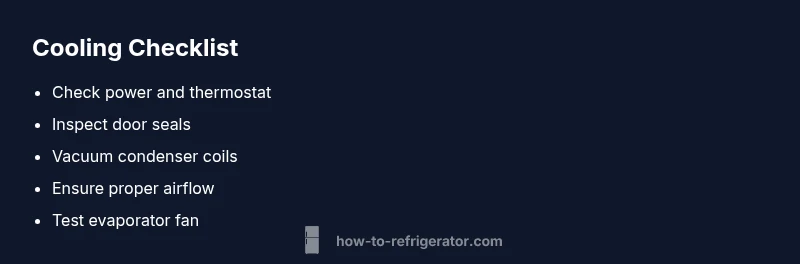
- Power and settings: Confirm the fridge is plugged in, the outlet works, and the thermostat is not set to off or an extremely cold setting.
- Door seals: Inspect gaskets for cracks or gaps. A quick test is to close the door on a dollar bill; if you can pull it out easily, the seal may be leaking.
- Interior airflow: Ensure vents between the freezer and fresh-food compartments are open and unobstructed by groceries.
- Coils and fins: Access condenser coils (back or underneath) and look for dust, hair, or grease; dirty coils dramatically reduce cooling efficiency.
- Evaporator fan check: When the door is opened, you should hear a faint fan sound; if not, the evaporator fan may be blocked or faulty.
- Frost patterns: If frost builds up abnormally in the freezer area but not in the fridge, a defrost or damper issue could be involved.
If these checks show no obvious issues, the problem may lie with sensors or the compressor. In that case, move to the diagnostic flow below and consider stepping up to more involved fixes or professional service.
Diagnosing the Most Common Causes
The most frequent culprits fall into a few broad categories. Airflow issues, especially blocked vents and dirty condenser coils, lead to inadequate heat transfer and warm compartments. Sensor-related problems, such as a failing thermistor, can cause the control board to misread temperatures, keeping the compressor off or running too long. A faulty start relay can prevent the compressor from starting, effectively halting cooling. Finally, a defective compressor or a sealed system leak is more serious and usually requires a professional diagnosis and refrigerant handling.
Key symptoms to map to causes:
- Fridge warm but freezer cold: likely airflow or damper issues, or a fan problem.
- Freezer frost-free but fridge warm: possible thermistor or evaporator issue.
- Unit hums but won’t cool: check the compressor and refrigerant circuit with a qualified tech.
- Uneven cooling or foggy insulation: inspect seals, door alignment, and airflow paths.
In all cases, safety and warranty terms matter. When in doubt, prefer a staged approach: eliminate simple mechanical blocks first, then assess sensors, and finally consider compressor health with professional assistance.
Step-By-Step Fixes for the Most Common Issue
The most common fix starts with condenser coil cleaning and airflow checks. If your fridge won’t cool or freeze due to blocked coils, follow these steps:
- Unplug and access the coils. Move the unit carefully to reach the condenser coils (usually on the back or beneath the fridge). Keep the area well-ventilated and avoid sharp objects near the coils.
- Clean thoroughly. Use a coil brush or a vacuum with a brush attachment to remove dust and debris from fins. Be gentle to avoid bending the fins.
- Re-check airflow. After cleaning, ensure the front grill and surrounding space are free of obstructions and that there is adequate clearance for air to circulate around the unit.
- Inspect the door seals. Look for cracks, tears, or gaps. If the seal is compromised, reseal or replace it following your model’s instructions.
- Confirm thermostat settings. Set the thermostat to a mid-range setting, then monitor cooling for several hours. Avoid abrupt changes to avoid stressing the compressor.
- If cooling does not improve, test the evaporator fan and damper. Listen for the evaporator fan when doors are opened; a non-working fan or a stuck damper can prevent cold air from reaching the fridge.
If these steps do not restore cooling, the issue may be a faulty start relay, thermistor, or compressor. In those cases, consult the diagnostic flow and consider professional service to avoid refrigerant exposure or further damage.
Safety Tips and Preventive Maintenance
Safety comes first when troubleshooting appliances. Always unplug before touching electrical parts, and avoid using water directly on electrical components. If you’re uncomfortable with any step, stop and call a pro. Regular preventive maintenance lowers the risk of future failures: clean condenser coils every 6–12 months, inspect door seals at least twice per year, and keep the area around the fridge free from dust and clutter to improve airflow. By adopting a simple maintenance routine, you can extend the life of your refrigerator and avoid surprising warm groceries.