Practical Guide to Fixing a Refrigerator Without Water or Ice
Diagnose and fix a refrigerator that won’t dispense water or ice with practical troubleshooting, safety tips, and prevention to protect your kitchen in 2026.


If your refrigerator won’t dispense water or ice, the most likely issues are a closed water valve, a kinked water line, or a clogged filter. Start by confirming the shut-off valve is fully open, then inspect the line for kinks, and replace the water filter if overdue. If these don’t fix it, proceed through the diagnostic flow for advanced checks.
Symptom snapshot: what it means when the fridge has no water or ice
When a refrigerator won’t dispense water or ice, you’ll notice the dispenser is unresponsive, and the ice maker may stay idle even though the ice bin is empty. This issue is more common than you might think and can stem from a simple valve position to a frozen line. According to How To Refrigerator, many homeowners resolve this with a few safe, methodical checks. Recognizing whether the problem is isolated to the dispenser or affects ice production too helps narrow the cause quickly. This guide focuses on practical steps you can take today to restore functionality while keeping your family safe.
Quick checks you can start with (safety first)
Before digging into deeper diagnostics, perform these quick checks. They cover the most common, easy fixes and reduce the risk of unnecessary disassembly.
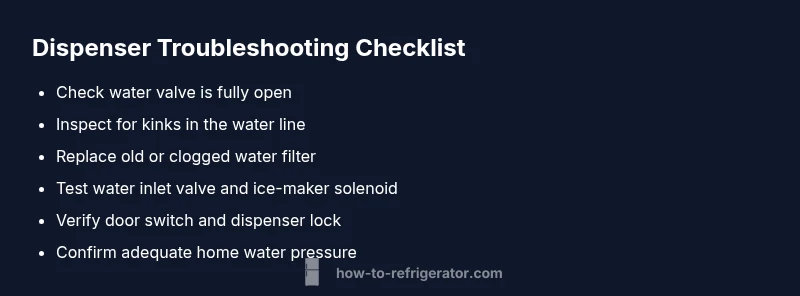
- Verify the water supply valve behind the fridge is fully open. A partially closed valve is a frequent culprit.
- Check the door switch: if the door switch is stuck or malfunctioning, the dispenser may be disabled. Manually press the switch to test.
- Inspect the water line for obvious kinks or bends that could restrict flow. If you see a knot or sharp bend, gently straighten it.
- If you have a water filter installed, confirm it’s not overdue or clogged. A clogged filter can limit both water and ice production.
- Ensure the ice maker is not in a paused or locked mode. Some models have a disable setting for the ice maker.
If these quick checks don’t restore function, proceed to the diagnostic flow and more in-depth fixes.
Why this happens: top causes you should know
Several factors can stop water and ice from flowing:
- Water supply valve is closed or not fully opened.
- Water line is kinked, pinched, or frozen inside the freezer compartment.
- Water filter is clogged or overdue for replacement.
- Faulty water inlet valve or ice-maker solenoid prevents water flow.
- Door or dispenser switches are malfunctioning or disabled, cutting power to the dispenser.
- Low home water pressure or a pressure regulator issue.
Each cause has a corresponding fix, ranging from a quick valve adjustment to replacing a faulty component. The best approach is to test progressively from easiest to more involved repairs.
Diagnostic flow: symptom → diagnosis → solutions
Use the following workflow to identify the root cause and apply targeted fixes. Start with the simplest checks and move to more technical tests only if needed. Always unplug the unit before opening access panels or handling electrical components.
- Symptom: No water or no ice
- Check: Valve position, line condition, filter age
- Diagnosis: If valve is open and line is clear but no flow, suspect inlet valve or dispenser switch
- Solution: Clean/replace as needed, then test flow
If flow returns briefly but stops again, re-check the line for hidden kinks, and verify the ice maker cycle completes without jams.
Step-by-step fixes for the most common cause
- Open the water shut-off valve fully and confirm water is reaching the fridge. If you can’t turn it by hand, contact a plumber.
- Inspect the water line for kinks or damage and straighten or replace as needed.
- Replace the water filter if it’s older than six months or appears discolored. Bypass only if you know your model allows it, otherwise install the correct replacement.
- Test the water inlet valve: unplug the fridge, access the valve, and check for click or voltage when the dispenser is activated. Replace if non-responsive.
- Check the ice maker: ensure the arm is not stuck in the down position; listen for the solenoid click when the ice maker attempts to fill. Replace the motor or solenoid if needed.
- Verify door switch operation: press the switch manually to confirm the dispenser enables. Replace the switch if it doesn’t engage properly.
- Confirm water pressure from the home supply is within spec. If pressure is low, contact your water supplier or a plumber to adjust.
Note: Work safely and follow your model’s service manual. If you’re uncomfortable, call a technician. Regular maintenance helps prevent future issues.
Safety notes and common mistakes to avoid
- Never attempt repairs with the fridge plugged in if you’re handling electrical components.
- Don’t abuse the water valve or force fittings—damaged lines can leak and cause water damage.
- Don’t ignore recalls or service notices from the manufacturer. If your ice maker repeatedly jams, a professional inspection may save you bigger headaches.
- Use the correct replacement parts for your model; incorrect parts can cause leaks or improper operation.
Prevention: keep it working smoothly
- Schedule regular filter changes and clean the water line’s inlet screen per manufacturer guidelines.
- Keep the back of the fridge clean and free from dust that can affect cooling efficiency and valve performance.
- Periodically test the dispenser and ice maker to catch issues before they become a failure.
- If you notice a drop in water pressure from the supply, address it early to prevent downstream problems.
When to call a professional (clear signs)
If you’ve completed the standard checks and the dispenser still won’t work, or you hear buzzing or hissing noises, it’s time to call a technician. Water damage, refrigerant issues, or ice-maker motor failures require professional tools and expertise. The How To Refrigerator team recommends scheduling a service visit for complex repairs, especially if cooling performance is affected.
Steps
Estimated time: 45-90 minutes
- 1
Check the water supply valve
Locate the valve behind the fridge or under the sink. Ensure it’s fully open and not corroded. If it’s stiff, try turning it slowly with a wrench or pliers, then test the dispenser.
Tip: If the valve was closed, a simple open-and-test can restore flow immediately. - 2
Inspect the water line for kinks
Trace the line from the wall or header to the fridge. Look for sharp bends or crushed segments. Straighten gentle curves; replace damaged sections.
Tip: Check near the back of the fridge where the line bends; a pinched section is a common culprit. - 3
Replace the water filter
Remove the old filter according to your model’s manual. Install the new filter, ensuring it clicks into place. Run a few cycles of water dispensing to flush air and debris.
Tip: Always use the correct filter type for your model. - 4
Test the water inlet valve
With the fridge unplugged, access the valve and test for voltage when the dispenser is activated. Replace if non-responsive or burnt. Reconnect and re-test.
Tip: Electrical work can be hazardous; if unsure, skip this step. - 5
Check the ice-maker mechanism
Inspect the arm or switch that starts the ice-making cycle. Ensure it’s not stuck and the mold cools. If the motor or solenoid is noisy or unresponsive, replacement may be needed.
Tip: Ice-maker failures are often due to a simple mechanical jam. - 6
Confirm dispenser and door switches
Press the dispenser lever and door switch to ensure power to the dispenser is active. Replace faulty switches to restore function.
Tip: Defective switches can silently disable the dispenser without obvious signs.
Diagnosis: Water dispenser not delivering water or ice
Possible Causes
- highWater supply valve is closed or not fully opened
- highKinked, pinched, or frozen water line
- mediumClogged or overdue water filter
- mediumFaulty water inlet valve or ice-maker solenoid
- lowDispenser/ice-maker switch disabled or door switch failed
- lowLow household water pressure
Fixes
- easyOpen the shut-off valve under the sink or behind the fridge
- easyInspect and straighten any kinks in the water line; replace if damaged
- easyReplace the water filter if overdue or clogged
- mediumTest and replace faulty inlet valve or ice-maker solenoid
- easyCheck and replace door switch or dispenser lock if needed
- mediumVerify home water pressure; contact a plumber if pressure is outside spec
FAQ
My fridge won’t dispense water, but ice maker works—what should I check first?
Check the water valve and line for kinks, then inspect the water filter. If water still won’t dispense, test the dispenser switch and inlet valve. Ice maker can operate independently, so a partial system fault is possible.
First check the water valve and line for kinks, then inspect the water filter. If that doesn’t fix it, test the dispenser switch and inlet valve.
Should I replace the water filter even if water comes out slowly?
Yes. A slow flow often points to a clogged filter. Replacing with the correct model typically resolves slow dispensing and helps prevent downstream issues.
Yes. A clogged filter is a common cause of slow flow; replacing it usually fixes the issue.
What if the water line is not frozen but still no water?
If the line isn’t frozen, the problem may be the inlet valve or a faulty solenoid. Check for voltage when the lever is pressed and replace components as needed.
If the line isn’t frozen, the inlet valve or solenoid is likely at fault. Check voltage and replace if necessary.
When should I call a professional for a dispenser issue?
If you’re uncomfortable with electrical tests, or if leaks, refrigerant concerns, or persistent valve failures occur, it’s safer to hire a technician.
If you’re unsure or see leaks or refrigerant concerns, call a professional.
Can a door switch affect both water and ice.
Yes. A failed door or dispenser switch can disable water and ice flow. Replacing the switch often restores both functions.
Yes. Door switch problems can disable both. Replacing it often fixes it.
Is low home water pressure something I can fix at home?
Low pressure is usually a home-water issue rather than the fridge. Contact your water supplier or a plumber to raise pressure and test again after adjustments.
Low water pressure usually requires a plumber or your water provider to resolve.
Watch Video
Top Takeaways
- Start with the simplest checks and valves.
- Replace filters that are overdue or clogged.
- If the ice maker or dispenser still fails, test the inlet valve and switches.
- Safety first: unplug before service and call a pro if needed.
- Regular maintenance reduces future failures.