How to Fix a Refrigerator with Water Dispenser: Step-by-Step Guide
Learn how to diagnose and repair a refrigerator with water dispenser that won’t dispense water. This practical guide covers water supply checks, filter replacement, line bleeding, valve inspection, and safe testing for homeowners.


Learn how to diagnose and fix a refrigerator with a water dispenser that isn’t delivering water. This guide covers checking the water supply, inspecting and replacing the water filter, bleeding air from the line, verifying the shut-off valve, and testing the dispenser mechanism. Follow the step-by-step actions to restore steady, clean water flow.
Why a refrigerator with water dispenser matters
According to How To Refrigerator, a dependable refrigerator with a water dispenser adds daily convenience and reduces reliance on single-use bottles. A well-functioning dispenser pairs a reliable filtration system with a chilled water line and an easy-to-use tap, delivering clean water on demand. When any part of this system falters, you lose convenience, and you may also waste resources by buying bottled water. Understanding the core components helps you diagnose simple issues quickly and safely. The advantages extend beyond taste and hydration: a reliable dispenser can contribute to healthier habits and a more sustainable kitchen. Regular maintenance—like changing filters on schedule and keeping the dispenser area clean—helps maximize longevity and water quality. This guide helps homeowners troubleshoot common problems without unnecessary trips to a service technician.
Common causes of a non-working dispenser
- Water supply is shut off or a valve is closed. This basic problem is surprisingly common and easy to fix.
- A kinked, frozen, or blocked water line restricts flow.
- A clogged or expired water filter reduces output and may affect taste.
- The dispenser solenoid or control switch malfunctions.
- Air trapped in the line after service requires priming to reestablish flow.
- Leaks or loose connections can drain the line and cause intermittent flow.
Checking the basics: water supply and shut-off valve
Start by locating the supply valve that feeds the refrigerator's water line. Ensure the valve is fully open and not obstructed by mineral buildup. If you have an ice-maker, verify that the corresponding shut-off valve is also open. A quick test is to press the faucet or the ice maker test button to see if water is reaching the dispenser. If there is no water, the issue likely lies upstream (supply, valve, or line) rather than in the dispenser itself. How To Refrigerator analysis shows that most issues arise from water supply problems rather than faulty components inside the fridge. Addressing the supply first saves time and effort.
Inspecting the water filter and dispenser line
Check the age and condition of the water filter. A clogged or exhausted filter can dramatically reduce flow or prevent dispensing entirely. Replace with the model specified by your refrigerator’s manufacturer. While you’re there, inspect the dispenser line for kinks, leaks, or frost buildup. A simple visual check can reveal a pinched line or frost that indicates a frozen segment of the line. Regular filter replacement and line inspection are critical for consistent performance.
Troubleshooting steps you can perform safely
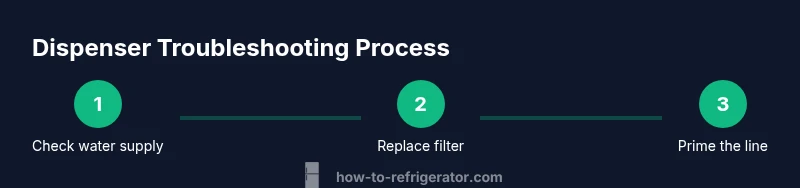
Before you begin, unplug the fridge if you plan to handle internal components or detach lines to avoid accidental shocks. Gather towels to catch spills and a bucket for any water waste. Step-by-step: 1) Verify water supply and valve status. 2) Replace the water filter if overdue. 3) Bleed air from the line by dispensing water after reconnecting. 4) Inspect and straighten any kinks in the supply line. 5) Test the dispenser solenoid and switch for proper operation. 6) If needed, reset the fridge by unplugging for 5 minutes and plugging it back in. 7) If water still won’t dispense, consider professional service. This approach minimizes waste and risk while identifying the root cause quickly.
When to call a professional and maintenance tips
If you identify a potential leak, persistent freezing, or an electrical concern with the dispenser mechanism, it’s wise to contact a professional. Don’t attempt to modify electrical components or the control board yourself. Regular maintenance—changing filters every 6–12 months, keeping the area around the dispenser clean, and testing the dispenser periodically—helps preserve performance. The How To Refrigerator team recommends keeping a service window warm for urgent issues and maintaining a simple maintenance routine to extend the life of your refrigerator with water dispenser.
Best practices and sources for ongoing reliability
Regular maintenance keeps your refrigerator with water dispenser operating smoothly. Always use manufacturer-approved replacement filters, verify water line integrity, and monitor for frost or leaks. For more detailed, authoritative guidance, consultEnergy.gov and EnergyStar resources on energy-efficient refrigerators, as well as reputable consumer guidance from major publications. This combination of care and knowledge helps ensure you enjoy clean, cold water from your dispenser for years. The How To Refrigerator team emphasizes prevention over reactive fixes and encourages homeowners to document service events for warranty purposes.
Tools & Materials
- Phillips screwdriver (Phillips #2)(Access panels and fasteners on the dispenser area)
- Flat-head screwdriver(If required by model screws)
- Adjustable wrench(For water line fittings)
- Pliers(Grip hoses and clamps)
- Towels or absorbent cloths(Mop up drips and spills)
- New water filter (model-specific)(Replace if overdue or clogged)
- Container or small bucket(Catch water when disconnecting lines)
- Multimeter (optional)(Check solenoid coil resistance)
- Gloves(Hand protection)
- Owner's manual / model-specific guide(For model-specific procedures)
- Isopropyl alcohol wipes(Clean connections)
Steps
Estimated time: 60-90 minutes
- 1
Check water supply and valve
Locate the fridge’s water supply line and ensure the shut-off valve is fully open. Test the line at the valve by turning it slowly and looking for leaks; you should feel or hear water flow when opened. If the supply is off, turn it on and re-test the dispenser after a minute. This step confirms the basics before deeper inspection.
Tip: If you have an ice-maker, confirm its dedicated valve is also open. - 2
Inspect and replace the water filter
Find the water filter cartridge, note its orientation, and remove it. If it’s clogged or difficult to remove, consult the owner's manual for the correct method. Install a new filter or one that’s compatible with your model, then run water through the dispenser to clear air.
Tip: Always use a replacement filter specified for your refrigerator model. - 3
Bleed air from the line
With the filter in place, dispense water for several seconds to force air out of the line. If nothing comes out, pause and recheck the valve and line. This helps restore normal flow after a filter change or line work.
Tip: Place a towel under the dispenser to catch drips during priming. - 4
Inspect the line for kinks or freezing
Visually inspect the water line behind the refrigerator for kinks, cracks, or frost. If the line is frozen, unplug or switch off the freezer temporarily and allow it to thaw. Once thawed, reinstall and test the dispenser again.
Tip: Avoid forcing bends; use curved tubing supports to prevent pinching. - 5
Test the dispenser solenoid and switch
Access the dispenser’s solenoid and switch per the manual. Check for proper operation with the door closed. If you can hear a click but no flow, the solenoid may be weak or the control board may be malfunctioning.
Tip: A multimeter can confirm coil resistance; refer to the service sheet. - 6
Reset the refrigerator
If dispenser behavior remains inconsistent, unplug the unit for about 5 minutes to reset the control system, then plug it back in and test the dispenser. This simple reset can clear minor controller glitches.
Tip: Do not unplug the unit during defrost cycles or when the water line is hot. - 7
Call a professional if issues persist
Electrical issues, persistent leaks, or unusual frost patterns require professional assessment. A trained technician can diagnose the control board, valve, compressor, and dispenser mechanism without risking safety.
Tip: Check warranty status before scheduling service.
FAQ
Why won't my refrigerator water dispenser dispense water?
Common causes include a shut-off valve, a kinked or frozen water line, an old or clogged filter, or a faulty dispenser solenoid. Start by checking the supply and filter, then inspect the line for obstructions.
Common causes are a shut-off valve, a kinked or frozen line, a clogged filter, or a bad dispenser solenoid. Start with the supply and filter, then inspect the line.
How often should I replace the water filter?
Most brands recommend replacing the water filter every 6 to 12 months, depending on usage and water quality. Check the indicator on your fridge, if available.
Most brands suggest replacing the water filter every 6 to 12 months, depending on usage.
Can a leaking water line cause a flood?
Yes. A leaking or cracked line can cause drips or floods. Shut off the water supply immediately and inspect the line. If you cannot pinpoint the leak, call a professional.
Yes, a leaking line can flood. Shut off water and call a pro if unsure.
Is it safe to replace the water filter myself?
Replacing a filter is generally safe when following the manufacturer’s instructions and disconnecting power if needed. Use the correct filter model for your fridge.
Replacing the filter is usually safe if you follow the instructions.
What if the dispenser is frozen?
If frost forms in the dispenser line, unplug the refrigerator or switch off the freezer to allow thawing before testing again. Do not use heat to thaw.
If the line is frozen, allow it to thaw and retest.
When should I call a professional?
If you detect persistent leaks, electrical issues, or a malfunctioning control board, professional repair is advised. They can safely diagnose and fix complex problems.
Call a professional for persistent leaks or electrical issues.
Watch Video
Top Takeaways
- Start with the water supply—this fixes most dispenser problems.
- Replace a clogged filter before deeper electrical checks.
- Bleed air from the line after any maintenance to restore flow.
- If in doubt, reset the fridge or call a pro for safety.