How to Fix a Refrigerator Water Line: Step-by-Step Guide
Learn how to diagnose, replace, and test your refrigerator water line with a clear, step-by-step approach. Safe, homeowner-friendly guidance from How To Refrigerator to fix leaks and prevent future issues.


By following this guide, you’ll fix a refrigerator water line and stop leaks safely. You’ll locate the line, shut off the water supply, inspect fittings and tubing, replace damaged sections, and test for leaks before restoring power and ice production. This homeowner-friendly process emphasizes using proper tools and slow, deliberate steps for reliable results.
Why the refrigerator water line matters
Understanding how to fix a refrigerator water line begins with the fact that the supply line feeds ice makers and fresh-water dispensers. A small leak or kink can cause damp cabinets, higher water bills, and mold risk. In most homes the line runs from a cold-water shutoff valve to the fridge’s water inlet, using a flexible braided stainless steel or plastic tube with compression fittings. If you notice moisture on the back panel, faster ice melt, or reduced water flow, start here. According to How To Refrigerator, recognizing the water line as a likely source saves time and reduces the risk of structural water damage. The repair mindset matters: prepare, measure, and proceed with controlled, safe steps. A well-maintained line prevents leaks and keeps your fridge performing as intended.
How the water line works in most refrigerators
Most modern refrigerators use a dedicated supply line that connects a home water shutoff valve to a valve inside the refrigerator, which controls water to the ice maker and dispenser. The line is typically a flexible hose with compression fittings on both ends. Water pressure must be steady, and fittings should not wiggle or crack under stress. When everything is healthy, you’ll hear a quiet murmur from the dispenser and see consistent output. If you notice dripping, a whistling sound, or inconsistent flow, the line and its connections are prime suspects. A thorough inspection should cover the length of the tube, the integrity of the fittings, and any signs of wear near the valve.
Symptoms of a faulty water line
Leaks around the connection, damp cabinetry, or pooling water on the floor are clear signs of a compromised water line. Tarnished or corroded fittings, a kinked tubing section, or a loose nut can all produce leaks. Ice quality may deteriorate if the line is blocked or starved for water, and you may notice unusual noises from the supply line as it strains against pressure. How To Refrigerator Analysis, 2026 shows that most water-line issues originate from loose connections or degraded fittings. If you observe erratic water flow or a sudden drop in ice production, pause other repairs and start with the line to prevent further damage.
Safety first: shutoffs and preparation
Before touching any plumbing, locate the home’s cold-water shutoff valve and the fridge’s inlet valve. Turn both valves off and drain any residual water from the line into a bucket. Avoid working with damp hands or standing water around electrical outlets or the fridge’s power cord. Keep the area clear of pets and children. Wear safety glasses if you anticipate splashing. A dry workspace reduces the risk of slipping and makes it easier to see leaks. These precautions protect you as you perform precise fittings and replacements.
Inspecting fittings and the supply line
With the water off, inspect every connection from the shutoff valve to the fridge inlet. Look for cracks, corrosion, or mineral buildup around compression nuts. Check for kinks, pinches, or crushed sections in the tubing. A damaged line should be replaced rather than repaired, as small defects can worsen after re‑connection. Use a flashlight to illuminate joints and feel for any loose wobble when you gently tug the hose. Keep a bucket handy to catch any residual water as you work.
Replacing a damaged line: choosing parts
Select a replacement line that matches your fridge model and the distance between the shutoff valve and the inlet. Flexible stainless steel or copper lines are common, but ensure the ends have the correct compression fittings and thread type. Measure the existing run carefully, allowing a small amount of slack for movement. When in doubt, choose a slightly longer line and trim during installation rather than forcing a too-short piece. Use a vendor-recommended part and avoid makeshift substitutes. This reduces the risk of leaks and future breakdowns.
Reconnecting and testing for leaks
Reinstall the new line by attaching compression nuts hand-tight first, then giving a light turn with a wrench—no overtightening. Reopen the shutoff valve slowly to fill the line. Check each connection for signs of moisture; if you see a leak, tighten gradually in small increments. Allow the line to pressurize for a few minutes, then run water through the dispenser to purge air and debris. Monitor for the next several minutes; even a tiny drip warrants reseating the fittings.
Maintenance and best practices
To prevent future leaks, regular inspections of the water line and fittings are key. Replace worn lines at the first sign of wear, and avoid sharp bends that can kink tubing. Use strain relief where the line runs near cabinet edges, and keep the area dry to deter mold growth. Label the shutoff valve for quick access during emergencies. With routine maintenance, you’ll extend the life of your water line and keep your refrigerator functioning smoothly.
Tools & Materials
- Flexible refrigerator water supply line (appropriate length)(5-6 ft is typical; ensure correct end fittings)
- Adjustable wrench(For compression nuts)
- Pliers(Grip fittings while tightening)
- Teflon tape (PTFE) or pipe joint compound(Use on threaded connections only)
- Bucket or shallow tray(Catch water during line removal)
- Soft cloths or towels(Dry surfaces and wipe spills)
- Scissors or utility knife(Trim line ends if needed)
- Razor or tubing cutter(Cleanly cut tubing if replacing segment)
Steps
Estimated time: 25-40 minutes
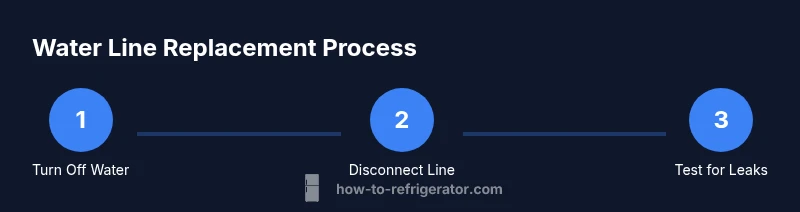
- 1
Turn off water supply
Locate the cold-water shutoff valve and the fridge inlet valve. Close both valves and drain residual water into a bucket to prevent spills during disassembly.
Tip: Use a flashlight to see tight spaces and avoid cross-threading fittings. - 2
Disconnect the old line
Loosen and remove the compression nuts at both ends. Gently pull the line away from the fittings, keeping the ends clean to avoid contaminating the inlet threads.
Tip: Keep the nuts in a safe place to reuse if the new line uses the same fittings. - 3
Inspect and assess
Check the old line for kinks, cracks, or wear. Examine fittings for corrosion or stripped threads. Decide whether to replace the entire line or just the damaged section.
Tip: If the line shows any leakage after a light squeeze, replace it fully rather than attempting a patch. - 4
Prepare the replacement
Unbox the new line and compare length and fittings with the old one. If needed, trim to the correct length with cutters, ensuring clean, square ends.
Tip: Apply a small amount of plumber’s tape to male threads only; avoid tape on the interior of the hose. - 5
Reconnect the line
Attach the compression nuts by hand, then snug with a wrench. Ensure the line sits without kinks and the ends align squarely with fittings.
Tip: Do not overtighten; over-torque can crack fittings and cause leaks. - 6
Restore water and test
Slowly open the shutoff valve to pressurize the line. Look for leaks at both ends, wipe away any moisture, and run water through the dispenser for several minutes to flush air.
Tip: If you see a drip, tighten in small increments and re-check. - 7
Final verification
Continue to monitor for leaks over the next 24 hours. If a persistent leak occurs, call a professional.
Tip: Keep the replacement part and receipt in case of warranty claims.
FAQ
Why is my refrigerator water line leaking?
Leaks usually come from loose connections, worn fittings, or a damaged line. Inspect the ends and compression nuts first, then replace if you see any cracks or deformation.
Leaks are usually from loose connections or a damaged line. Check fittings, then replace if you see wear.
Can I fix the water line myself or should I hire a pro?
Small leaks and line replacements are common DIY tasks for homeowners with basic tools. If you encounter persistent leaks, complex valve issues, or uncertain fittings, call a professional.
DIY is fine for simple fixes, but call a pro if leaks persist or fittings are unclear.
What tools do I need to replace a refrigerator water line?
You’ll typically need a flexible replacement line, an adjustable wrench, Teflon tape, a bucket, and towels. Have scissors or a tubing cutter for trimming ends if necessary.
Have a replacement line, wrench, tape, bucket, towels, and trimming tools.
How do I test after replacing the water line?
Slowly reopen the shutoff valve, observe for leaks at both ends, and run water through the dispenser for several minutes to purge air and check again.
Open the valve slowly, check for leaks, then run water for a few minutes to flush air.
How often should I replace refrigerator water lines?
There is no fixed interval. Inspect annually and replace any line showing wear, cracks, or persistent leaks.
Inspect yearly and replace worn lines or any that leak.
Is it safe to use household pliers on plastic fittings?
Use hand-tightening and a wrench only on metal compression nuts. Avoid overtightening plastic fittings, which can crack.
Only use hands or metal fittings with care; avoid overtightening plastic parts.
Watch Video
Top Takeaways
- Identify the water line as the source of leaks first.
- Replace damaged tubing with the correct length and fittings.
- Tighten connections carefully and test for leaks before use.
- Perform regular line maintenance to prevent future failures.
- Use proper safety practices and have a plan if a leak persists.