How to Clean Refrigerator Water Line: A Practical Guide
Learn how to clean your refrigerator water line safely, remove mineral buildup, prevent leaks, and keep ice and water tasting fresh with a simple, actionable process.


You’ll learn a safe, step-by-step method to clean a refrigerator water line, including how to shut off power and water, disconnect the line, flush with a safe cleaning solution, and verify there are no leaks after reassembly. This approach minimizes clogs, preserves water quality, and protects fittings.
What is a refrigerator water line and why clean it?
The refrigerator water line is a narrow tube that carries cold water to the ice maker or water dispenser. Over time, mineral deposits, sediment, and biofilm can accumulate inside the line, narrowing the passage and affecting flow. While the health risk from a clean, well-maintained line is low, buildup can alter taste, reduce water flow, and trap microorganisms in the line. According to How To Refrigerator, regular maintenance is the simplest way to prevent leaks and ensure the dispenser works reliably. A routine cleaning also helps you spot issues early, such as a loose connection or a kinked supply tube, before they become costly repairs. In this guide we’ll cover safe, practical steps you can complete with common household tools, without special training. You’ll learn how to recognize signs of a clogged line, what cleaning agents are safe for drinking-water lines, and how to reassemble fittings so the system remains leak-free. The goal is to keep your fridge’s water system clean, comfortable to use, and free from unwanted odors or tastes, protecting your family’s water quality.
Causes of buildup in the water line and how it affects performance
Buildup in the water line tends to occur from mineral deposits (especially in hard water areas), sediment from the supply line, and occasional biofilm growth in warmer environments or where lines are rarely used. Algae or rust can contribute to discoloration, and fittings may wear over time, increasing the chance of leaks. When minerals accumulate, water flow slows, ice may come out cloudy, and the dispenser can deliver a weaker stream. Taste and odor issues are common indicators that the line needs attention. How To Refrigerator analysis shows that preventive cleaning, not just reactive fixes, keeps your dispenser reliable. If you notice longer than normal dispenses, a slow drip after dispensing, or unusual tastes, it’s a good signal to inspect and clean the line.
Safety first: preparing your workspace and tools
Before you start, unplug the refrigerator or switch off its circuit, and shut off the cold-water supply valve to prevent drips and accidental sprays. Place towels or a small basin under the connection to catch spills. Clear the area around the fridge, and have a bucket, soft cloths, and a few rags handy. Use protective gloves and safety glasses to guard against splashes. These precautions reduce slip hazards and protect you from unexpected leaks. Remember, improper disassembly can damage fittings, so proceed with care. According to How To Refrigerator, taking these safety steps reduces the chances of electric shock, water damage, or fixture damage during cleaning.
The cleaning approach: what to use and what to avoid
For most homes, a mild cleaning solution is all that’s needed. A vinegar-water solution (1 part distilled white vinegar to 3 parts water) works well for mineral buildup and odor control. Alternatively, a mild dish soap dissolved in warm water can be effective for grime on fittings. Avoid harsh solvents, chlorine bleach, or ammonia directly in contact with drinking-water components, and never mix cleaners with bleach. After cleaning, flush the line with clean water to remove any residual cleaner. If you have access panels or fittings, inspect for corrosion or wear and replace parts as needed. Always rinse thoroughly and dry connectors before reassembly. This approach keeps the line safe for drinking water and preserves the integrity of plastic or metal fittings.
Step-by-step overview: plan and flow
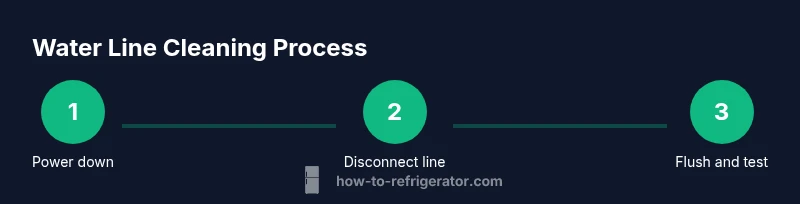
The cleaning process follows a simple flow: (1) safely shut down power and water, (2) disconnect the line at the fridge and prepare to catch drips, (3) apply a mild cleaner to the line and fittings, (4) flush with clean water to remove cleaner residues, (5) reattach the line and restore water supply, (6) run water through the dispenser to purge any cleaner, and (7) check for leaks and tidy the area. This sequence minimizes disruption while maximizing safety and effectiveness. How To Refrigerator emphasizes taking your time during reconnects to ensure fittings seal properly and prevent future leaks.
Post-cleaning checks and maintenance routine
After reassembly, turn the water supply back on slowly and run several cycles of water through the dispenser to purge air and verify a steady flow. Observe all connections for dampness for the next 24 hours. If you notice leaks, tighten fittings gently and reseal with appropriate pipe tape if needed. Consider replacing any aged fittings or the water filter if your fridge has one, as a clogged filter can contribute to reduced flow. Establish a simple maintenance cadence—check fittings and run a quick cleaning every 12–24 months or when you notice taste changes or reduced flow. This routine helps prevent mineral buildup and keeps your ice and water tasting clean. How To Refrigerator’s team recommends documenting each maintenance day to track wear and plan replacements ahead of time.
Authority sources and further learning
- https://www.cdc.gov
- https://www.energystar.gov
- https://www.epa.gov/watersense
Common mistakes and troubleshooting tips
- Avoid using bleach or ammonia directly in the water line; this can create hazardous mixtures and contaminate drinking water.
- Do not force connections or over-tighten fittings; this can crack plastic lines or strip threads.
- If the line remains clogged after cleaning, the problem may be a kinked tube, a blocked filter, or corroded fittings requiring professional help.
- Always verify the supply valve is fully open and that the line has refilled before testing the dispenser.
Tools & Materials
- Adjustable wrench(Useful for loosening or tightening compression fittings on the water line.)
- Screwdrivers (Phillips and flat-head)(For removing any panel screws securing the access to fittings.)
- Bucket or basin(To catch drips and spilled cleaning solution.)
- Towels or rags(Aborb spills and protect the floor.)
- Safety gloves(Protect hands from cleaners and sharp edges.)
- Safety glasses(Shield eyes from splashes during disassembly and cleaning.)
- Mild dish soap(For a gentle cleaning solution if vinegar isn’t used.)
- Distilled white vinegar(For mineral buildup and odor control in a safe cleaning solution (dilute with water).)
- Clean container for collecting wastewater(Keeps the work area tidy and contained.)
- Lint-free cloth(For drying fittings and wiping surfaces.)
- Replacement water filter (if your model uses one)(Use if the filter is old or clogged.)
Steps
Estimated time: 45-60 minutes
- 1
Power down and shut off the water
Unplug the fridge or switch off its circuit at the breaker. Then close the cold-water shutoff valve to stop incoming water. This prevents electric shock and accidental leaks while you work.
Tip: Double-check that the fridge is completely off and the valve is fully closed before touching any fittings. - 2
Disconnect the water line
Place a bucket under the connection and carefully disconnect the line from the fridge end. Have towels ready to catch any remaining water. This creates a clean workspace for cleaning the line and fittings.
Tip: Keep the hoses supported to avoid kinking when you move them. - 3
Prepare your cleaning solution
Mix a mild cleaning solution: 1 part distilled white vinegar to 3 parts water, or use a mild dish soap solution for grime. Do not mix cleaners with bleach. Pour the cleaner into a small cup for easy dipping.
Tip: Label your cup or set it aside to avoid accidental mixing with other cleaners. - 4
Clean the line and fittings
Dip the brush or cloth into the solution and scrub the exposed line, fittings, and the couplings. Wipe away buildup and wipe dry. Let any stubborn deposits soak for 2–3 minutes, then rinse with clean water.
Tip: Use a gentle brush to avoid scratching plastic tubing. - 5
Flush the line
Reconnect the line to the fridge end temporarily and run clean water through the dispenser or ice maker for 1–2 minutes to flush out cleaner residues. Then disconnect again to dry if needed before final reassembly.
Tip: Running water through the line helps purge cleaner residues and air. - 6
Reattach and restore water supply
Reconnect the line to the fridge end, tighten fittings securely by hand then a quarter-turn with a wrench. Slowly reopen the shutoff valve and listen for leaks as water starts to flow.
Tip: Start with a slow valve opening to avoid a sudden surge that could loosen fittings. - 7
Test for leaks and finish
Observe all connections for the next 15–30 minutes. If any dampness appears, tighten fittings slightly and recheck. Run a few dispensing cycles to ensure steady flow and clean taste.
Tip: If leaks persist, replace worn fittings or call a professional.
FAQ
Is it safe to clean a refrigerator water line with vinegar?
Yes, a mild vinegar solution is commonly used for mineral buildup and odors. Do not mix with bleach, and rinse thoroughly after cleaning.
Yes. A mild vinegar solution is commonly used for mineral buildup and odors. Just don’t mix it with bleach and be sure to rinse well after cleaning.
How often should I clean the refrigerator water line?
Most households benefit from cleaning every 12 to 24 months, or sooner if you notice slow water flow, odd tastes, or discolored water.
Usually every year to two years, or sooner if you notice slow flow or unusual taste.
What are signs the water line needs cleaning?
Low water flow, unusual taste or odor, discolored water, or frequent ice maker clogs are common indicators.
Look for slow water, odd taste, or discolored water as signs to clean.
Can a clogged water line cause not dispensing water?
Yes. A clogged line can reduce or stop water flow to the dispenser or ice maker.
Yes, a clog can stop water from coming out of the dispenser or ice maker.
Do I need to hire a professional for this task?
Most homeowners can perform this task safely with basic tools. If you encounter persistent leaks or corroded fittings, call a professional.
Usually DIY is fine, but if leaks persist or fittings are corroded, get a professional.
Watch Video
Top Takeaways
- Disconnect power and water before starting
- Use a mild cleaning solution and flush thoroughly
- Check all fittings for leaks after reassembly
- Schedule regular line maintenance to prevent buildup