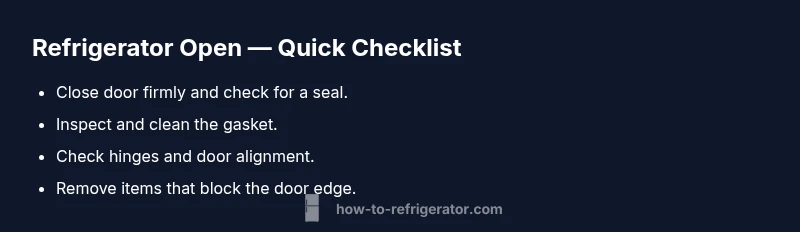
Refrigerator Open: Urgent Troubleshooting Guide
Urgent, practical steps to diagnose and fix a refrigerator door that won't stay closed. Quick checks, fixes, safety tips, and when to call a pro.


Most likely, the issue is a poorly sealed door or misaligned hinges. Start with simple fixes: push the door fully closed, clean the gasket, and remove any items blocking it. If the door still opens, inspect hinges and door leveling. If this doesn't resolve it, contact a professional.
Understanding Why a Refrigerator Open Issue Happens
If your refrigerator open door is causing spoiled groceries and wasted energy, you’re not alone. According to How To Refrigerator, most open-door problems stem from a door that doesn't latch fully, a damaged gasket, or interference from stored items. The fridge relies on a tight seal to keep cold air in and warm air out; even a small gap lets the compressor run longer and use more power. In practice, you’ll notice the interior light staying on when the door is ajar, higher energy bills, and uneven cooling on shelves. Before diving into complex repairs, start with the simplest checks, stay safe, and document what you find. This section breaks down the most common scenarios homeowners encounter and explains how to pinpoint the culprit without professional help.
Quick Checks You Can Do Right Now
These checks require no special tools and can be done in minutes. First, ensure the door is closed firmly—give it a firm nudge and listen for a decisive seal, not a soft click. Next, inspect the gasket around the door; wipe away crumbs, sticky spills, and debris that can prevent sealing. Look for cracks, tears, or sections that appear bent or stretched. Remove items that protrude into the door frame, especially tall bottles near the edge. If the door still seems to sit ajar after these steps, verify that the refrigerator is level from front to back and side to side; a tilted unit can prevent the door from meeting the gasket evenly. Finally, test the interior light switch or door switch (if accessible) to confirm it turns off when the door is closed; a stuck switch can mimic an open-door condition and keep the light on.
Common Causes of a Fridge Door Not Sealing
There are several frequent culprits behind a door that won’t stay shut. A worn, torn, or dirty gasket is the most common cause; grime can prevent a tight seal, and cracks reduce sealing pressure. A misaligned or loose hinge can tilt the door away from the gasket and leave a gap. Overstuffing shelves near the door can push the door slightly out of alignment. Temperature settings that are too high or a fluctuating compressor can cause the door to seem not to seal as cold air bleeds out. Finally, a door switch that sticks in the on position can cause the interior light to remain on and fool you into thinking the door is open when it’s simply stalled.
How Door Seals and Gaskets Work
The door gasket is a flexible seal that compresses against the frame to form an airtight barrier when the door is shut. Magnets along the door edge help keep the door closed once contact is made. When either the gasket is torn, dirty, or the door cannot align correctly because of sagging hinges or an uneven floor, the seal breaks. A damaged seal allows cold air to escape, causing the fridge to work harder, wasting energy, and possibly causing frost near the defrost drain. Understanding this mechanism helps you diagnose issues without guessing, and guides you toward safe, practical fixes.
How to Inspect and Fix Common Problems
Start with the simplest fixes and work toward more involved repairs:
- Clean the gasket with warm soapy water to restore suction and remove debris.
- Inspect the gasket for cracks or tears; if damaged, replace it following manufacturer instructions.
- Check door alignment by looking for a uniform gap at the top and bottom; adjust hinges if needed.
- Ensure shelves do not block the door edge; rearrange items to avoid pressure on the seal.
- Examine the door latch or magnetic seals and replace any broken magnets.
- If the door still opens, reseat the door by removing heavy items, rechecking alignment, and re-tightening screws on the hinges.
- Finally, confirm the door switch isn’t stuck and turns off the interior light when closed. If you’re uncomfortable with any replacement, contact a professional for guidance or service.
Preventive Maintenance to Avoid a Refrigerator Open
Prevention is better than emergency fixes. Schedule monthly checks to wipe the gasket and seals, inspecting for cracks or deformation. Keep the frame clean and level: use a spirit level on the front edge and adjust feet as needed. Periodically inspect the hinges for looseness and tighten screws if you’re comfortable with basic tools. Avoid overstuffing the fridge; leave some space around the door to ensure a full seal. Replace missing magnets or worn door seals promptly to maintain energy efficiency. Finally, keep the interior light off when the door is closed to minimize energy waste and reduce heat near the seal. Regular maintenance reduces the chances of a refrigerator open condition reoccurring.
Steps
Estimated time: 30-60 minutes
- 1
Close the door firmly and observe the seal
Gently push the door until you hear the seal compress fully. If the door feels loose or slides back, note the location of gaps and proceed to inspect the gasket and hinges. This step helps you determine whether the issue is quick and fixable or indicates a deeper alignment problem.
Tip: A solid, complete seal often means a minor adjustment is enough. - 2
Inspect the door gasket for damage
Look for cracks, tears, or deformations in the gasket along the entire perimeter. If you find obvious damage, prepare to replace the gasket with an identical model from the manufacturer or a compatible aftermarket part.
Tip: Purely cosmetic scuffs won’t seal like a torn edge will. - 3
Clean the gasket and contact surfaces
Wipe the gasket and the door frame with warm, soapy water to remove grime that can prevent sealing. Dry thoroughly before retesting the seal.
Tip: Avoid abrasive cleaners that could wear away the gasket material. - 4
Check door alignment and adjust hinges
Look for even gaps at the top and bottom of the door. If the door sits crooked, loosen hinge screws, adjust alignment, and retighten. Recheck after closing.
Tip: Small adjustments can make a big difference in seal quality. - 5
Remove items near the door edge
Rearrange shelves and remove tall items that push the door edge inward. Ensure nothing blocks the gasket’s path as the door closes.
Tip: Keep free space near the door to avoid interference. - 6
Test the door latch and magnets
Inspect any door-mounted magnets or latching mechanism for wear or misalignment. Replace damaged magnets per your model’s instructions.
Tip: A damaged magnet can prevent a full seal even if the door looks closed. - 7
Check the door switch and interior light
With the door closed, verify the interior light turns off. A stuck switch can make it seem like the door is open.
Tip: Power off before examining electrical components. - 8
Call a professional for stubborn issues
If the door still opens after all checks, a professional can assess gasket integrity, hinge alignment, and the frame for bending. They can preserve warranty and perform precise repairs.
Tip: Document model, age, and symptoms for the technician.
Diagnosis: Refrigerator door remains open or appears ajar after closing
Possible Causes
- highDoor not fully closed due to obstructions
- highWorn or dirty door gasket
- mediumHinges misaligned or loose
- lowDoor switch or light sensor stuck
Fixes
- easyRemove obstructions and ensure door is fully closed; reseat shelves if needed
- easyClean or replace the gasket to restore a tight seal
- mediumRealign hinges and confirm door is level; tighten screws
- easyCheck door switch/light sensor; replace if stuck or faulty
FAQ
Why does my refrigerator open even when I close the door?
Common causes are a worn or dirty gasket, a misaligned hinge, or items blocking the door. Inspect these areas first before considering replacement parts.
Common causes are a worn gasket, misaligned hinges, or items blocking the door. Check those areas first.
Can I fix a damaged door gasket myself?
Yes, if the gasket shows minor wear or dirt. Clean or replace it following manufacturer instructions. Unplug the fridge before any gasket replacement.
Yes, you can replace a worn gasket yourself after unplugging the fridge.
How do I know if the hinges are misaligned?
Look for an uneven gap at the top or bottom and a door that slants. If alignment is off, realign or tighten hinge screws carefully.
Look for an uneven gap and a crooked door; realign hinges if needed.
Is it dangerous to DIY fix a refrigerator door?
DIY fixes are generally safe for minor tasks like gasket cleaning, re-seating the door, or tightening screws. Unplug the unit before working on electrical components or refrigerant-related parts.
DIY tasks like cleaning or tightening are usually safe if unplugged; avoid refrigerant work.
When should I replace the door seal entirely?
Replace the door seal if there are tears, large gaps, or the seal no longer makes contact with the frame. If in doubt, a professional can confirm necessary replacement.
Replace the seal if there are tears or gaps; a pro can confirm.
Watch Video
Top Takeaways
- Check the door is fully closed and the gasket is intact.
- Clean and inspect gaskets regularly to prevent leaks.
- Align hinges and ensure the fridge sits level.
- Call a pro if the issue persists after simple fixes.