If Refrigerator Door Left Open: A Practical Troubleshooting Guide
Learn how to respond when the refrigerator door is left open, minimize energy waste, protect food safety, and prevent recurrence with a practical, step-by-step plan from How To Refrigerator.


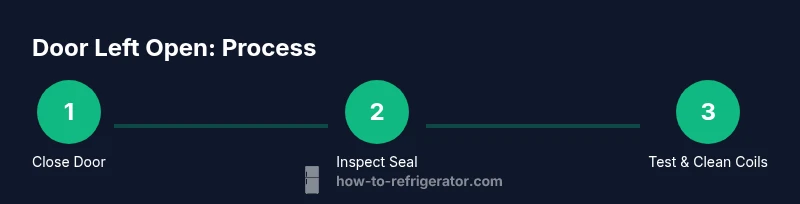
Closing the door promptly halts energy waste and uneven cooling. To recover, check the door seal for cracks, inspect gaskets, and clean coils; then reset temperatures to recommended ranges and monitor for frost or condensation. If the door was left ajar for an extended period, run a quick diagnostic and reseat shelves before resuming normal use.
Why leaving the door open matters
When the refrigerator door is left open, warm room air rushes in. That disrupts the appliance's cooling cycle, forces the compressor to run longer, and can elevate energy use. According to How To Refrigerator, even short stretches with the door ajar can affect food safety and overall efficiency. You may notice increased frost buildup, faster moisture condensation, and foods that don’t stay as cool as they should. The impact isn’t limited to energy bills; prolonged exposure to non-ideal temperatures can hasten spoilage of dairy, produce, and leftovers. Recognizing the signs early helps you act quickly and prevent a broader issue.
Related terms to understand: door seals, gasket integrity, condenser coils, and airflow pathways. Each of these plays a role when the door is left open and can influence how fast conditions return to normal.
Immediate actions when you discover the door was left open
If you catch the issue soon after it happens, close the door firmly and wait a few minutes to observe whether the interior cools back to the normal level. While it warms back up, avoid opening the door unnecessarily; repeated openings can extend the recovery time. Check that nothing blocks the door from sealing and remove any food items that might be wedged against the gasket. This is also a good moment to inspect the door gasket for obvious wear or deformation. If you notice tears or a loose fit, plan a gasket replacement as soon as possible. In the meantime, keep the fridge organized so cold air circulates efficiently when you resume normal use.
Tip: If you feel resistance when closing the door, stop and inspect the seal closely; a warped hinge or misaligned door can prevent an airtight seal.
Diagnosing common causes: seals, hinges, and airflow
A worn or dirty door seal is one of the most common culprits when the fridge doesn’t seal properly after an open-door event. Examine the gasket for cracks, brittleness, or sections that don’t align with the door frame. Dirt and residue on the seal can also impede a proper seal; wipe it clean with a damp microfiber cloth and a mild cleaner. Next, check hinges for looseness or misalignment; a sagging door may not close fully, especially on larger units. If the door hits the frame or shelves, adjust the hinge screws or shims if your model allows. Finally, ensure the condenser coils are clean and the airflow vents aren’t blocked by tall items. Poor airflow means the compressor runs more, increasing wear and energy use.
How To Refrigerator note: Regular checks of seals, hinges, and coils help avert problems and maintain efficiency when the door is opened and closed day-to-day.
Prevention is better than cure: maintenance habits to stop this from happening again
Create a simple maintenance routine to catch seal wear and alignment issues early. Clean the door gaskets every few months, and perform a quick “paper test” to confirm sealing integrity: close a sheet of paper in the door; if you can pull it out without resistance, the seal is compromised. Vacuum or brush the condenser coils at least twice a year, especially if you live in a dusty environment. Keep the interior organized to improve airflow and reduce the need for the compressor to work overtime. Consider placing a reminder near the fridge to perform a quick seal check during weekly chores. By integrating these habits, you’ll minimize energy waste and keep foods safe more consistently.
Note: For older models, seals may deteriorate faster; replacement parts are often affordable and worth the investment for reliability and efficiency.
When to call a professional vs. DIY-safe checks
Many issues can be resolved with DIY steps, such as cleaning seals and realigning a loose door. However, if the door will not seal even after cleaning, if you hear unusual noises from the compressor, or if the interior temperature remains unstable despite your best efforts, it’s time to contact a professional technician. Handling refrigerants or opening sealed components without training can be dangerous and is not recommended. A pro can inspect for refrigerant leaks, test defrost systems, and verify electrical connections. In most cases, marginal seal wear can be addressed with a gasket replacement, but persistent cooling problems merit expert attention.
Tools & Materials
- Soft brush or coil cleaning brush(for dust on condenser coils (unplug fridge before cleaning))
- Vacuum with brush attachment(to safely remove dust from coils and vent grills)
- Microfiber cloths(for wiping seals and surfaces)
- Mild soap or non-abrasive cleaner(for external surfaces and door gaskets)
- Flashlight(to inspect behind shelves and in hard-to-see areas)
Steps
Estimated time: 60-90 minutes
- 1
Close the door firmly and check the seal
Gently push the door closed until you hear the latch engage. Make sure the seal sits evenly all the way around the frame. If you detect any gaps or resistance, examine the gasket for tears or warping.
Tip: If you feel resistance, inspect the hinge area for misalignment before forcing the door closed. - 2
Clear the door path and organize shelves
Remove items that are blocking full closure (bulky or tall items near the door can prevent a tight seal). After clearing, re-close the door and confirm it seals evenly around the perimeter.
Tip: Keep items away from the door edge to prevent future interference. - 3
Inspect and clean the gasket and hinges
Wipe the gasket with a damp microfiber cloth; remove any stuck residue. Check hinges for looseness and tighten screws if safe to do so. A clean, aligned gasket helps seal better.
Tip: Avoid harsh chemicals on gaskets; use mild cleaner and dry thoroughly. - 4
Clean condenser coils and back panel if accessible
Unplug the fridge, then gently vacuum or brush the coils to remove dust buildup. A clean coil improves efficiency and reduces compressor strain after the door has been left open.
Tip: Do not use water directly on electrical components; let everything dry before replugging. - 5
Check temperature settings and airflow
Ensure the interior is cooling within the recommended range and that airflow paths aren’t blocked by items on shelves. If temperatures seem off, adjust the thermostat slowly and monitor for stabilization.
Tip: Avoid drastic temperature changes; small adjustments plus time help stabilize readings. - 6
Test and monitor for the next 24-48 hours
After completing the steps, observe the door’s sealing behavior and interior temperature. If issues recur, consider scheduling a professional inspection.
Tip: Keep a quick log of door-open events to identify patterns and address root causes.
FAQ
Why does leaving the refrigerator door open waste energy and affect cooling?
An open door allows warm room air to enter, forcing the compressor to run longer and harder to maintain safe temperatures. This increases energy use and can compromise cooling consistency.
Leaving the door open makes the fridge work overtime, wasting energy and risking uneven cooling.
How can I tell if the door seal is worn or damaged?
Inspect the gasket for cracks, tears, or stiff areas that don’t seal evenly around the door. A simple test is to close the door on a dollar bill or paper; if you can pull it out easily, the seal may be compromised.
Check for visible damage and test with a piece of paper to see if the seal grips properly.
Should I unplug the fridge to clean the coils?
Yes. Always unplug the refrigerator before cleaning coils or accessing electrical components to avoid electric shock.
Unplug the fridge first, then clean the coils with a brush or vacuum.
When should I call a professional for a door-seal issue?
If the door still won’t seal after cleaning or you hear unusual noises from the compressor, it’s time to schedule a professional inspection.
If the seal problems persist after DIY fixes, get a pro to check the system.
Can leaving the door open affect food safety?
Yes. Warmer interior temperatures can hasten spoilage and increase the growth of bacteria on perishable foods.
Leaving the door open can make food unsafe faster; check temps and discard spoiled items if in doubt.
Watch Video
Top Takeaways
- Close the door firmly to stop energy waste
- Inspect and clean door seals regularly
- Clean condenser coils to restore efficiency
- Check temperature settings and door alignment
- If problems persist, call a pro