Refrigerator 5-Door Troubleshooting and Maintenance
Practical steps to diagnose and fix common issues on a refrigerator 5-door, including door seals, temperature checks, defrost-drain maintenance, and energy-saving tips. Learn from How To Refrigerator with clear, actionable guidance.


With a refrigerator 5 door, you will learn to optimize storage and troubleshoot common issues. This guide covers door-seal checks, temperature calibration, defrost-drain clearing, condenser coil cleaning, and energy-efficient usage. Before starting, identify your model's door configuration and have basic tools ready. Follow the steps to diagnose problems and improve performance.
Understanding a 5-Door Refrigerator: Layout and Common Uses
According to How To Refrigerator, a refrigerator 5 door configuration typically uses three doors for the fresh-food compartment and two for the freezer or specialty storage. This layout provides dedicated zones for produce, dairy, beverages, and frozen items, while maximizing organization. The trade-off is more door interfaces and gaskets to inspect, which means a systematic maintenance routine pays off. By understanding the door plan and how you usually store items, you can tailor cooling zones to minimize energy use while keeping items at their best. When you first inspect a 5-door model, note which doors control which compartments and where the evaporator coils and fans live. This knowledge makes future diagnostics faster and safer.
How 5-Door Configurations Impact Efficiency and Storage
A 5-door fridge often splits the cooling duties across multiple zones, allowing precise temperature control in each area. That can improve humidity management for produce while protecting meats or dairy. However, because there are more gaskets and door openings, air leakage can rise if seals wear or if doors aren’t closed fully. Energy efficiency depends on proper door seals, consistent interior temperatures, and clean condenser coils. Users who assign specific shelves for different food groups tend to see longer shelf life and less food waste, especially in households with varied diets and large freezes. The How To Refrigerator team emphasizes designing daily routines around your door layout to maintain even cooling across all sections.
Key Maintenance Tasks for a 5-Door Refrigerator
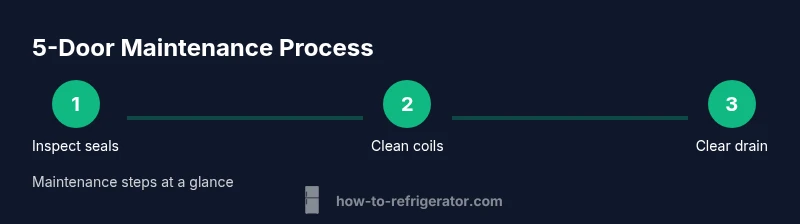
Maintenance for a 5-door model focuses on keeping components clean and aligned. Regularly inspect door gaskets for cracks or compression, dust the condenser coils, and ensure the interior temperature settings align with manufacturer recommendations. Defrost-drain cleanup is crucial in frost-prone models to prevent water backup. Clean, dry surfaces reduce mold risk and help sensors read accurate temperatures. Create a simple weekly checklist that includes a quick door seal inspection, a coil brush pass, and a quick interior wipe-down with a mild detergent. Small, consistent efforts prevent big performance drops.
Diagnosing Common Issues in 5-Door Models
If sections in your refrigerator 5 door aren’t cooling evenly, start with door seals, airflow vents, and the thermostat. Frost buildup around the evaporator or freezer ducts often signals a defrost system issue or a clogged drain. Listen for fan operation when doors are opened and check that vents aren’t blocked by tall items. If ice forms in the freezer while the fridge section stays warm, your defrost timer or heater may be failing. For noisy operation, inspect the condenser fan and compressor mounts for looseness. When symptoms persist after basic checks, consult the manufacturer’s manual and schedule service if needed.
Step-By-Step Troubleshooting Workflow
This section provides a practical workflow you can follow without specialized tools. Start by confirming power and basic settings, then methodically test insulation and seals, then address airflow and drainage. If you encounter a persistent cooling issue, perform a controlled defrost test and monitor temperatures after restoration. Document any changes and the exact door configuration. Always work in a well-lit, dry area and unplug the appliance before opening internal panels to avoid shocks or refrigerant contact.
When to Call a Professional and What to Expect
Some 5-door models require professional service for compressor, sealed system, or electronic control repairs. If you notice persistent warm zones, refrigerant odors, or unusual noises after basic maintenance, contact a licensed technician. Expect a diagnostic visit to include model verification, measurements of temperatures across zones, and confirmation of defrost function. The technician may perform component tests such as the compressor, condenser, evaporator, fans, and sensors, and will provide a repair plan with estimated costs.
Long-Term Care: Extending Life of Your 5-Door Unit
Proactive maintenance reduces major failures and keeps energy use low. Schedule seasonal coil cleaning, check door seals quarterly, and ensure the appliance sits level on a stable surface. Rearrange items to avoid overstuffing doors, which can strain seals and impede airflow. Replace worn seals promptly and keep the interior dry to deter mold. Regular filter checks (if your model uses internal air filters) help maintain air quality and cooling efficiency. A routine care cadence saves time and money over the life of a refrigerator 5 door.
Safety Precautions and Best Practices
Always unplug the appliance before inspecting internal components. Use insulated gloves when handling sharp edges inside the cabinet, and avoid resting hands near the compressor or electrical connections. Do not bypass safety features or override temperature controls. When cleaning, use mild detergents and avoid harsh chemicals that could damage gaskets or plastic liners. Keep kids and pets away from the work area, and store any loose parts securely to prevent tripping hazards.
Tools & Materials
- Phillips head screwdriver(Size #2 is common for appliance panels)
- Flathead screwdriver(For prying light panels careful watch on plastics)
- Multimeter(For basic electrical checks on components)
- Coil cleaning brush or small vacuum(Use on condenser coils exterior surface)
- Soft cloths and mild detergent(Interior and exterior cleaning; avoid abrasive cleaners)
- Bucket and towels(Mop up any condensation or defrost water)
- Gloves(Protect hands from sharp edges and cold surfaces)
- Replacement door gasket (if needed)(Choose exact model fit to avoid leaks)
Steps
Estimated time: 60-90 minutes
- 1
Identify door configuration and model
Locate the model number (usually inside the door frame or on the compressor cover) and map which doors control which compartments. This helps target issues accurately and informs which seals to inspect first.
Tip: Take a photo of the label and door layout for quick reference. - 2
Check setpoints and confirm zones
Verify that the refrigerator and freezer temps align with the manufacturer’s recommendations in the manual. Erratic temperatures point to airflow or sensor problems.
Tip: Use a calibrated thermometer in each zone to cross-check readings. - 3
Inspect door seals and alignment
Close each door on a folded paper test to check for gaps. Misaligned doors or cracked gaskets cause air leaks and frost.
Tip: Replace cracked gaskets promptly and realign hinge mechanisms if needed. - 4
Clean condenser coils and vents
Unplug the unit, then clean coils on the back or bottom. Clear dust and debris to improve heat transfer and reduce compressor load.
Tip: Do not use high-pressure methods; a gentle brush and vacuum work best. - 5
Check defrost drain and interior moisture
If you see pooling or frost buildup, inspect the defrost drain line for clogs and clear with a flexible wire or pipe cleaner.
Tip: Pour a small amount of warm water to flush the drain after clearing. - 6
Listen for fans and airflow
Open the doors and listen for evaporator and condenser fans. If a fan is silent or grinding, it may indicate a faulty motor or loose mounting.
Tip: Avoid running with blocked vents; rearrange items to improve air path. - 7
Evaluate need for professional service
If temperatures remain unstable, or you hear unusual noises after checks, contact a licensed technician for a more in-depth diagnostic.
Tip: Ask for a written estimate and document all symptoms observed.
FAQ
What distinguishes a refrigerator 5-door model from standard configurations?
A 5-door model typically has three doors for the fresh-food section and two for the freezer or specialty compartments, offering more organized zones but more seals to inspect. Regular maintenance helps keep temperatures steady across all sections.
A five-door fridge splits the interior into multiple zones for better organization, but it means more seals to check during maintenance.
How do I know if my 5-door fridge is cooling properly?
Use a calibrated thermometer to check temperatures in both the fridge and freezer. Compare readings against the manufacturer’s recommended range and adjust settings if needed.
Check temperatures with a thermometer in both compartments and compare to the manual’s recommended ranges.
Are door seals replaceable on a 5-door model?
Yes. Door seals are usually replaceable. Buy the exact gasket model for your unit and follow the manufacturer’s guidance for removal and installation.
Door gaskets can usually be replaced; get the right model and follow the manual for installation.
Is it safe to defrost a frozen 5-door fridge at home?
Defrosting can be done manually by turning off the unit and allowing it to melt, or using the auto-defrost function if available. Always unplug first and use towels to manage water.
Defrosting is safe if you disconnect power first and use towels to catch water.
How often should I clean the condenser coils on a 5-door model?
Clean coils every 6-12 months, or more often if you have pets or live in a dusty environment. Regular cleaning improves efficiency and reduces noise.
Clean coils every 6-12 months to keep the fridge efficient.
When should I replace a compressor or fan in a 5-door fridge?
Replace when you notice persistent cooling failures, unusual noises, or capacitor failures confirmed by a professional. A licensed tech should inspect sealed-system components.
If cooling stays poor or you hear persistent noises, a professional should check the compressor or fan.
Watch Video
Top Takeaways
- Inspect door seals regularly to prevent cold air leaks
- Verify zone temperatures match manufacturer recommendations
- Keep condenser coils clean to maintain efficiency
- Clear defrost drains to avoid water buildup
- Call a professional if cooling issues persist after basic checks