4 Door Refrigerator: Repair, Maintenance & Buying Guide
Learn how to diagnose, repair, and maintain a 4 door refrigerator with clear, actionable steps, safety tips, and practical checklists for homeowners.


This guide shows how to troubleshoot and maintain a 4 door refrigerator, focusing on seals, coils, thermostat, and drainage. You’ll follow a step-by-step maintenance routine, identify common issues, and perform safe checks to extend life and improve energy use. It covers safety tips, required tools, and how to verify results.
Why a 4 door refrigerator matters for families
According to How To Refrigerator, a 4 door refrigerator offers flexible storage with separate zones for fresh food, frozen items, and drinks. This design helps reduce temperature fluctuations and saves energy when you organize items by usage. In this section, we outline the core design features homeowners should know before troubleshooting or performing maintenance.
Design and layout essentials
A 4 door model typically provides three primary zones plus a versatile middle drawer that can be used for produce, deli, or beverages. Adjustable shelves, door-in-door features, and configurable bins make organization easier and can reduce unnecessary door openings. When planning maintenance, consider shelf height, drawer seals, and the ease of accessing coils and drains behind rear panels.
Energy efficiency and running costs
Modern 4 door refrigerators aim for energy efficiency with better insulation, compressor control, and electronics management. Look for energy star labels and consider expected annual energy use based on capacity and usage patterns. Regular maintenance helps sustain efficiency by preventing excess frost buildup, improving airflow, and keeping door seals tight.
Organization and storage optimization
Maximize space by grouping similar items and using clear containers for visibility. Keep frequently accessed items near the front and avoid overfilling drawers, which can trap moisture and lead to temperature inconsistencies. A well-organized fridge reduces energy use since the compressor runs less often when you minimize door openings and temperature fluctuations.
Maintenance routine and cleaning
Establish a monthly routine: wipe spills with a damp cloth, clean shelves with mild soap, and inspect door seals for uniform compression. Vacuum or brush condenser coils as recommended by the manufacturer to prevent overheating. Document small repairs and replacement dates to plan future service and avoid unexpected outages.
Defrosting, drainage, and frost management
Defrost drainage is essential to prevent ice buildup that blocks the evaporator and impedes airflow. If you notice frost, remove it with a plastic scraper and check the drain line for clogs. A cleaned drain helps prevent water leakage inside and around the fridge; use warm water and a mild cleaning solution to flush the path.
Troubleshooting common issues
If cooling is uneven, inspect door seals and verify airflow around the condenser. A noisy compressor or fans can indicate debris, loose components, or a failing part—shut down power and inspect for loose screws or obstructions. Always verify temperature settings first, then check for frost buildup and drainage problems.
When to repair vs replace
Repair makes sense for minor faults like gasket leaks, clogged drains, or minor thermostat issues. If energy bills rise sharply, cooling is inconsistent, or the unit is older than 10–15 years, consider replacement. Use a cost-benefit mindset: compare repair estimates against a new model’s price, energy efficiency, and reliability.
Buying guide tips for 4 door models
When shopping, consider configuration options (French vs side-by-side), interior layout, ice maker availability, and overall capacity. Compare energy usage, warranty terms, and service networks. Reading consumer reviews and energy efficiency ratings helps identify durable models that fit your kitchen layout.
Safety considerations and long-term care
Always unplug the appliance before servicing. Use non-conductive tools near electrical components and wear protective gloves when handling sharp edges. Regularly check seals, coils, and drainage to reduce fire or electrical hazards and extend the refrigerator’s life.
Tools & Materials
- Phillips head screwdriver(Size PH2 is common for fridge panels)
- Nut driver set(For panel screws and mounting hardware)
- Digital multimeter(Test voltage and continuity safely)
- Soft microfiber cloth(For interior cleaning without scratching)
- Mild dish soap(Gentle cleaning solution)
- Warm water bucket(Rinse and wipe surfaces)
- Sponge or non-abrasive pad(Scrub without scratching)
- Towels or absorbent rags(Soak up spills and leaks)
- Baking soda(Deodorizing solution)
- Plastic putty knife(Gently lift panels if needed)
Steps
Estimated time: 60-120 minutes
- 1
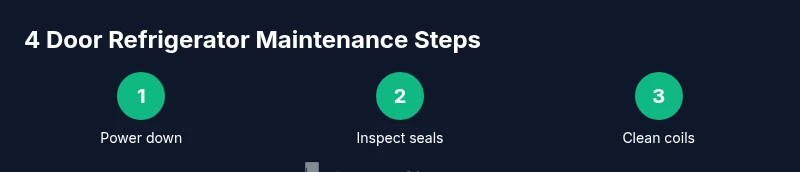
Power down and unplug
Unplug the refrigerator from the wall outlet before any work. This eliminates shock risk when you touch metal components or wiring. If the plug is behind cabinetry, consider turning off the circuit breaker for added safety.
Tip: Use a non-contact voltage tester to confirm no current before touching terminals. - 2
Inspect door seals and gaskets
Close the doors and visually inspect for gaps, tears, or deformation. A faulty seal lets warm air in, causing frost formation and higher energy use. Clean seals with a damp cloth and test door closure by gently pulling the door; it should reseal firmly.
Tip: If gaskets are cracked, plan replacement to restore tight seal. - 3
Check condenser coils
Locate coils (usually behind a rear access panel or underneath in some models). Dust and lint reduce cooling efficiency. Vacuum or brush gently to remove debris, then wipe with a damp cloth.
Tip: Do not bend fins; use a soft brush to avoid damage. - 4
Test thermostat and temperature settings
Use the multimeter or a built-in diagnostic feature to verify accurate temperature readings in both fresh-food and freezer compartments. Most manufacturers recommend around 37–40°F (3–4°C) for fresh food and 0°F (-18°C) for frozen items.
Tip: If readings are off, recalibrate or replace the thermostat if needed. - 5
Clean interior and shelves
Remove shelves and drawers. Wash with warm, soapy water, rinse, and dry before reinstalling. Wipe door shelves and gaskets with a mild cleaner to prevent residue buildup that can impact airflow.
Tip: Avoid harsh chemicals that may damage plastic parts. - 6
Inspect drainage and defrost drain
Locate the defrost drain and ensure it is clear. A clogged drain causes water pooling and frost. Flush the line with warm water and a small amount of baking soda if needed.
Tip: Pour slowly to avoid water backing up into shelves. - 7
Check ice maker and water line
If your model has an ice maker, inspect the water line for kinks or leaks. Ensure the supply valve is fully open and the line is not frozen. Test ice production and discard ice if the line was stagnant.
Tip: If ice quality is off, inspect the fill tube and sensor as per the manual. - 8
Reassemble and test run
Reconnect all shelves, plugs, and panels. Plug the unit back in and allow 1–2 hours to stabilize. Monitor temperatures and listen for unusual noises as it resumes operation.
Tip: Document any changes and note if issues recur after a single test. - 9
Document results and schedule next check
Record temperatures, any parts replaced, and the date of the maintenance. Schedule a follow-up in 3–6 months or sooner if issues recur. Keeping a simple log helps catch creeping problems early.
Tip: Set a reminder in your calendar for routine maintenance. - 10
Know when to call a pro
If cooling remains uneven, leaks persist, or you detect unusual electrical smells, contact a qualified technician. Complex refrigerant issues or compressor failures require professional service.
Tip: Use the manufacturer’s service network for warranty considerations.
FAQ
Why is my 4 door refrigerator not cooling evenly?
Uneven cooling can result from worn door seals, obstructed air vents, or frost buildup. Start by inspecting seals and clearing airflow paths. If unresolved, check evaporator and condenser components or seek professional service.
If your fridge isn't cooling evenly, first check the door seals and air vents. Clear any frost or debris and consider a professional check if it persists.
How often should I clean condenser coils on a 4 door refrigerator?
Condenser coils should be cleaned when they appear dusty or every 6 to 12 months as part of routine maintenance. Regular cleaning helps maintain efficiency and reduces the risk of overheating.
Clean coils when dusty, about every 6 to 12 months, to keep the fridge efficient.
What causes a clogged defrost drain in a 4 door refrigerator?
A defrost drain can clog due to ice buildup, food particles, or mineral deposits. Regularly flushing with warm water helps prevent pooling and frost inside.
You may get a frost buildup if the defrost drain is clogged. Flushing with warm water usually fixes it.
Is a leaking water line dangerous or fixable by a homeowner?
A minor water line leak can often be resealed or replaced by a homeowner with basic plumbing skills. Turn off the water supply, drain excess water, and inspect connections. If the leak persists, contact a pro.
If you notice a leak, turn off water and check connections. If it continues, call a professional.
When should I replace a 4 door refrigerator instead of repairing it?
Consider replacement when repair costs approach or exceed the price of a new model, or when energy efficiency and reliability are poor. Longevity and warranty coverage are also important factors.
If repair costs are high or reliability is poor, consider replacement with a more efficient model.
What cleaning solutions are safe to use inside the fridge?
Use mild dish soap and warm water for interior cleaning. Avoid ammonia-based or abrasive cleaners that can damage gaskets or shelves.
Stick with mild soap and water; avoid harsh cleaners inside the fridge.
Watch Video
Top Takeaways
- Inspect seals and coils regularly
- Clean and organize to improve airflow
- Differentiate between minor fixes and major replacements
- Document maintenance for future reference
- Know when to call a pro for serious issues