How to Fix a Refrigerator Constantly Running: A Complete Troubleshooting Guide
Learn how to diagnose and fix a refrigerator constantly running. Practical checks, diagnostic flow, and safe fixes to reduce energy use and extend appliance life.


The refrigerator constantly running is usually caused by an overworked compressor, a faulty defrost thermostat, or poor airflow from dirty condenser coils. Begin with immediate checks: verify door seals, set temperature to 37-40°F (3-4°C), inspect condenser coils for dirt, and ensure vents aren’t blocked. If the problem persists, power down the unit to reset controls and continue troubleshooting.
Understanding the Symptoms of a Refrigerator Constantly Running
If you notice your kitchen appliances working overtime, you’re likely facing a scenario where the refrigerator constantly runs. This behavior often shows up as a steady hum from the compressor, a cool interior that never seems to stabilize, or ice buildup along the evaporator. The How To Refrigerator team emphasizes that diagnosing the cause quickly can prevent wasted energy and rising repair costs. In many homes, the root cause is either a seal leak, improper temperature settings, blocked airflow, or dirty coils. Over time, these issues lead to higher electricity bills and accelerated wear on the compressor. By understanding the typical patterns and measurements, homeowners can decide whether a quick DIY check is enough or if a pro should be called. This guide uses clear, actionable steps to help you troubleshoot safely and efficiently. Remember that even a few degrees of temperature miscalibration can turn a normally efficient fridge into a machine that never stops.
Common Causes Behind a Refrigerator Constantly Running
There are several common culprits behind a refrigerator constantly running. A failing door gasket lets warm room air in, causing the compressor to work overtime. A thermostat or defrost timer stuck in the closed or open position can cause continuous cooling cycles. Dirty condenser coils trap heat and reduce efficiency, requiring the fan and compressor to run longer. Poor airflow from items blocking vents inside the freezer or fridge can also prevent proper circulation. Additionally, high ambient room temperature, inadequate clearance around the back of the appliance, or a miscalibrated temperature setting can push the unit to run more than it should. While each scenario has its own fix, the pattern is similar: reduce heat input, improve airflow, and restore the proper thermostat operation. How To Refrigerator analysis shows that addressing the simplest causes first often delivers quick wins without professional service.
The Quick Checks You Can Do Right Now
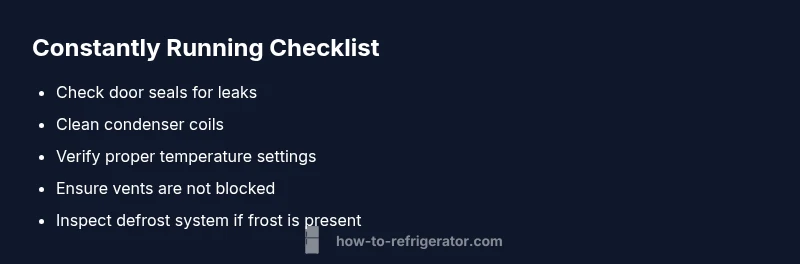
Before pulling out tools, run through a few quick checks. Inspect the door gasket for cracks or gaps and replace if damaged. Confirm the temperature is set to 37-40°F (3-4°C) for the fresh compartment and 0°F (-18°C) for the freezer. Clean the condenser coils on the back or underneath using a soft brush or vacuum—dirt buildup here is a frequent culprit. Ensure the vents are not blocked by groceries; leave several inches of space around the unit to promote air flow. Listen for unusual noises that might point to a failing evaporator fan or compressor. If you’ve recently moved the fridge or adjusted shelves, verify that nothing is pinching interior vents. These steps can solve many cases of refrigerator constantly running without requiring tools.
Diagnostic Flow: Symptom → Diagnosis → Solutions
Symptom: Refrigerator constantly running and cooling slowly.
Diagnosis path:
- Door gasket leak → replace gasket.
- Dirty condenser coils → clean coils.
- Faulty thermostat/defrost timer → test/replace.
- Refrigerant leak or failing compressor → contact pro.
Solutions:
- Clean coils, reseat gaskets, calibrate thermostat, replace timer, call pro for refrigerant/compressor issues.
Step-By-Step Fixes for the Most Likely Cause
This section provides a practical, fix-focused sequence you can follow to address the most common cause of a fridge that runs nonstop: dirty condenser coils and miscalibrated thermostat.
- Unplug and Safety Check: Unplug the unit and remove all food. Wear gloves and use a flashlight to inspect the back/bottom for dust and debris. Tip: Work in a well-lit area to avoid missing buildup.
- Clean Condenser Coils: Use a coil brush or a vacuum with a brush attachment to remove dust. Wipe down surfaces with a dry cloth and recheck airflow around the coil area. Tip: Do not use water directly on electricity.
- Inspect Door Seals: Close the door on a thin piece of paper; if you can pull it out easily, the gasket is worn and needs replacement. Tip: Replace gaskets in pairs to maintain even sealing.
- Check Thermostat Settings: Ensure the fresh-food section is around 37-40°F (3-4°C) and the freezer at 0°F (-18°C). If the temperature fluctuates unexpectedly, the thermostat or control board may be faulty. Tip: Recheck after 24 hours of stable settings.
- Defrost System Check: If you notice frost buildup on the evaporator or ice behind the drawers, the defrost timer or heater could be stuck. Manually defrost if needed and test the timer. Tip: A professional may be needed for electric defrost components.
- Restore Power and Monitor: Plug the fridge back in and monitor for 24-48 hours. If it still runs non-stop, the issue may be refrigerant-related or a failing compressor. Tip: Keep a log of temperatures and run times to share with a technician.
Safety Tips and Common Mistakes to Avoid
- Always unplug the unit before doing any maintenance to avoid electric shock. - Do not spray water directly on electrical components or into the condenser housing. - Avoid using metal tools that could damage fan blades or coils. - Do not ignore unusual noises; a grinding or squealing sound can indicate a failing compressor. - If you suspect a refrigerant leak, never attempt a DIY repair; refrigerants require licensed professionals.
Preventive Maintenance to Stop the Issue from Returning
- Schedule monthly condenser coil cleaning and dust removal to maintain airflow. - Inspect door gaskets every 3-6 months and replace worn seals promptly. - Keep the fridge properly spaced from walls and other appliances to ensure ventilation. - Set consistent temperatures (37-40°F for fresh food, 0°F for frozen) and avoid frequent door openings. - Perform a quick defrost check during humid seasons or after heavy usage; address timers if you notice frost buildup.
Key Takeaways
- Clean coils and seal doors to reduce run time.
- Verify correct temperatures to prevent overworking the compressor.
- Regularly maintain airflow and perform seasonal defrost checks.
- When in doubt, consult a professional for refrigerant or compressor issues.
- Document symptoms to help a technician diagnose quickly.
Steps
Estimated time: 1-2 hours
- 1
Power down safely
Unplug the refrigerator and move items to a temporary cooler. This prevents electric shock while inspecting components.
Tip: Always unplug before touching electrical parts. - 2
Inspect condenser coils
Locate coils (back or bottom). Use a coil brush or vacuum to remove dust until minimal resistance to airflow is felt.
Tip: Clean from top to bottom to avoid redistributing dust. - 3
Check door gaskets
Visually inspect for cracks and test with a paper slip method. Replace if air leaks are evident.
Tip: Replace gaskets in pairs to ensure uniform seal. - 4
Verify temperature settings
Set fresh food to 37-40°F and freezer to 0°F. Monitor for 24-48 hours for stability.
Tip: Small changes can have big effects. - 5
Test defrost system
Look for frost buildup indicating a stuck defrost timer. If present, consider timer or heater replacement.
Tip: Defrost components can be dangerous; consult a pro if unsure. - 6
Restore power and observe
Plug back in and track run times. If it still runs constantly, the issue may be refrigerant-related or a failing compressor.
Tip: Keep a log to share with a technician.
Diagnosis: Refrigerator constantly running
Possible Causes
- highDirty condenser coils or obstructed airflow
- highDoor gasket leaks allowing warm room air in
- mediumFaulty thermostat or defrost timer
- lowLow refrigerant charge or compressor failure
Fixes
- easyClean condenser coils and remove airflow obstructions
- easyReplace worn door gaskets and ensure proper seal
- mediumTest/replace thermostat or defrost timer
- hardConsult a professional for refrigerant leaks or compressor issues
FAQ
Why is my refrigerator constantly running even though the door is closed?
Constant running often points to a door seal leak, dirty condenser coils, or a thermostat issue. Start with door gasket inspection and coil cleaning, then verify temperature settings. If unresolved, test the defrost timer and consider professional diagnosis.
If your fridge won’t stop running, check the door seals, clean the coils, and verify the temperature. If it still runs, you may have a faulty thermostat or defrost timer that needs a professional check.
Can a dirty condenser coil cause the fridge to run continuously?
Yes. Dirty condenser coils trap heat, forcing the compressor to work longer. Cleaning the coils usually reduces running time and restores efficiency. If the problem persists, look at seals and thermostat as well.
Absolutely. Dusty coils make the compressor work overtime. Clean the coils first, then recheck seals and thermostat if needed.
Is it safe to replace a defrost timer or thermostat by myself?
Replacing a defrost timer or thermostat can be straightforward but involves electrical components. If you’re comfortable with basic wiring and unplugging the unit, follow the manufacturer’s diagram. If not, hire a licensed technician.
It can be simple, but if you’re unsure about wiring, it’s safer to call a professional.
How often should I service my refrigerator to prevent nonstop running?
Regular maintenance is key. Clean coils every 6-12 months, test seals, and check temperatures quarterly. Address issues promptly to avoid compressor strain.
Do routine coil cleanings and seal checks every few months to keep it running efficiently.
What if I hear a new grinding noise while the fridge runs?
A new grinding sound may indicate a failing compressor or fan motor. Stop using the unit and have it inspected by a pro to avoid further damage.
If you hear grinding, shut it off and get a technician to inspect the compressor or fan.
If the fridge still runs non-stop after all checks, what’s next?
If basic checks don’t resolve it, you may have a refrigerant leak or compressor problem. These require a licensed refrigeration technician to diagnose and repair.
If it still runs after checks, a professional should assess refrigerant leaks or compressor issues.
Watch Video
Top Takeaways
- Identify whether airflow or sealing issues are causing the run time.
- Maintain correct temperatures to reduce compressor load.
- Regular maintenance prevents future nonstop running.