What is Wrong with a Refrigerator That Runs All the Time: A Fast-Action Troubleshooting Guide
Explore why a fridge runs nonstop and learn fast, practical steps to diagnose common causes, plus when to call a pro for safe, reliable fixes.


If your refrigerator runs nonstop, the most likely causes are a thermostat set too low, a worn or dirty door gasket, or dirty condenser coils. Start by raising the temperature setting a notch and checking that the door seals are tight. If the unit still runs constantly, inspect the condenser coils and look for frost or ice buildup on the evaporator. If these steps don’t resolve it, contact a professional.
Why a Refrigerator Runs All the Time: Common Causes
If you're wondering what is wrong with a refrigerator that runs all the time, you're not alone. A fridge that never stops consumes energy and can wear out components prematurely. According to How To Refrigerator, several core issues drive nonstop operation, often stemming from faulty temperature controls, poor door seals, or airflow obstructions. The thermostat tells the compressor when to run; if it’s set too low or misread, the compressor stays on. A worn door gasket can let warm room air enter, causing the cooling cycle to lengthen. Dirty condenser coils reduce heat exchange, so the compressor runs longer to meet the set temperature. Frost buildup can also trick the system into continuous cooling to compensate for blocked air pathways. Each cause has a telltale sign, and most fixes are straightforward once you identify the culprit. In the next sections we’ll break these down, with practical checks you can perform safely today.
Checkpoints Before You Dig In: Quick Diagnostics
Before pulling panels or removing the back cover, perform quick, low-risk checks. Start with the dial thermostat: ensure it’s not set to its coldest setting; aim for a mid-range like 3–5, depending on model. Inspect the door seals: close the door on a dollar bill or piece of paper; if you can tug it out with little resistance, the seal is failing. Listen for unusual fan or compressor noises; loud buzzing may indicate a failing start relay or a failing compressor. Look at frost on the evaporator coils inside the freezer compartment; excessive frost suggests a defrost system issue. Finally, check for airflow obstructions around the condenser coils (vents blocked by dust or nearby objects). These checks can be performed safely without tools and often reveal the simplest fixes.
Thermostat and Temperature: The First Suspects
The thermostat is the gatekeeper. If it reads too low, the freezer and refrigerator will cry out for cool air and the compressor will run more than necessary. Verify the actual temperature with a thermometer in the fresh food compartment (aim for 35–38°F / 1.7–3.3°C). If the temperature seems off, recalibrate or replace the thermostat. Some models use electronic sensors; in that case, a loose connector or faulty sensor can cause improper readings. Replacing a thermostat is a common DIY fix, but if you’re uncertain, a professional can test the sensor circuit and verify power to the compressor. Also inspect the evap fan in the fridge; if it’s obstructed or failing, airflow drops and the refrigerator may overwork.
Seals, Doors, and Air Leaks
Gaps around doors allow warm air to enter, forcing the compressor to run more. Inspect weatherstripping for cracks, tears, or hardening. Replace damaged gaskets; for most fridges, you can reseal by cleaning the surface, applying a thin film of silicone lubricant, and reattaching the gasket. Ensure doors latch fully and align properly. If the door is misaligned, even a slight gap can cost energy. After sealing, monitor for 24–48 hours; if the fridge still runs constantly, proceed to other causes.
Condenser Coils and Defrost System: Hidden Culprits
Dust and lint on condenser coils at the back or underneath can insulate heat and force longer cycles. Vacuum or brush coils every 6–12 months. If you hear defrost heater sounds or see frost buildup on the evaporator coil in the freezer, the defrost timer or control board may be stuck; a service call is recommended if you see ice forming inside. Clean coils, clear the surrounding area, and ensure airflow around the compressor. After cleaning, wait a few hours to see if the cycles normalize as the unit returns to normal temperatures.
Electrical Components: Start Relay, Compressor, and Fans
If the start relay sticks, the compressor may run continuously. This part is more technical: remove the back access panel and test with a multimeter or swap a known-good relay (if available). Absent tools, call a pro. Inspect the condenser fan and evaporator fan; if either is blocked or worn, the cooling cycle becomes inefficient. A failing fan can cause the compressor to run longer or continuously. For safety, unplug the unit before any electrical work and avoid touching wiring with wet hands.
Putting It All Together: A Troubleshooting Protocol
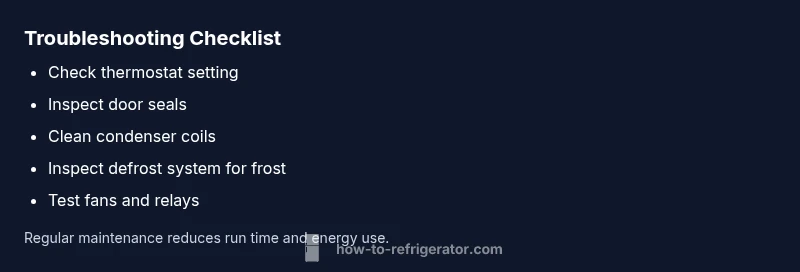
Follow a logical flow: start with the thermostat and door seals, then move to airflow and condenser cleanliness, check for frost issues, and finally inspect electrical components if the prior steps don’t resolve the problem. Document the results at each step and note the time frame for any changes in performance. If any step reveals a dangerous condition (burning smell, visible arcing, or a hot compressor), stop immediately and contact a licensed technician. Regular preventive maintenance dramatically reduces the chance of future nonstop running.
Steps
Estimated time: 60-120 minutes
- 1
Check and adjust thermostat
Power off the unit, then adjust the thermostat up by one or two increments. Power the unit back on and monitor for 4–6 hours to see if cycling normalizes. Use a fridge thermometer to verify the temperature settles around 35–38°F (1.7–3.3°C).
Tip: Document the setting you start with in case you need to revert. - 2
Inspect door seals and alignment
Close the doors and test seal integrity with a dollar bill or liner. If the bill pulls out easily, replace or repair the gasket and realign the door. A snug seal prevents warm air intrusion and reduces run time.
Tip: Clean the gasket grooves with a mild soap solution before reseating. - 3
Clean condenser coils and verify airflow
Unplug the fridge. Access the condenser coils (back or underneath) and remove dust with a brush or vacuum attachment. Ensure there is at least a few inches of clearance around the unit for airflow.
Tip: Do not use metal tools that could damage fins. - 4
Assess defrost system and frost buildup
Check for frost on the evaporator coils inside the freezer. If you find significant ice, run a temporary defrost cycle if your model supports it; otherwise arrange service. Persistent frost can indicate a defrost timer or heater failure.
Tip: Avoid using sharp objects to remove ice; use a plastic scraper. - 5
Test fans and electrical components
Listen for the evaporator and condenser fans. If a fan is noisy or blocked, clear the obstruction or replace the faulty fan. If the start relay or compressor seems suspect (unusual buzzing, heat, or continuous humming), consider professional testing.
Tip: Always unplug before touching electrical components. - 6
Safety check and professional threshold
If all prior steps fail to resolve nonstop operation, schedule a professional inspection. Document the steps you took and any symptoms to share with the technician to speed up diagnosis.
Tip: Do not attempt high-voltage repairs unless trained.
Diagnosis: Refrigerator runs continuously
Possible Causes
- highThermostat set too low or faulty temperature sensor
- highDamaged or loose door gasket allowing warm air in
- highDirty condenser coils or blocked airflow around the unit
- mediumFrost buildup on evaporator due to failed defrost system
- lowSticking start relay or faulty compressor
Fixes
- easyRaise thermostat by 1–2 steps and verify temperatures with a thermometer
- easyReplace or reseal door gaskets and ensure doors seal fully
- easyClean condenser coils and clear around the unit to improve airflow
- mediumInspect defrost system; if frost persists, schedule service
- hardTest or replace start relay or compressor with professional help
FAQ
Why does my refrigerator run constantly even when the door is closed?
Common causes include thermostat issues, door seal leaks, or dirty coils. Verify settings, seals, and airflow. If unresolved, additional checks may be needed.
Common causes are thermostat, door seal, or dirty coils. Start with settings and seals; if not fixed, seek further diagnosis.
Can a dirty condenser coil cause nonstop operation?
Yes. Dusty coils impede heat rejection, making the compressor work longer. Clean coils and recheck after 24 hours.
Dirty coils make the fridge work harder; clean them and monitor.
Is it safe to use a vacuum on condenser coils?
Yes, but use a vacuum with a brush attachment or a coil cleaning brush; unplug the unit first and avoid metal tools. Be careful not to bend fins.
Unplug first; use a coil brush or vacuum designed for coils.
When should I replace the thermostat myself?
If you’re comfortable with DIY, you can replace a faulty thermostat by following model-specific instructions. If not, hire a pro to test the sensor and circuit.
You can replace it if you're comfortable; otherwise get a pro.
When is it time to call a professional?
If you hear loud buzzing, smell burning insulation, or the unit remains out of spec after standard checks, a licensed tech should inspect the compressor and electrical components.
If you're unsure or hear buzzing or burning smells, call a technician.
Watch Video
Top Takeaways
- Raise the thermostat setting and recheck temperatures.
- Inspect and seal door gaskets to stop warm air leaks.
- Clean condenser coils to restore heat rejection efficiency.
- Test the defrost system if frost appears; call a pro if unsure.
- If electrical components seem suspect, seek professional help.