Why Your Refrigerator Won't Stop Running: A Practical Troubleshooting Guide
Learn how to diagnose and fix a refrigerator that won t stop running. Step-by-step flow, safety tips, and prevention to save energy and avoid damage.


The most likely cause is a faulty thermostat or defrost timer that keeps the compressor on. Start with safe, basic checks: verify the thermostat setting, inspect door gaskets for leaks, and look for ice buildup in the defrost drain. If the issue persists, unplug briefly to reset controls and contact How To Refrigerator Team for a full diagnostic.
Problem overview: why this happens
In this guide we address the urgent issue of why refrigerator won t stop running. A runaway fridge wastes energy, raises utility bills, accelerates wear on the compressor, and can cause frost buildup and temperature instability. Most cases begin with simple, user-serviceable causes before moving to electrical components. By understanding the roles of the thermostat, defrost timer, and compressor, homeowners can triage quickly, safely, and with confidence. This article uses clear, actionable steps so you can determine whether you can fix it yourself or know when to call a professional. If you’ve ever wondered why refrigerator won t stop running, you’re not alone, and a systematic approach is the fastest path to a resolution.
Quick checks you can perform safely
Before you dive into diagnostics, start with the least invasive steps. First, confirm the door is fully closed and the gasket is sealing. A loose seal lets warm air enter and can force the unit to run longer. Next, check the thermostat setting; accidental changes or a high, cold setting can cause the compressor to run continuously. Inspect the condenser coils for dust and debris—blocked coils reduce efficiency and can mislead the control system into extended run times. If frost or ice forms in the evaporator or defrost drain, the defrost system may be stuck. Finally, listen for unusual noises that might indicate a failing start relay or compressor issue. If you’re uncomfortable with any step, pause and contact a professional. How To Refrigerator recommends starting with these basic checks to avoid unnecessary repairs.
Diagnostic flow: symptom to diagnosis to fixes
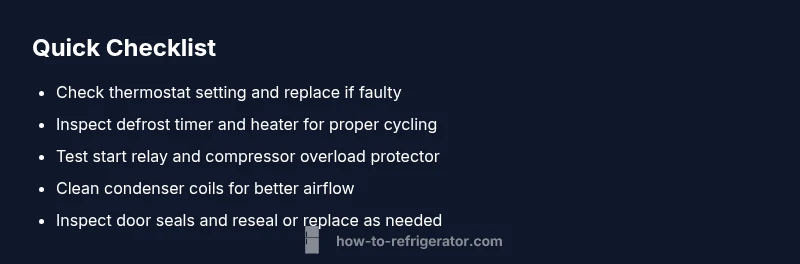
Symptom: Refrigerator runs continuously, compressor staying on. Causes: High likelihood thermostat fault; medium likelihood defrost timer issue; high likelihood faulty start relay; low likelihood dirty condenser coils; medium likelihood door seal problem. Fixes: Adjust or replace thermostat (easy/medium); replace defrost timer (hard); replace start relay (medium); clean condenser coils (easy); replace door gaskets if leaks are found (easy). For each potential cause, perform the corresponding check and advance only if the symptom persists. If you ever detect refrigerant smells, frost heave, or burns, stop and call a licensed technician immediately. If you’re unsure, prioritize safety and professional assessment.
Common causes and how to confirm
- Thermostat fault: The thermostat tells the compressor to stop when the desired temperature is reached. If it sticks or fails, the compressor may run nonstop. Test by adjusting to a warmer setting and observing whether the compressor cycle shortens.
- Defrost timer or heater: A malfunctioning defrost timer can prevent the evaporator from defrosting, causing ice buildup and continued running. Look for frost around the coils and listen for heater sounds in cycles.
- Start relay or overload protector: A failed start relay can keep the compressor energized. If the unit hums but won’t start, or starts and immediately stops, this is a key clue.
- Dirty condenser coils: Dusty coils reduce cooling efficiency and can trigger longer run times, especially in warm rooms. Inspect and clean if dusty.
- Leaky door seals: Worn or cracked gaskets allow warm air to leak in, forcing more cooling cycles. Check for gaps and replace if needed.
Step-by-step overview: most common fix (high-level guidance)
If the thermostat is suspected, the high-level approach is to test and replace it if needed, then monitor the unit. For a suspected defrost timer issue, replacement by a professional is typically required. Start-relay issues require component testing and replacement. In all cases, cleaning coils and ensuring good airflow around the unit are beneficial maintenance steps that can improve overall performance and prevent future run-time extensions.
Safety tips and warnings
Safety comes first. Always unplug the refrigerator before opening access panels or touching electrical components. Avoid using metal tools on energized parts. If you smell refrigerant, hear hissing, or see liquids pooling, stop immediately and call a licensed technician. Do not attempt to bypass safety devices or perform refrigerant work yourself. Keep children and pets away from the area while testing.
Prevention tips to avoid future runaway problems
Regular maintenance reduces the risk of a fridge running continuously. Schedule coil cleaning every six to twelve months, inspect door seals for wear twice a year, and ensure proper ventilation around the unit. Keep the temperature setting within the manufacturer’s recommended range and avoid overloading the shelves, which can obstruct airflow. Document any changes you make and the results to help future troubleshooting efforts. Regular professional checkups can catch issues like faulty defrost timers or failing start relays before they escalate.
Steps
Estimated time: 60-90 minutes
- 1
Power down safely
Unplug the refrigerator and wait a few minutes before inspecting any components to avoid electrical shocks. Confirm no power is reaching the unit by testing the outlet with a simple device. This reset helps clear transient faults and prepares you for safe checks.
Tip: Always unplug before touching wiring or panels. - 2
Check thermostat setting
Inspect the thermostat dial or digital setting. Set it to a recommended temperature (usually around 37-38°F or the manufacturer’s spec). After adjusting, plug the unit back in and monitor if the compressor cycles normally.
Tip: If the dial is loose, note the setting and replace the knob if necessary. - 3
Inspect door seals and airflow
Examine door gaskets for tears or warping. Clean any residue from the seal and ensure the door closes fully. Check that the back of the fridge has at least a few inches of clearance for proper air circulation.
Tip: A quick soapy-water wipe can improve seal performance. - 4
Test defrost system indicators
Look for frost on the evaporator coils or a pooling defrost drain. If frost appears or the drain is blocked, the defrost cycle may be compromised. A professional may need to replace a faulty defrost timer or heater.
Tip: Don’t use sharp objects to clear ice; if in doubt, call a pro. - 5
Assess condenser coils
Locate and clean the coils using a low-velocity vacuum or a brush. Ensure there’s ample clearance around the unit for heat dissipation. Reconnect and observe whether the run time decreases.
Tip: Clean coils from the outside in to avoid pushing dust back inside. - 6
Check compressor start components
If you hear buzzing or the compressor doesn’t start after a reset, a faulty start relay or overload protector could be the culprit. This fix may require replacement by a trained technician.
Tip: Avoid testing live electrical parts beyond your comfort level.
Diagnosis: Refrigerator runs continuously, compressor stays on
Possible Causes
- highStuck or faulty thermostat
- mediumDefrost timer stuck or defective
- highFaulty start relay or overload protector
- lowDirty condenser coils or obstructed airflow
- mediumDoor gasket leaks or door left ajar
Fixes
- easyTest and replace thermostat if faulty
- hardReplace defrost timer (or heater) if stuck
- mediumReplace faulty start relay or overload protector
- easyClean condenser coils and improve airflow around unit
- easyReplace worn door gaskets and reseal door
FAQ
What causes a refrigerator to run continuously?
Continuous running is usually due to thermostat faults, defrost timer issues, or a failed start relay. Dirty coils and door leaks can contribute as well. A structured check helps identify the exact cause.
Runaway operation is often from thermostat or defrost timer problems, plus wires or relay issues.
Should I unplug and reset the fridge?
Yes, unplugging briefly can reset controls. After a reset, monitor operation to see if the compressor cycles normally. If it continues to run, proceed with the diagnostic steps or contact a professional.
Unplugging to reset can help, but if the problem repeats, get a professional check.
Is it safe to clean the condenser coils myself?
Yes, with the unit unplugged. Use a brush or vacuum to remove dust. Avoid spraying water directly on electrical parts and ensure proper airflow after cleaning.
Yes, unplug first and clean the coils with a brush or vacuum.
When should I call a professional?
Contact a professional if thermostat replacement, defrost timer/heater issues, or refrigerant handling are suspected. Also call if basic checks don’t resolve the problem or if you detect refrigerant odors.
If basic checks don’t fix it or you smell refrigerant, call a pro.
Can dirty door seals cause longer run times?
Yes. Worn or cracked seals let warm air enter, causing the unit to run longer to maintain temperature. Inspect and replace seals as needed.
Bad door seals can make the fridge run longer to stay cold.
What maintenance helps prevent runaway issues?
Regular coil cleaning, seal inspections, and proper airflow around the unit reduce run times. Keep temperatures at the recommended levels and schedule annual professional checkups.
Keep coils clean and seals good to prevent runaways.
Watch Video
Top Takeaways
- Start with safe, quick checks before deep diagnostics
- Prioritize thermostat, defrost timer, and start relay as likely causes
- Clean coils and check door seals to restore efficiency
- Call a professional for refrigerant-related or high-risk repairs
- Prevent future issues with regular maintenance