Fixing a Refrigerator and Freezer Not Cold Enough
If your refrigerator and freezer not cold enough, this guide helps you diagnose common causes, perform safe DIY fixes, and know when to call a pro. Step-by-step flow, safety tips, and prevention to keep food safe.


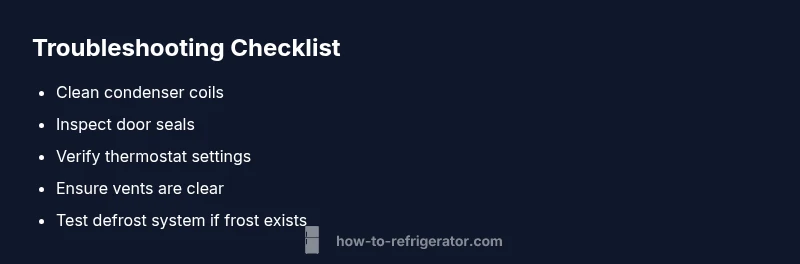
Most likely, not cold enough means a simple, reversible issue rather than a failed compressor. Common culprits include dirty condenser coils, a damaged door seal, or a defrost system problem that frost builds up and blocks airflow. Start with quick checks: clean coils, verify doors close fully, and confirm the thermostat is set correctly before deeper testing.
Quick checks you can perform now
If your refrigerator and freezer not cold enough, start with a few fast tests that don’t require tools. First, verify the power supply is stable—check the outlet with another device and ensure the cord is fully plugged in. Next, inspect the thermostat setting; most units perform best around the mid-range temperatures. Finally, open the doors and observe airflow; if warm air escapes or the interior feels stuffy, address airflow and door seals as a priority. If there's a visible frost layer on the back wall or inside the freezer, that could indicate a defrost problem. The goal is to rule out the easiest fixes before moving to more involved steps.
Verify the basics: power, settings, and airflow
Beyond the initial checks, confirm the fridge is level and not tucked behind furniture. A slight tilt can cause door gaskets to misseal. Check that the interior temperature readings match the external thermostat. Keep the fridge room at a stable, cool ambient temperature; hot rooms make cooling harder. Finally, ensure items inside are not blocking vents; crowded shelves restrict cold air circulation and can mimic a cooling failure. If you notice frequent door openings or a door that doesn’t seal well, address these as top priorities.
Inspect condenser coils and airflow paths
Condenser coils should be clean and dust-free; dirty coils dramatically reduce cooling efficiency. Locate coils on the back or beneath the unit; unplug the appliance before wiping with a soft brush or vacuum. After cleaning, power the unit back on and listen for the compressor; a grinding or buzzing sound could indicate a motor issue. Also inspect the airflow paths—make sure there are no obstructions in the freezer or refrigerator compartments that block vents. If you still hear unusual noises after cleaning, that hints at a mechanical fault needing professional help.
Check door seals and gaskets
Damaged or worn door seals allow warm air to seep in, especially if the door closes slowly or sticks. Inspect the gasket for cracks, tears, or gaps. A simple test is the dollar-bill trick: close a dollar bill in the door and try to pull it out; if it slides out easily, the seal may be weak. Replace seals that fail this test. Poor seals can cause continual warm air intrusion, undermining cooling even if the compressor is healthy.
Defrost system and frost buildup
If frost accumulates on the evaporator coil, air cannot circulate properly. Check for frost in the freezer and listen for a running defrost heater. If you see thick frost or ice crystals that won’t melt after a regular defrost cycle, the defrost timer or heater may be faulty. This often requires professional service or a manual defrost followed by a proper repair. Frost issues are a common but fixable cause of not cooling.
Temperature controls and placement
Make sure the temperature control board is functioning and not set to 'high' by mistake. Some models use digital displays; if the display is blank or erratic, the control board may have failed. Also avoid placing hot dishes directly into the fridge, and keep the appliance away from heat sources. Proper spacing around the unit helps heat dissipate and reduces burden on the compressor. If the display is unresponsive, you may need a control board replacement.
Overload, blocked vents, and air circulation
Overloading can block air channels; remove excess items and reposition shelves to create clear paths for cold air. Ensure vents inside the fridge and freezer are open and free from food items. Consider reorganizing the interior to encourage even cooling and reduce hotspots. When airflow is restored, you’ll often notice a quicker return to normal cooling temperatures.
Refrigerant leaks and compressor concerns
Low refrigerant is a refrigeration system issue typically caused by a leak and requires a refrigerant recharge—a task for licensed technicians. A failing compressor or refrigerant leak often manifests as warm spots near the back or a hissing sound. If you suspect these issues, stop using the unit and call a pro. Do not attempt to seal refrigerant leaks yourself. These problems require specialized tools and safe handling.
When to call a professional and what to expect
Not all cooling problems are DIY fixes. If you’ve checked coils, seals, defrost, and thermostat, and the temperature problem persists, a technician can run pressure tests, inspect the evaporator coils, and verify the defrost circuit. Expect a diagnostic visit to include system tests, part checks, and potential refrigerant service. If in doubt, schedule service early to prevent food spoilage.
Cleaning and preventive maintenance to avoid future issues
Set a routine to clean coils every 6–12 months and inspect door seals seasonally. Keep the area around the fridge clear to promote airflow, and avoid frequent door openings during hot spells. Track performance after any repair and adjust settings as needed to maintain safe temperatures. Regular maintenance reduces the risk of recurring cooling problems and extends appliance life.
Steps
Estimated time: 60-120 minutes
- 1
Power cycle and verify basics
Unplug the refrigerator for 5 minutes and plug back in to reset the electronics. While it reboots, confirm the thermostat is set to a mid-range temperature and that the unit has adequate space around it for ventilation.
Tip: A simple reset can clear minor control glitches and restore proper fan operation. - 2
Clean condenser coils and clear vents
Vacuum and brush the condenser coils thoroughly to remove dust and debris. While you clean, check that all interior vents are unobstructed by food or shelving and that the airflow path is open.
Tip: Do this step before touching refrigerant-related issues; airflow is essential. - 3
Inspect doors and seals
Check door gaskets for cracks or gaps and ensure doors seal completely when closed. Perform the dollar-bill test to quantify seal effectiveness.
Tip: Replace seals that fail the test to restore airtight closure. - 4
Check the thermostat and temperature settings
Set the fridge to about 37°F (3°C) and freezer to 0°F (-18°C). If the display is malfunctioning, refer to the user manual for voltage-safe troubleshooting or service options.
Tip: Avoid frequent changes to prevent thermal stress. - 5
Test defrost cycle and frost buildup
Listen for the defrost heater cycle and inspect for frost buildup. If frost is excessive or doesn’t melt during a defrost cycle, the defrost system may require professional service.
Tip: Do not attempt to thaw large ice builds with heat sources. - 6
Assess airflow and interior layout
Remove items blocking airflow, rearrange shelves, and ensure air can circulate from the freezer to the fridge. A balanced load helps maintain even temperatures.
Tip: Smaller, evenly spaced items improve cooling efficiency. - 7
Escalate when unresolved
If temperatures remain high after these steps, schedule professional service for refrigerant, compressor, or control-board diagnostics.
Tip: Address cooling issues promptly to prevent food spoilage.
Diagnosis: Refrigerator and freezer not cold enough
Possible Causes
- highDirty condenser coils and inadequate airflow
- highDamaged or poorly sealing doors allowing warm air intrusion
- mediumThermostat setting too warm or power interruption
- mediumDefrost system failure causing frost buildup
- lowFaulty condenser fan or motor
Fixes
- easyUnplug the unit and vacuum/brush the condenser coils until clean; ensure air can flow freely around the coils.
- easyInspect door gaskets for cracks or gaps; replace if damaged and test the dollar-bill seal test.
- easyLower the thermostat setting and allow 12-24 hours to assess temperature recovery.
- mediumInspect defrost timer and heater; if frost persists, call a professional for defrost system repair.
- hardIf you hear unusual noises or see frost after basic fixes, contact a licensed technician for a refrigerant or compressor check.
FAQ
Why is my fridge not cooling even when the light is on?
The light being on just means power is reaching the unit. Common culprits are thermostat missettings, dirty condenser coils, faulty door gaskets, and frost blocking airflow. Start with the simplest checks—coils, seals, and thermostat settings.
If the light is on but it isn’t cooling, start with the thermostat, coil cleaning, and door seals.
What should I check first if the freezer is cold but the fridge isn’t?
Focus on airflow from the freezer to the fridge, the damper control, and the evaporator. A frozen evaporator or a damper stuck open/closed can cause the fridge to be cold-sufficient but not the fridge section.
If the freezer is cold but the fridge isn’t, check airflow and damper controls.
Can a blocked vent cause not-cooling issues?
Yes. Blocked vents prevent cold air from circulating evenly, leading to warm spots in the fridge or freezer. Clear obstructions and rearrange items to restore airflow.
Blocked vents can stop air from circulating and make areas warm.
When should I call a professional?
If basic checks don’t restore cooling, or you suspect a refrigerant leak or compressor problem, a licensed technician is needed to safely diagnose and repair.
If basic fixes don’t work, it’s time to call a repair pro for refrigerant or compressor issues.
Watch Video
Top Takeaways
- Check and clean condenser coils regularly
- Ensure door seals are airtight and undamaged
- Verify thermostat settings and airflow for even cooling
- Call a pro for refrigerant/compressor issues
- Prevent future problems with routine maintenance