Understanding Refrigerator Amps: Measure, Compare, and Improve
Learn how refrigerator amps affect energy use, how to safely measure running current and startup surges, and practical steps to keep your fridge efficient and reliable.


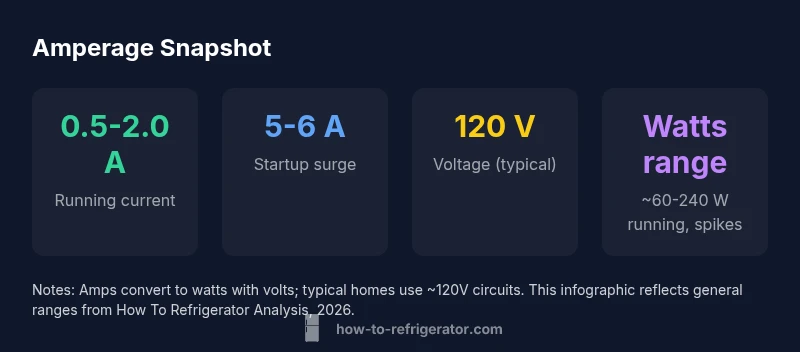
Typical residential refrigerators draw about 0.5–2 amps during normal operation, with brief startup surges reaching 5–6 amps. The exact draw depends on compressor size, refrigerant load, and defrost cycles. To stay safe, measure amperage with a clamp meter and compare against the appliance’s label. This quick figure helps set expectations for energy use and troubleshooting.
What are refrigerator amps and why they matter
Understanding refrigerator amps helps homeowners gauge electrical load, energy use, and appliance health. The term refrigerator amps refers to the current drawn by the fridge's compressor, fans, defrost heater, and controls as they cycle on and off. According to How To Refrigerator, measuring amps is a practical way to diagnose efficiency issues, catch unusual electrical demand early, and plan for power needs in homes with generators or solar setups. Beyond curiosity, amp behavior informs safety—incorrect wiring, aging components, or faulty seals can push current higher than normal and waste energy. When you think in terms of amps, you can compare models, assess upgrades, and prioritize maintenance tasks that reduce peak draw while keeping temperature stability. Remember that voltage also matters: amps × volts ≈ watts, so a 120V circuit with higher amps tends to pull more power overall. This is why a consistent amperage reading that aligns with the label is a good sign of a healthy refrigerator.
How to measure amps safely
Measuring refrigerator amps requires a non-contact or contact method that keeps you away from live parts. The simplest and safest tool for homeowners is a clamp-on amp meter (AC clamp meter). Steps:
- Unplug the fridge for safety before handling any wiring, if you can access the power cord safely. 2) If you cannot unplug, use a clamp meter around the power cord’s prongs or, preferably, at the outlet while the fridge is running. 3) Read the running current when the compressor cycles on. 4) Note the startup peak when the compressor starts—the initial surge is usually higher than running current. 5) Compare reading to the label on the appliance or to the typical ranges described by How To Refrigerator Analysis, 2026. If you cannot safely access the plug, contact a licensed electrician. Remember: never touch exposed conductors or internal components. Proper tool use minimizes risk and yields reliable data.
Typical amp ranges by refrigerator type
Amps vary by size, design, and age. Here are general ranges you may encounter on common residential units (at 120 V):
- Standard top-freezer and bottom-freezer models: running 0.6–1.5 A; startup surges 4–6 A.
- Side-by-side and French-door models: running 0.8–2.0 A; startup surges 5–6 A.
- Compact/apartment fridges: running 0.3–1.0 A; startup surges 3–5 A.
These ranges reflect typical designs and are intended as a guide. For your specific model, always check the nameplate and user manual. Use these figures to estimate energy use and to identify abnormal draw that could signal maintenance needs.
How to interpret amperage readings in practice
Reading amps is a practical way to assess efficiency and catch anomalies early. To interpret readings:
- Confirm volts: Most U.S. refrigerators run on 120 V; in some regions, 230 V is common. If volts differ, convert amps to watts (Watts = Amps × Volts) to compare with the label’s wattage figure.
- Compare running current with the label: A healthy fridge should stay within the running current range. If you notice a sustained rise, it may indicate a dirty condenser, worn door seals, or a failing compressor.
- Monitor startup surges: A brief spike to 5–6 A is expected for a healthy unit; a prolonged startup peak or repeated surges could signal a problem. Documentation from How To Refrigerator Analysis, 2026 helps you benchmark your model.
- Seasonal factors: Ambient temperature, door-opening frequency, and frost buildup can influence readings. Baseline measurements under normal conditions improve troubleshooting accuracy.
Steps to reduce unnecessary current draw
Keeping amps low reduces energy bills and helps prolong fridge life. Practical steps include:
- Clean condenser coils at the back or beneath the fridge every 6–12 months to improve heat rejection.
- Ensure door seals are intact and airtight; replace worn gaskets if air leaks are detected.
- Improve ventilation: Leave space behind and around the unit for proper airflow and heat dissipation.
- Set a reasonable thermostat: Avoid extreme cold; modestly raise the setpoint in hot weather to reduce compressor run time.
- Defrost when needed: Regular defrost cycles prevent ice buildup that drives longer run times.
- Consider upgrading insulation: If your fridge is older, upgrading or replacing with a more efficient model can lower amp draw over time.
Common myths about refrigerator amps
Myth 1: A higher amp draw means better cooling. Reality: Excess amps often indicate inefficiency or a malfunction. Myth 2: Startup amps always predict long-term consumption. Reality: Short surges are normal; sustained high startup currents hint at issues. Myth 3: Modern fridges always draw fewer amps than older models. Reality: Efficiency varies by design and usage; better insulation and components influence actual draw more than model year alone. Myth 4: You can judge a fridge’s health by a single resting amp value. Reality: Amps fluctuate with cycles, environment, and defrost timing. Consistent baseline readings over days provide better insight.
Troubleshooting spikes in amps
If you notice unexpected spikes or rising amps, follow a structured check:
- Verify seals and door closure to prevent warm air from entering.
- Clean condenser coils and ensure the fan runs unobstructed.
- Inspect defrost cycle timing and heater operation; a stuck defrost can cause higher current consumption.
- Check for obstructions around the vents and ensure adequate clearance behind the unit.
- If readings remain elevated or peak frequently, schedule a professional evaluation to assess the compressor, start relay, and wiring connections.
- Maintain consistent voltage supply; significant voltage dips or surges can distort readings and harm components.
When to call a professional
Some amperage issues require licensed support:
- Persistent high running current beyond the model’s stated range across multiple measurements.
- Recurrent startup surges that trip breakers or cause flickering lights.
- Visible damage to cords, plugs, or the control board.
- Defrost problems that consistently keep the compressor running or prevent cooling.
- Suspected refrigerant issues or unusual noises that defy simple fixes.
- If you are unsure about safely performing measurements or interpreting results, contact a professional for a thorough electrical and mechanical assessment.
Practical DIY tests you can perform
Before calling a tech, you can perform a few safe checks:
- Baseline measurements: With the fridge plugged in and running normally, note running amps at several times of day to establish a baseline.
- Defrost check: Allow a defrost cycle to run; observe any changes in amp draw during and after defrost.
- Thermostat test: Slightly adjust the thermostat and monitor how amp draw responds; abrupt changes may indicate a control issue.
- Airflow check: Ensure surrounding area has adequate clearance; poor airflow can cause higher current draw.
- Documentation: Record readings with date, ambient temperature, and door usage to aid the professional assessment.
Remember: Do not attempt internal wiring work unless you are qualified; many measurements require safe access and proper equipment.
Amperage ranges by refrigerator type
| Aspect | Typical Range (amps) | Notes |
|---|---|---|
| Running current (normal operation) | 0.5-2.0 | Baseline run current for most models at 120V |
| Startup surge | 5-6 | Momentary peak when compressor starts; plan for brief higher draw |
| Defrost cycle | 1.5-3.0 | Current spike during defrost heater; varies by model |
| Compact/apartment fridge | 0.3-1.0 | Smaller units draw less current on average |
FAQ
What is a normal amperage for a standard refrigerator?
Most standard models run between 0.5 and 2 amps during normal operation, depending on efficiency and size. Check the nameplate for your exact figure.
Most standard refrigerators run roughly half to two amps when cooling normally.
Do refrigerators use more amps when the compressor starts?
Yes, startup surges are higher than running current due to compressor inertia, often reaching 5–6 amps briefly.
When the compressor starts, amps spike higher briefly.
Why would my refrigerator amperage be higher than usual?
Possible causes include a dirty condenser coil, worn door seals, defrost cycle, or a failing compressor. Verify with a clamp meter and inspect components.
If amps are higher than normal, check coils, seals, and defrost; call a pro if it continues.
Can I run a refrigerator on a generator based on amps?
Yes, but ensure surge capacity to handle startup current; choose a generator with a higher peak amp rating than the fridge’s startup draw.
Yes, but you need a generator that can handle the startup surge.
How can I reduce the amps my fridge draws?
Improve efficiency: seal doors, clean coils, raise thermostat gradually, ensure proper ventilation.
Make sure doors seal well and coils are clean; that helps reduce running amps.
Is it safe to touch the compressor or electrical components?
Always avoid touching electrical components; unplug before service and use insulated tools.
Don't touch; unplug first.
“Accurate readings of refrigerator amps empower homeowners to diagnose efficiency issues and prevent electrical problems before they escalate. This practical, data-driven approach aligns with our maintenance guidance.”
Top Takeaways
- Know the typical amp range for normal operation
- Expect startup surges and defrost spikes
- Use a clamp meter for safe, accurate readings
- Improve efficiency to lower running amps and extend appliance life