Reasons Refrigerator Not Cooling: A Practical Troubleshooting Guide
Urgent, practical guide to diagnose and fix a refrigerator not cooling. Step-by-step checks, safety tips, and maintenance to restore cooling fast.


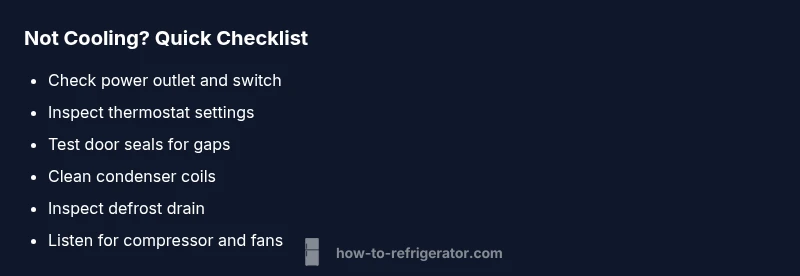
Start with the simplest checks: verify power and the outlet, confirm the thermostat setting is correct, and listen for the compressor and fans. If the light and fan run but cooling is weak, clean the condenser coils and inspect door seals for leaks. If issues persist, unplug for a minute to reset, then call a professional if needed.
Understanding the problem: why a refrigerator might not cool
When a refrigerator isn’t cooling, it’s usually a sign that one of a handful of common issues is at play. For homeowners, the phrase “reasons refrigerator not cooling” is often a cue to start with simple checks before diving into harder repairs. The most important part of diagnosing the problem is to separate symptoms from root causes. If you notice warm air at the vents, uneven cooling on shelves, frost in the freezer, or water pooling inside, you’re likely dealing with a cooling problem rather than a one-off temperature fluctuation. How To Refrigerator analysis shows that many not-cooling scenarios begin with basic, user-serviceable items or simple blockages rather than a sealed-system failure. Document when the issue started, what you change, and what stays the same to build a clear trail that helps you decide whether a quick DIY fix will restore cooling or whether a professional repair is needed. This guide will walk you through a safe, systematic approach to problems like not cooling, with practical steps you can take today.
Common culprits homeowners should check first
In many cases the cause of not cooling is something you can verify or fix without specialized tools. Start with the most common and easiest items first:
- Power and outlet: Ensure the fridge is plugged in and the outlet is live. A tripped circuit or a switch controlled outlet is a frequent start to the question of why a refrigerator is not cooling.
- Thermostat settings: Confirm the temperature control is set appropriately for cold foods. A misadjusted thermostat can masquerade as a cooling failure.
- Door seals and gaskets: A loose or damaged seal lets cold air escape, reducing cooling efficiency and causing warm spots inside.
- Condenser coils: Dirty coils can reduce heat transfer, making the fridge work harder and fail to maintain proper temperature.
- Airflow obstructions: Ensure nothing blocks vents inside the fridge or freezer; blocked airflow can create warm zones.
- Frost buildup and defrost drain: Frost can clog the defrost drain, leading to frost on evaporator and poor cooling. Don’t ignore unusual frost or ice buildup.
If you notice persistent warm air or uneven cooling even after addressing these items, you’re likely dealing with a more complex issue that may require professional assessment.
Diagnostic approach: from symptoms to solutions
A structured diagnostic process helps isolate the root cause of not cooling without unnecessary disassembly. Start by confirming power, thermostat, and seals are in good shape, then assess airflow and condenser heat exchange. If the appliance runs but never reaches the desired temperature, test whether the compressor cycles on and off and listen for the condenser and evaporator fans. Frost or ice accumulation on the evaporator can indicate defrost problems, while a humming or loud compressor may signal a failing component. By documenting symptoms (what you see and hear) and testing one factor at a time, you can narrow down the likely cause of the not cooling condition without guessing. Remember, the goal is to move from symptom to diagnosis to a practical solution, and always weigh safety first.
Step-by-step fix for the most common cause: dirty condenser coils
The most frequent reason for not cooling is dirty condenser coils, usually located at the back or underneath the unit. A thorough, safe cleaning often restores cooling without expensive service. Start by unplugging the refrigerator and moving it away from the wall to access the coils. Use a soft brush or vacuum to remove dust and debris from the coil surfaces, being careful not to bend delicate fins. After cleaning, replug the unit, give it 4–6 hours to stabilize, and monitor temperatures. If the coils were heavily soiled, this can make a noticeable difference in cooling performance. If temperatures remain high or you still hear unusual noises, follow with a targeted check of the fan and compressor. In many cases, a coil cleaning resolves the issue quickly and cost-effectively.
Safety, warnings, and mistakes to avoid
Working with appliances involves electrical and refrigerant hazards. Always unplug the unit before touching electrical components or interior panels. Do not bypass safety features or tamper with refrigerant lines. Common mistakes include using abrasive tools on condenser fins, over-tightening door hinges, and ignoring frost buildup that indicates a blocked defrost drain. If you observe frost thickening on the evaporator plate or you hear unusual sounds from the compressor or fans, stop DIY fixes and call a professional. Regularly inspecting seals and coils can prevent many not-cooling issues before they start.
Maintenance tips to prevent cooling problems
Preventing problems is easier than fixing them. Schedule simple maintenance tasks to keep your refrigerator cooling effectively. Clean the condenser coils every 6–12 months, depending on environment. Check door seals monthly and replace worn gaskets. Keep the appliance level to ensure proper door alignment and seal integrity. Clean spills promptly to avoid moisture buildup in interior surfaces. Finally, set the thermostat to a moderate temperature (not too cold) to reduce compressor wear. With these habits, you’ll reduce the likelihood of not cooling problems and extend the life of your fridge.
Steps
Estimated time: 30-60 minutes
- 1
Confirm power and thermostat
Check that the fridge is plugged in and the outlet is supplying power. Verify the thermostat is set to a cooling range and adjust if needed. Wait 30–60 minutes to see if temperatures stabilize.
Tip: If the outlet is controlled by a wall switch, ensure the switch is ON and the circuit is not tripped. - 2
Inspect door seals and airflow
Close all doors and inspect gaskets for gaps, tears, or sticky residue. Wipe seals clean and ensure doors seal snugly. Remove items that block vents inside the fridge and freezer to improve airflow.
Tip: A loose seal is a common cause of not cooling; replace damaged gaskets promptly. - 3
Clean condenser coils
Unplug the unit and locate the condenser coils (back or underneath). Use a brush or vacuum to remove dust and debris; ensure the coils are accessible and not bent.
Tip: Do not use sharp tools that could damage delicate fins; work gently across the coil surface. - 4
Check defrost system
If you notice frost on the evaporator or frost buildup, check the defrost drain for clogs and ensure the defrost heater is functioning. Clear any blockages and allow the system to cycle.
Tip: A recurring frost issue often signals a defrost timer or heater problem that requires professional attention. - 5
Test the compressor and fans
Listen for the compressor running when the unit is plugged in. Feel the back of the fridge to confirm the condenser fan is turning. If either is silent or unusually loud, note it for the technician.
Tip: A non-running compressor can indicate a faulty start relay or refrigerant issue that needs pro repair. - 6
Call a professional if needed
If temperatures remain high after basic checks, or you suspect refrigerant leaks or sealed-system problems, schedule service. Provide the technician with a list of symptoms and what you tested.
Tip: Document noises, frost, and any test results to speed up diagnostics.
Diagnosis: Refrigerator not cooling or cooling unevenly
Possible Causes
- highPower or outlet issue
- highThermostat or control settings misadjusted
- mediumDirty condenser coils
- mediumDoor gasket leaks or misalignment
- lowDefrost drain clog or frost buildup
- lowCompressor or condenser fan failure
Fixes
- easyCheck outlet and power cord; test with another appliance on the same outlet or reset the circuit breaker.
- easyVerify thermostat setting and adjust to a proper cooling level; avoid extreme cold settings.
- easyDisconnect, then carefully vacuum or brush condenser coils; ensure adequate clearance around the unit.
- easyInspect door gaskets for cracks or gaps; replace if damaged and ensure doors seal properly.
- mediumIf frost is present, clear defrost drain and allow the evaporator to thaw; monitor for recurring frost.
- mediumListen for a running compressor and fans; if you don’t hear them or they’re noisy, schedule service.
- hardFor suspected refrigerant or sealed-system issues, contact a trained technician; do not attempt refrigerant work yourself.
FAQ
What is the most common reason a refrigerator stops cooling?
The most common causes are dirty condenser coils, worn door seals, and thermostat misadjustments. These issues are usually fixable without professional help if addressed early.
Most fridge cooling problems come from dirty coils, bad door seals, or a thermostat that's off. These are usually fixable yourself if you catch them early.
How do I know if my condenser coils are dirty?
Inspect the coils behind or beneath the fridge; if you see a thick layer of dust or lint, cleaning them can restore cooling efficiency. If dust is minimal, the issue might lie elsewhere.
Check behind or underneath the fridge for dusty coils. If you see a lot of dust, a cleaning often helps the cooling.
Can a door seal cause not cooling?
Yes. A damaged or loose door seal lets cold air escape, raising internal temperatures. Replacing worn gaskets typically fixes this problem.
A bad door seal can cause cooling problems because cold air leaks out. Replacing the gasket usually fixes it.
When should I call a technician for not cooling?
If you hear unusual noises, suspect a refrigerant leak, or temperatures don’t improve after basic checks, it’s time to call a technician for a professional assessment.
If you hear odd noises or can’t fix it after checking the basics, call a repair technician.
Are frost and defrost drain problems serious?
Frost buildup and blocked defrost drains can cause not cooling. Clear the drain and check for recurring frosting; persistent frost may indicate a defrost system fault.
Frost and clogged drains can cause cooling problems. Check and clear the drain, and watch for recurring frost.
Is it safe to run the fridge with the back panel removed?
No. Avoid running the fridge with access panels removed. There is a risk of electric shock and refrigerant exposure. Reassemble for safety and call a pro if needed.
Don’t operate the fridge with panels off. Reattach panels and seek professional help for behind-panel issues.
Top Takeaways
- Check basics first before calling a pro
- Dirty coils and worn seals are common culprits
- Defrost issues can cause frost and poor cooling
- If you suspect a refrigerant or sealed-system problem, contact a professional
- Regular maintenance reduces future cooling issues