LG French Door Refrigerator Troubleshooting and Maintenance Guide
Learn how to diagnose and fix common issues on an LG French door refrigerator with practical, step-by-step guidance, safety tips, and easy maintenance practices.


With this guide, you will diagnose and fix common problems on an LG French door refrigerator. You’ll learn to check temperature accuracy, resolve ice or water dispenser issues, identify leaks, and address odd noises. Gather basic tools, unplug safely, and follow clear, step-by-step troubleshooting steps tailored to LG French-door models.
Understanding LG French Door Refrigerator Design
LG French door refrigerators are designed to maximize fresh-food storage while delivering flexible organization. In typical layouts, the refrigerator section occupies the upper cavity behind two wide doors, with a bottom freezer drawer or two drawers depending on model. Many LG French-door models feature accessible gallon-door shelves, humidity-controlled crisper drawers, adjustable shelves, and a water/ice dispenser integrated into the door. Good design helps with energy efficiency, reduces cold air loss, and makes routine cleaning easier. For homeowners troubleshooting issues, a basic knowledge of where components live – seals, coils, fans, and drains – makes diagnostics faster and safer. According to How To Refrigerator, understanding the layout helps you target the right components first and minimize wear on seals and gaskets.
This guide centers on common LG French door configurations and how to approach repairs without risking damage to sensitive electronics or refrigerant lines. You’ll learn to distinguish symptoms that signal simple maintenance from those that require careful replacement or professional service. Keep your user manual handy, and use model-specific diagrams when available to locate parts such as the evaporator, condenser, defrost drain, and ice-maker assembly.
Symptoms and Diagnoses: Common LG French Door Issues
Common LG French door symptoms fall into a few broad categories: the fridge not cooling adequately, frost buildup in the freezer, unusual noises, leaks around the base or door seals, and dispenser problems (ice or water). Temperature instability can stem from door seals that don’t seal well, overfilled shelves blocking air vents, or a dirty condenser coil. Frost buildup implies a defrost system issue or a blocked drain. Leaks are often related to improper drainage, a loose water line, or a damaged door gasket. Ice makers may stall due to water supply issues, clogged filters, or frozen lines in the dispenser.
From a diagnostic perspective, cluster symptoms by the system: airflow vs. cooling capacity, drainage vs. ice/water components, and mechanical noise vs. electrical indicators. Based on How To Refrigerator analysis, most LG French door problems trace back to door seals, condenser coils, or the ice/water line. A systematic approach helps you confirm the root cause before replacing parts.
Safety Precautions and Prep Work
Before touching electrical components or disassembling panels, observe strict safety steps. Unplug the unit from the wall outlet and switch off any power strips feeding it. If you must work near water lines, keep the area dry and avoid contact with damp skin. Use a dry, non-conductive tool when handling electrical connectors, and never attempt refrigerant-related repairs yourself. Clear the surrounding area of food, utensils, and sharp objects to prevent accidents. If the fridge is on a hot kitchen island or has a stubbornly difficult door seal, wait a few minutes to let components settle before proceeding. These precautions reduce risk and set a safe baseline for the diagnostic process.
In addition, document any settings or notifications you observe. A quick photo log of control panel displays, door alignment, and gasket condition can help you compare before/after results. The How To Refrigerator team emphasizes safety as the foundation of any repair, especially when dealing with sealed systems and electrical components.
Diagnostic Checklist: Quick Tests You Can Do
Use this checklist as a practical, non-destructive testing routine. Start with the simplest checks and progress to more involved tests only if you’re comfortable.
- Verify power supply: Confirm the outlet is live and the cord is intact.
- Check door seals: Inspect gaskets for cracks or deformation and test with a dollar bill test (insert bill; if it pulls out easily, seal may be failing).
- Observe airflow: Ensure air vents inside the fridge aren’t blocked by items.
- Inspect condenser area: Look for dust buildup; dirty coils reduce cooling efficiency.
- Test temperature settings: Ensure the fridge and freezer are set within the manufacturer’s recommended ranges.
- Examine water line and ice-maker: Check for kinks, leaks, or frozen sections in the line.
- Check internal drainage: Look for frost at the back panel near the drain pan and ensure the defrost drain isn’t blocked.
- Listen for unusual noises: A buzzing or clicking sound can indicate fan or compressor issues.
If a test reveals a potential leak, unusual noises, or a persistent temperature issue, it may require more in-depth inspection or professional service. The goal is to isolate whether the issue is a simple misadjustment or a sign of a failing component.
Inspecting Key Components: Seals, Coils, Drainage, and Ice Maker
Inspecting major components provides clarity about what’s failing and where to focus your repair efforts. Door seals should be clean and fully seated; replace any damaged gaskets to restore airtight closure. Condenser coils should be clean and free of dust; a simple vacuum or brush can improve heat transfer efficiency. The defrost drain must be clear; a blocked drain can cause water to pool in the fridge or contribute to frost. For ice makers and water dispensers, ensure the water line is connected, the water filter is not clogged, and the ice maker is enabled. If the ice maker is producing small or cloudy ice, check for mineral buildup or filter replacement needs.
On many LG French door models, interior components are accessible from a rear panel or inside the fridge. Always unplug before removing panels, label connectors if you disconnect any cables, and reassemble in the reverse order. This careful approach reduces the risk of pinched wires or misplaced parts and helps maintain the appliance’s warranty compatibility.
Maintenance Tips to Prevent Issues
Preventive maintenance saves time and keeps your LG French door refrigerator operating efficiently. Schedule a light cleaning of the door seals and interior monthly to prevent mold and odors. Clean condenser coils at least twice a year, or more often in dusty or high-traffic environments. Keep the area around the fridge tidy to promote proper airflow, and avoid overfilling shelves that can block vents. Replace the water filter according to the manufacturer’s schedule and reset any indicator lights to reflect the new filter. Periodically verify that doors still seal completely when closed and that the hinge alignment is correct. Small, consistent maintenance can extend the life of your appliance and reduce the likelihood of major repairs.
Energy Efficiency and Long-Term Care
Optimizing energy efficiency for LG French door refrigerators involves maintaining clean coils, proper door seals, and consistent temperatures. A well-sealed system reduces cycling and minimizes frost buildup, which can strain the compressor. When doors are left ajar, energy use spikes and foods spoil faster. Smart scheduling of defrost cycles and routine maintenance keep energy consumption reasonable while preserving freshness. Use the manufacturer’s energy-saving tips and keep vents unblocked for consistent airflow. If you notice a sudden spike in electricity usage, review your maintenance log for recent changes or a potential leak and address promptly. Regular maintenance is a proactive investment in appliance life and household energy costs.
AUTHORITY SOURCES
- https://www.energy.gov/eere/buildings/articles/refrigerators
- https://www.cpsc.gov
- https://www.osha.gov
Final Maintenance Plan and Quick Reference
A practical maintenance plan combines monthly checks with seasonal deep-clean tasks. Use a checklist to remind yourself of coil cleaning, gasket inspection, water filter replacement, and ice maker calibration. Keeping a simple, repeatable routine reduces the risk of overlooking a problem and helps you document changes over time. If you prefer digital tools, set monthly reminders and attach photos of any issues you observe for future reference. This proactive approach aligns with best practices in appliance care and supports safer, longer-lasting LG French door refrigerators.
Tools & Materials
- Multimeter(to test thermistors and defrost sensors)
- Phillips and flat-head screwdrivers(for access panels and handles)
- Soft brush/vacuum with nozzle attachment(for condenser coils and vents)
- Towels and shallow pan(to catch spills during defrost/drain work)
- Thermometer (fridge internal)(to verify actual temps vs setting)
- Manual or model-specific guide(for locating parts and wiring diagrams)
Steps
Estimated time: 60-120 minutes
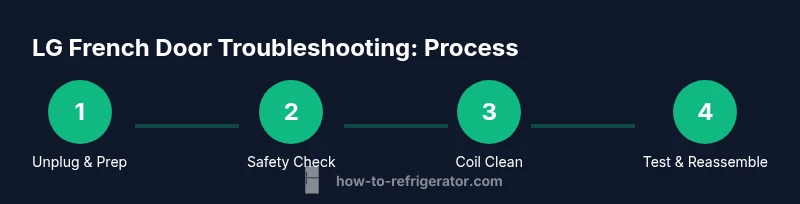
- 1
Unplug refrigerator
Safely unplug the unit and remove any loose items inside to prevent damage or spills. Wait 60 seconds before touching any exposed components to allow capacitors to discharge. Keep the area dry and keep a towel handy for moisture.
Tip: Always unplug first; never work on live electrical components. - 2
Move the fridge away from the wall
Gently slide the appliance forward to create space for rear access. This makes it easier to reach the condenser area and defrost drain without bending or forcing panels. Make sure to protect the floor with a soft mat or blanket.
Tip: Ask a helper if possible to prevent back strain. - 3
Clean condenser coils
Use a soft brush or low-suction vacuum to remove dust from condenser coils visible at the back or underneath the unit. Clean coils improve heat dissipation and cooling efficiency, reducing compressor workload. Reposition the unit after cleaning so air can circulate.
Tip: Do not use water directly on coils; keep the area dry. - 4
Inspect door gaskets and door alignment
Check door seals for cracks, tears, or deformations. Wipe gaskets with a damp cloth to remove residues. If seals are damaged, replace them. Ensure doors align and close evenly to maintain an airtight seal.
Tip: A dollar-bill test can help assess seal integrity. - 5
Check thermostat settings and verify temps
Ensure both refrigerator and freezer are set to manufacturer-recommended ranges. If your model has a digital display, confirm the readings are stable after 10–15 minutes of operation. Adjust as needed and monitor for 24–48 hours to confirm improvement.
Tip: Avoid frequent, abrupt changes that stress components. - 6
Inspect ice maker and water line
Look for kinks or leaks in the water line and confirm the water supply valve is fully open. If ice production is slow or inconsistent, check filters and confirm ice-maker is enabled. Clear any frost obstructing lines that could impede flow.
Tip: Replace the water filter if it’s clogged or overdue. - 7
Check defrost drain and frost buildup
If you notice frost around the evaporator or a pool of water in the fridge, the defrost drain may be blocked. Clear the drain path and flush with warm water if needed. Reassemble panels carefully after ensuring the area is dry.
Tip: Signs of frost—like ice buds near vents—signal a defrost issue. - 8
Test operation and reassemble
Plug the unit back in, replace any panels, and return items to their places. Monitor temperatures and ice maker function for 24–48 hours. If symptoms persist, proceed to professional service or consult the LG support resources.
Tip: Keep a simple troubleshooting log for reference.
FAQ
Why is my LG French door refrigerator not cooling properly?
Start with the basics: ensure power is connected, verify the thermostat is set correctly, check door seals for leaks, and inspect the condenser coils for dust. If temperatures remain unstable after these checks, there may be a defrost issue or a failing compressor.
First check power, thermostat, seals, and coils; if it still cools poorly, there may be a defrost or compressor problem.
Why is there water leaking inside or outside the fridge?
Leaks often come from a clogged defrost drain, a kinked water line, or a loose connection. Inspect the drain path, ensure the water line is properly connected, and reseal doors if needed.
Look for a blocked defrost drain or loose water line, and reseal doors to stop leaks.
My ice maker isn’t making ice. What should I check?
Check the water supply, ensure the filter isn’t clogged, confirm the ice maker is turned on, and inspect the ice bin for ice buildup.
Check water supply and filter, make sure the ice maker is enabled, and clear any ice in the bin.
What do flashing lights on the control panel mean?
Flashing indicators usually signal an error code or door-open condition. Refer to the user manual’s error code list or LG support for guidance.
Flashing lights indicate an error or door issue; check the manual or LG support for the code.
Can I fix this myself or should I call a pro?
Many basic issues (like button settings or coils) are DIY-friendly. More complex problems, especially refrigerant or compressor work, require a licensed technician.
If you’re unsure, start with simple checks; for refrigerant or compressor work, call a pro.
How often should I clean condenser coils?
Clean coils at least twice a year, or more often if your kitchen is dusty or your fridge is in a high-traffic area.
Two times a year is a good baseline; more often in dusty spaces.
Watch Video
Top Takeaways
- Unplug before any inspection
- Clean condenser coils to improve cooling efficiency
- Inspect door seals to prevent leaks
- Test ice maker and water line for proper function
- Maintain temperatures per manufacturer guidelines for efficiency