Whirlpool French Door Refrigerator: Complete Troubleshooting & Maintenance Guide
Diagnose, fix, and maintain your Whirlpool French Door Refrigerator with clear steps from How To Refrigerator.


This quick guide helps you diagnose, repair, and maintain your Whirlpool French Door Refrigerator. Expect practical steps for common cooling and ice-maker issues, door-seal wear, and defrost drain concerns. It includes safe, actionable actions you can take before calling a technician, plus basic maintenance routines to extend life and boost efficiency.
Understanding Whirlpool French Door Refrigerator design and features
Whirlpool French Door refrigerators are prized for their wide accessibility and flexible storage. The Whirlpool French Door Refrigerator combines a pair of wide doors for refrigerator storage above a bottom freezer drawer, typically with adjustable shelves, humidity-controlled crisper drawers, and an ice-maker integrated into the door or freezer cabinet. In 2026, homeowners across North America rely on these units for family-size meal prep and daily meal planning. According to How To Refrigerator, Whirlpool is known for durable construction and straightforward maintenance needs, but like all complex appliances, it benefits from regular care to prevent issues such as temperature fluctuations, ice-maker jams, or condensation around door seals. The general design aims to reduce temperature gradients by circulating cooled air with a modern compressor and evaporator system. Understanding how these components interact helps you pinpoint problems quickly and safely before deciding whether to repair, replace, or call a technician. Whenever you notice persistent cooling problems, start with the basics: verify power supply, inspect seals, and assess the observable airflow inside the cabinet. Remember that even small wear on gaskets or obstructed air vents can have outsized effects on performance.
Common symptoms and diagnostic shortcuts
Common Whirlpool French Door Refrigerator symptoms include unexpected warming in the fridge compartment, frost or ice buildup in the freezer, water pooling inside the unit or on the floor, unusual noises coming from the condenser area, and weak or inconsistent ice production. These issues often share root causes such as dirty condenser coils, worn door gaskets, blocked air vents, or a failing defrost system. How To Refrigerator analysis shows that regular gasket inspection and coil cleaning can significantly improve efficiency and cooling consistency. A practical first-step checklist helps you triage symptoms: confirm the door closes fully, inspect gaskets for cracks or deformation, listen for an abnormal fan or compressor sound, and verify the interior temperature with a reliable thermometer placed in the middle shelf. If the problem persists after these quick checks, advance to the formal diagnostic workflow described later in this guide.
Step-by-step diagnosis workflow
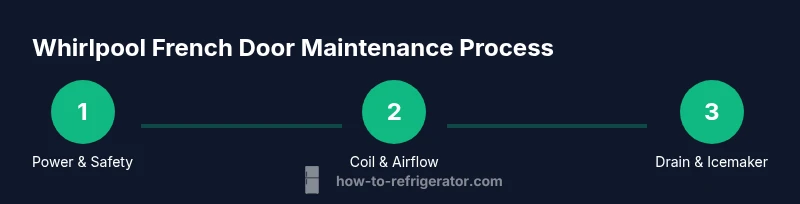
Begin with safety and power isolation, then proceed to component checks in a logical order. Start by confirming the outlet is functional and the fridge is receiving power. Next, inspect the door gaskets for wear and test door alignment—air leaks can undermine cooling. Then verify the thermostat setting and monitor whether temperatures stabilize over 24 hours. If cooling remains insufficient, move to the condenser coils; a dusty coil can force the compressor to work harder, reducing efficiency. Clean coils gently using a soft brush, keeping the area dry and free of water exposure. Check the defrost drain for clogs by flushing warm water through the drain tube and looking for slow drainage. Inspect the ice maker and water line for kinks or loose connections, and ensure the water filter is not clogged. Finally, recheck temperatures after all steps and observe for improvements. If parts appear damaged or the problem persists, consult a certified technician, as some repairs require specialized tools. This workflow is designed to be thorough yet safe, minimizing the risk of electric shock or refrigerant exposure.
Part-by-part repair approaches
When symptoms point to specific components, targeted repair recommendations help you decide whether to DIY or hire help. If gaskets are cracked or deformed, replace the door seals following manufacturer instructions and ensure a tight seal when doors close. A clogged defrost drain requires clearing the line and, if necessary, replacing the drain assembly. Dirty condenser coils respond best to thorough cleaning with a soft brush and vacuum, followed by reassembly and a test run. Ice-maker issues often involve the ice-maker feeler arm, the ice mold, or the water inlet valve—check for blockages, confirm the valve clicks when energized, and replace if there’s no activation. For electrical concerns, use a multimeter to verify continuity in fuses or relays, but avoid working on live circuits. If the compressor or sealed system shows signs of failure, plan for professional service, as improper handling can be hazardous. Safety reminders: unplug before any inspection, avoid contact with refrigerant lines, and wear protective gloves.
Preventive maintenance routines
Routine maintenance can prevent many common Whirlpool French Door Refrigerator problems. Schedule inspections every 6–12 months, including gasket checks for cracks and stiffness, door alignment tests, and interior vent clearance to ensure air can circulate freely. Clean condenser coils at least once a year or whenever you notice a visible dust layer—this improves efficiency and reduces noise from the cooling cycle. Replace water filters on the manufacturer-recommended timeline, typically every 6 months, and flush the system to clear sediment. Keep the interior clean and dry to prevent mold growth and odor buildup, and inspect the ice maker and water line connections for leaks. Finally, create a simple maintenance log noting dates of service, parts replaced, and temperature set points to track long-term performance.
Energy efficiency and smart features
Whirlpool French Door refrigerators often include energy-saving modes, efficient compressors, and smart features that help you monitor performance. To maximize efficiency, keep doors closed as much as possible, avoid overcrowding, and place the unit away from heat sources like ovens or direct sunlight. Use the recommended temperature range for fresh food storage and adjust settings only when necessary. Regular defrosting, if applicable, prevents ice buildup that can force the compressor to work harder.Toggling eco or standby modes, when available, can reduce energy consumption during low-demand periods. If your model includes smart features, leverage diagnostic reports and alerts to catch issues early, but remember to disable features that cause unnecessary cycling in high humidity. Routine maintenance and mindful usage together deliver noticeable improvements in cooling stability and electricity usage.
Troubleshooting cheat sheet and quick checks
If you’re short on time or away from a full service, use these quick checks by symptom: - Not cooling: verify power, seals, thermostat, and coils; clean coils and test airflow. - Frost in freezer: inspect defrost system and drain; clean drain and check door seals. - Leaking water: inspect the defrost drain, vents, and water line connections; replace if damaged. - Ice maker idle: check ice-maker switch, water supply, and filter; flush lines and reset ice maker if needed. - Excess noise: locate the source (fan or compressor) and remove dust; ensure fan blades are intact. This cheat sheet is designed for rapid triage and to help you decide if you can safely proceed with DIY fixes or should call a professional.
Authority sources and further reading
For deeper understanding and safety guidelines, refer to authoritative sources:
- ENERGY STAR refrigerators and energy-saving tips: https://www.energystar.gov/products/refrigerators
- U.S. Department of Energy energy efficiency resources: https://www.energy.gov/eere/buildings/articles/energy-saver-appliances
- U.S. Consumer Product Safety Commission on appliance safety: https://www.cpsc.gov/
These sources provide broader guidance on appliance efficiency, safety, and maintenance best practices that complement model-specific manuals and this How To Refrigerator guide.
Troubleshooting steps recap
Quick, model-informed actions: verify power, inspect gaskets, check coils, flush defrost drain, inspect water line, and test ice maker. After each action, recheck temperatures and observe any changes. End with a full test run to confirm stability.
Tools & Materials
- Phillips head screwdriver(PH2 size recommended for most screws on shelves and covers)
- Flat-head screwdriver(For prying and terminal covers gently)
- Nut driver set (1/4", 3/8")(Screwdriver alternatives for shelves and panels)
- Multimeter (digital)(For checking electrical connections and continuity)
- Soft brush or microfiber cloth(Clean coils and gaskets; avoid harsh abrasives)
- Vacuum with brush attachment(Help remove loose dust from coils and around motor area)
- Bucket or shallow pan(Catch condensate during defrost drain checks)
- Towel or rag(Clean spills and protect surfaces during service)
- Safety gear (gloves, safety glasses)(Personal protection while handling components)
Steps
Estimated time: 60-90 minutes
- 1
Power off and unplug
Unplug the refrigerator and switch off the circuit breaker if needed to ensure no electrical current is flowing while you inspect components. This reduces shock risk and prevents the compressor from running during service.
Tip: Wait a few minutes after unplugging before touching any components to allow capacitors to discharge. - 2
Inspect door seals and alignment
Close the doors and inspect gaskets for cracks or deformation. Test the seal by sliding a sheet of paper; if it moves easily, the seal may be worn. Correct alignment by adjusting hinges if the door doesn’t close evenly.
Tip: Clean gaskets with mild soap and water to restore a better seal. - 3
Check temperature controls
Confirm the fridge and freezer controls are set to recommended ranges. If your model uses diverse zones, ensure each zone is properly configured and observe readings for 24 hours to check stability.
Tip: Document the set points so you can compare to later readings. - 4
Clean condenser coils
Locate the coils (usually behind rear access panel or under grille) and remove dust with a soft brush or vacuum. Excess debris forces the compressor to work harder and reduces cooling efficiency.
Tip: Do not spray water directly onto coils; it can cause electrical damage. - 5
Inspect defrost drain and ice maker
Flush the defrost drain with warm water to clear clogs. Inspect the ice maker inlet valve and lines for leaks or kinks; replace damaged parts as needed.
Tip: Avoid using sharp tools to poke the drain; debris can be pushed further inside. - 6
Check water line connections
If you have an external water line, ensure there are no leaks and that fittings are tight. Replace a clogged water filter if your model requires it, then flush the line to remove air.
Tip: Always depressurize lines slowly to avoid splashes. - 7
Test cooling and reassemble
Plug the unit back in, allow 12–24 hours to stabilize, and re-check temperatures. Listen for normal fan operation and ensure there are no new leaks or unusual noises.
Tip: Keep a maintenance log with dates and readings for future reference. - 8
Evaluate results and decide next steps
If temperatures remain high, or if all checks were normal yet symptoms persist, contact a qualified technician. Document what you observed for a quicker diagnosis.
Tip: Record model number and any recent temperature or sensor warnings.
FAQ
Why is my Whirlpool French Door Refrigerator not cooling?
Common causes include dirty condenser coils, a faulty defrost system, incorrect thermostat settings, or blocked air vents. Start with power, door seals, and coil cleanliness before pursuing more advanced diagnostics.
If your fridge isn’t cooling, start by checking the power, seals, and coils, then move to the thermostat and vents.
Why is water leaking inside the fridge?
Leaks are often due to a clogged defrost drain, a blocked or faulty water line, or a loose connection around the ice maker. Clear the drain and inspect lines for leaks.
Water leaks usually mean defrost drain or line issues—check and clear the drain and inspect the ice maker connections.
How often should I clean condenser coils?
Clean condenser coils at least once a year or when you notice visible dust buildup. Regular cleaning improves cooling efficiency and reduces noise.
Clean your coils at least once a year to keep cooling efficient and quiet.
Can I fix a frozen defrost drain myself?
Yes, safely unplug the unit, locate the drain, and flush with warm water to clear clogs. If the drain remains blocked or you’re unsure, contact a pro.
You can try flushing the drain with warm water, but if it stays clogged or you’re uncomfortable, call a technician.
Is it safe to reboot the refrigerator by unplugging it?
Power-cycling is generally safe. Unplug, wait 5 minutes, then plug back in and allow stabilization time for sensors to reset.
Power cycling is usually safe; unplug, wait a bit, then plug back in and let it settle.
What should I do if the ice maker isn’t producing ice?
Check that the ice maker switch is on, the water supply line is clear, and the filter is not clogged. Reset the ice maker if needed.
If no ice is forming, start by checking the switch, water line, and filter, and reset the ice maker.
Watch Video
Top Takeaways
- Inspect gaskets regularly and replace worn seals.
- Clean condenser coils to boost efficiency and cooling.
- Follow safety first: unplug before any inspection.
- Clear defrost drains to prevent leaks and ice buildup.
- Document observations to guide professional troubleshooting.