LG French Door Refrigerator Ice Maker Troubleshooting and Repair
Learn how to diagnose, reset, and repair the LG french door refrigerator ice maker with clear, actionable steps. This How To Refrigerator guide covers common causes, tool lists, safety tips, and maintenance to keep ice production steady.


You're here to fix an LG french door refrigerator ice maker. This guide explains how to diagnose common ice maker issues, reset the unit, inspect water lines and filters, and perform safe maintenance. It covers troubleshooting, replacement parts, and preventive care to keep ice flowing reliably. It also helps you determine when to call for professional service if needed.
Why this matters for LG French door refrigerator ice maker
For many homeowners, the ice maker on an LG french door refrigerator is a convenience that quickly becomes a frustration when ice stops flowing. A reliable ice maker supports daily living, from coffee rituals to entertaining guests. A few simple checks can often resolve most common issues without calling a technician. In addition to maintaining ice production, understanding the ice maker helps you protect water quality and energy use. The How To Refrigerator team has found that routine maintenance—like swapping filters on schedule and inspecting water lines—can prevent a majority of performance issues. When you know where to look, diagnosing ice maker problems becomes a step-by-step process rather than a mystery. The LG ice maker system is designed for relatively straightforward service, but it does require careful attention to water supply and electrical safety. If you notice unusual noises or a consistent failure to produce ice after a reset, consult this guide and consider professional help if the issue persists.
Common ice maker failure modes in LG units
LG french door refrigerators often use integrated ice makers that depend on water supply, sensor signals, and mechanical components. Common failure modes include no ice production, ice cubes that are misshapen or too small, and ice that is stuck in the tray. Water leaks around the ice maker suggest line or valve issues, while odd noises can indicate a jam, motor problem, or a frozen line. Filtering plays a critical role: a clogged or overdue filter can reduce water flow, leading to insufficient ice production. A misaligned ice mold or a loose sensor can also cause the unit to stop cycling. In summary, most problems fall into four categories: water supply problems, filtration issues, mechanical jams, and sensor or control faults. A systematic checkup helps isolate which category is at fault.
Diagnostic workflow to isolate the problem
To diagnose effectively, start with non-destructive checks at the surface and progress to targeted inspections. Verify the ice maker switch is on and the freezer temperature is in the normal range for ice production. Check the water line for kinks or freezing along the line, and inspect the shut-off valve to confirm water is flowing. Remove the ice bin and observe whether ice is being produced at all or if the cycle stalls mid-way. If ice production is absent, test the water valve by listening for a click when the unit attempts to fill. If there is water flow but no ice, the issue is likely at the ice mold, sensor, or motor. Document any error codes from the control panel if present. Safety note: unplug the unit before touching electrical connections or panel screws.
Resetting the ice maker and recalibrating
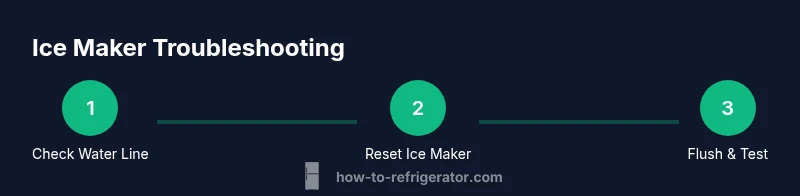
Resetting is often the simplest remedy for many ice maker issues. Start by locating the reset button or the reset procedure outlined in your LG manual. Press and hold the reset button for several seconds until you hear a chime or see the ice maker restart. After a reset, allow the unit to complete one full cycle and check whether ice production resumes. If not, perform a full recalibration by ensuring the freezer temperature is stable, the ice maker is properly aligned, and the fill mechanism seats correctly. Monitor ice production for the next 24 hours to confirm stability. A reset can clear minor sensor glitches and restore normal operation without replacing parts.
Replacing the water filter and checking supply lines
A degraded or overdue water filter can dramatically reduce ice production. Locate the water filter in your LG fridge and replace it with a compatible model, following the clockwise-to-lock instructions. After replacing the filter, run a cleaning cycle or flush the system to purge air and debris. Inspect the water line connections for leaks, kinks, or frost buildup, especially at joints and the valve. If you see frost buildup, allow the line to thaw and recheck after a few hours. If the filter indicator remains lit, replace again and verify water pressure from the supply line. Proper filtration and unobstructed water flow are essential for consistent ice.
Maintenance and long-term reliability tips
Consistency is key for long-term ice maker reliability. Schedule periodic filter changes based on water quality and manufacturer guidelines, typically every several months. Keep the freezer set to the recommended temperature for ice production and avoid frequent opening of the door during peak cooling cycles. Regularly inspect the ice mold for buildup and clear it as needed using a soft cloth and a non-abrasive tool. Document any recurring issues and review the LG manual or How To Refrigerator guides for model-specific notes. With routine care, your LG french door refrigerator ice maker can maintain steady performance and reduce the likelihood of unexpected breakdowns.
Tools & Materials
- Phillips head screwdriver(For removing screws on ice maker housing)
- Flathead screwdriver(For prying covers carefully)
- Needle-nose pliers(To disconnect quick-connect fittings)
- Adjustable wrench(Loosen fittings on the water line)
- Towel or rag(Mop up spills and protect surfaces)
- Container or shallow tray(Catch water when disconnecting lines)
- Replacement water filter(Only if the existing filter is clogged or past life)
- Flashlight(Better visibility inside compartments)
Steps
Estimated time: 30-45 minutes
- 1
Power down and locate the ice maker
Unplug the refrigerator to prevent electrical shock. Open the freezer and identify the ice maker assembly and its mounting screws. Remove any panels or covers only as needed to access the ice maker, avoiding excessive force. This step ensures your safety and gives you clear access to the critical components.
Tip: If in doubt, unplug first and work on a dry surface to prevent water contact with electronics. - 2
Inspect water line and valve
Trace the water line from the supply valve to the ice maker. Look for kinks, leaks, or frost on the line. If you suspect a blockage, disconnect carefully and rinse with warm water. Reconnect securely and test water flow before proceeding.
Tip: Have a towel ready to catch any drips during disconnection. - 3
Check for ice buildup or jams
Remove the ice bin and visually inspect the mold and fill mechanism for clogs or cracked parts. If ice is stuck, gently clear with a non-metallic tool. Ensure the mold can release ice without binding and that the sensor can move freely.
Tip: Do not insert sharp objects; use a wooden or plastic tool to avoid damaging the mold. - 4
Reset the ice maker
Locate the reset button or procedure in your LG manual. Hold the reset button for 3-5 seconds until the unit signals a restart. After reset, allow one full cycle and verify ice production resumes.
Tip: If there is no visible reset button, consult the model-specific guide for alternative methods. - 5
Test water filtration and line after a reset
If the ice maker still shows issues, replace the water filter and flush the system to purge air. Reconnect all lines firmly, run a test cycle, and observe the ice maker for at least one cycle to confirm water delivery and ice formation.
Tip: Run the water dispenser for a few seconds to prime the line after changing the filter. - 6
Finalize and schedule maintenance
Secure all panels, restore power, and monitor ice production over the next 24 hours. Record any recurring symptoms and plan regular maintenance per LG guidelines to prevent future failures.
Tip: Keep a small spare filter on hand for timely replacements.
FAQ
Why is my LG ice maker not producing ice?
Common causes include a clogged water filter, a frozen water line, a faulty water valve, or a sensor/motor issue. Start with the water supply and filter, then check for ice mold jams. If unresolved, continue with a controlled reset and inspection.
Ice maker issues are usually due to water supply problems, filters, or sensor faults. Start with the water line and filter, then reset and inspect the mold for jams.
How do I reset the LG ice maker on a French door fridge?
Locate the reset button on the ice maker module. Press and hold it for 3-5 seconds until you hear a chime or see the unit restart. Allow one full cycle to confirm normal operation.
Find the reset button on the ice maker, press and hold for a few seconds until it restarts, then test for a full cycle.
Can a dirty filter cause ice maker problems?
Yes. A clogged filter reduces water flow to the ice maker, leading to underfilled molds or no ice. Replace the filter according to LG guidance and flush the system afterward.
A dirty filter can block water flow and stop ice production. Replace the filter and flush the system.
Is it safe to fix the ice maker myself?
With the unit unplugged and the ice maker access panels open, many issues can be addressed safely. Avoid sharp tools near electrical components and disconnect water lines only when pressure is released.
You can work on it safely if you unplug first and follow the manuals, but stop if you feel unsure or see damaged parts.
When should I replace the water filter?
Replace the filter when the flow slows, the ice looks odd, or the LG indicator signals. Use a compatible LG filter and flush the system after installation.
Replace the filter when you notice slower water flow or unusual ice, and flush after replacing.
What if the ice maker still fails after a reset and filter change?
If the issue persists, the problem may be a faulty sensor, motor, or valve. At that point, professional service or LG support may be necessary to diagnose internal components.
If reset and filter changes don’t solve it, consider professional service for sensor or valve failures.
Watch Video
Top Takeaways
- Inspect water supply first to rule out line issues
- Reset the ice maker before replacing parts
- Replace the filter if ice flow slows or tasting issues occur
- Document recurring problems and maintain on a schedule