Repair LG Refrigerator Ice Maker: Step-by-Step Guide
Learn how to diagnose and repair an LG refrigerator ice maker with a homeowner-friendly, step-by-step approach. Safety-first tips, diagnostic checks, component replacement guidance, and preventative maintenance to keep your ice maker running smoothly.


Goal: Diagnose and repair an LG refrigerator ice maker. Begin by confirming the ice maker is powered and the water supply line is connected and unfrozen. Then check the ice mold, ejector blades, and bin for jams, inspect the fill cup, and test sensor signals. If parts are defective, replace with compatible LG ice maker components.
Common LG Ice Maker Symptoms
LG ice makers that misbehave often show a handful of telltale signs. You may notice no ice or very small ice, irregular or hollow cubes, or a slow production rate. Jammed ejector blades or a stuck ice mold can prevent cycles from completing, while frost buildup around the ice maker may indicate a defrost or condensation issue. Water leaks near the ice maker or a persistent buzzing or humming sound are red flags for water-line or motor problems. The root causes commonly include a frozen or restricted water line, a faulty water inlet valve, a defective ice maker module or sensor, or obstructions in the ice mold assembly. According to How To Refrigerator, a methodical approach that starts with power and water checks often saves time and money. If your LG ice maker struggles to cycle, verify that the freezer temperature is correct and the ice maker switch is in the ON position. For homeowners, recognizing these patterns helps prioritize fixes and decide when to seek professional service.
Tools and Safety Precautions for LG Ice Maker Repair
Before you touch any components, unplug the refrigerator or switch off power at the circuit breaker to avoid electrical shock. Shut off the water supply to the fridge to prevent leaks while you work. Wear safety gloves to protect your hands from sharp edges inside the panel. Keep a clean workspace and catch basins or towels ready to manage any residual water. Have a camera or note-taking method handy to document disassembly steps, so reassembly is straightforward. Use the manufacturer’s guidelines and avoid forcing parts; LG ice maker assemblies can be delicate, especially the ejector blades and mold housing. If you detect burnt smells, arcing, or melted insulation, stop immediately and contact a professional. These precautions reduce risk and protect your family and appliance while you troubleshoot.
Step-by-Step Diagnosis and Testing (High-Level Roadmap)
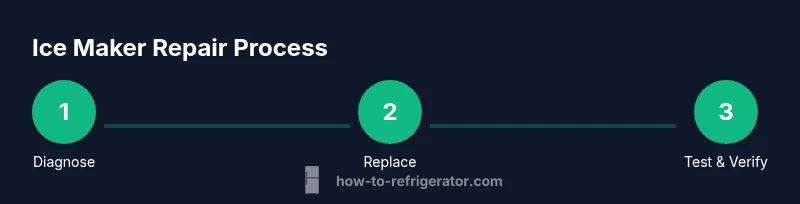
A systematic diagnosis helps identify whether the ice maker itself or upstream components are at fault. Start with power verification, followed by water supply inspection, then evaluate the ice mold and ejector assembly for jams. If you suspect an electrical fault, test the ice maker module and related wiring for continuity and proper voltage. Where helpful, consult the LG model’s service manual or How To Refrigerator’s guides for wiring diagrams and test points. After confirming or replacing a likely faulty component, run a test cycle to observe ice production and inspect cycle timing, sensor feedback, and seal integrity. Document all findings; this makes it easier to decide whether to continue with repairs or call a pro.
Replacing Common Failures: Ice Maker Module, Inlet Valve, and Mold
Replacing components can restore function when diagnostics point to one or more hardware faults. Start with the ice maker module if the unit fails to cycle or control signals are irregular. The water inlet valve can cause no-water or delayed-fill symptoms and may freeze the line if stuck open or closed. The ice mold assembly and ejector blades should be inspected for cracks, wear, or obstruction; misalignment prevents proper cube ejection. Use compatible LG replacement parts and follow the service instructions for your model. After installation, secure all connections, reassemble the panel, and perform a test cycle to confirm proper operation.
When to Repair vs Call a Technician: Cost, Safety, and Warranty Considerations
If your ice maker repair involves complex wiring, sealed refrigerant circuits, or a component under warranty, weigh the cost and risk of DIY against professional service. In many cases, a blown fuse, simple jam, or blocked line is DIY-friendly, while a faulty control board or compressor-related issue is best left to a trained technician. Remember that opening sealed refrigerant systems can be hazardous and may void warranties. If your LG ice maker is still under warranty, check the terms before purchasing replacement parts. A proactive maintenance routine can prevent recurring problems and extend the life of the ice maker.
Preventive Maintenance to Extend LG Ice Maker Life
Routine maintenance minimizes future breakdowns. Clean the ice bin and mold assembly regularly to prevent mineral buildup and jams. Check the water line for kinks or leaks and ensure the freezer temperature remains consistently cold but not overly frozen. Replace the water filter per the manufacturer’s schedule to maintain water quality and flow. Periodically inspect the ice maker housing for frost buildup and address freezer door seals if they appear compromised. A simple periodic check keeps the ice maker reliable and reduces the need for urgent repairs.
Quick Troubleshooting Cheat Sheet
- No ice or slow production: verify water supply, line is not frozen, and ice maker switch is ON.
- Ice is jammed: inspect mold and ejector for obstructions; remove ice carefully.
- Water leaks: tighten hoses, check valve connections, and inspect for cracks.
- Odd noises: check the motor and gears for wear; replace if necessary.
- Error codes: consult LG service manuals and How To Refrigerator’s repair guides for model-specific signals.
Tools & Materials
- Multimeter(Test electrical signals and continuity)
- LG-compatible ice maker kit or replacement module(Ensure compatibility with your LG refrigerator model)
- Screwdriver set (Phillips and flathead)(Remove panels and fasteners)
- Nut driver or socket set(Access mounting hardware)
- Needle-nose pliers(Grip clamps and water line fittings)
- Gloves and safety goggles(Protect hands and eyes)
- Towels or absorbent cloths(Catch spills during tests)
- Container for small parts(Prevent loss of screws and springs)
- Water source shutoff tool or valve wrench(If the valve is stubborn, a wrench helps)
Steps
Estimated time: Estimated total time: 45-60 minutes (depending on access and part availability)
- 1
Power off and access the ice maker
Unplug the refrigerator or switch off the circuit breaker to eliminate shock risk. Remove the front panel or ice maker cover as needed to access internal components. Keep track of screws and small parts for reassembly.
Tip: Take photos during disassembly to help with correct reassembly. - 2
Check power and signals
Test that the ice maker receives voltage when it should cycle. Use the multimeter to check continuity between control pins and verify the module is receiving power.
Tip: If no voltage is present, backtrace from the control board to identify potential wiring faults. - 3
Inspect water supply and line
Turn off water, disconnect the line, and check for kinks, freezes, or leaks. Ensure the water inlet valve is open and not stuck.
Tip: If you see frost on the line, thaw the supply with a hair dryer from a safe distance. - 4
Evaluate the ice mold and ejector
Look for cracks, warping, or obstructions in the mold and ejector blades. Manually rotate the ejector to check for smooth operation.
Tip: Do not force the ejector; misalignment can damage the mechanism. - 5
Test cycling and sensors
With power reconnected, run a diagnostic cycle if available. Check sensor feedback and ensure the mold fills evenly.
Tip: Document any error codes shown by the display to aid diagnosis. - 6
Replace faulty components
Install the identified defective part(s), following the manufacturer’s wiring diagrams and safety guidelines. Recheck connections for tightness and insulation.
Tip: Use OEM or LG-approved parts to avoid compatibility issues. - 7
Reassemble and run a test cycle
Reattach the ice maker cover, restore power, and initiate a full test cycle of ice production. Observe the cycle, listen for unusual noises, and verify ice quality.
Tip: If the test is unsuccessful, re-check all connections and seals before finalizing. - 8
Monitor performance after repair
Over the next day, monitor ice production rate and look for recurrent jams or leaks. Adjust freezer temperature if necessary and ensure the door seals are intact.
Tip: Keep a log of ice production to detect early signs of another issue.
FAQ
What are the most common LG ice maker problems?
Most common issues include no ice, slow production, jammed ejector blades, and frozen water lines. Start by checking the water supply and ice mold for obstructions, then inspect the ice maker module and wiring for faults.
Most LG ice maker problems are due to water supply or jams in the mold. Start with the water line and mold, then inspect the module if needed.
Why is my LG ice maker not filling with water?
A blocked or frozen water line or a faulty inlet valve commonly causes no fill. Ensure water supply is on, the line isn’t frozen, and the inlet valve is functioning. If the valve is defective, replace it.
No water fill is usually from a frozen line or bad inlet valve. Check the line and valve, and replace if needed.
Can I fix my LG ice maker myself?
Many ice maker issues can be repaired by a capable homeowner, such as clearing jams or replacing a faulty water inlet valve. Complex electrical or refrigerant-related failures are best handled by a professional.
Yes, many fixes are DIY-friendly, like clearing jams or replacing valves. For complex issues, consult a pro.
How do I know if the ice maker module is bad?
Indicators include no cycling, erratic ejector movement, or sensor errors. Use a multimeter to test continuity and verify the module receives the correct signals during operation.
A bad module often won’t cycle or will move erratically; test the module with a meter and check signals.
Is the ice maker covered under LG warranty or replacement plans?
Warranty coverage depends on model and purchase date. Check your warranty terms and contact LG support or your retailer for service options and part replacements.
Warranty depends on model and purchase date. Check the terms with LG or your retailer.
Watch Video
Top Takeaways
- Diagnose before replacing components.
- Verify water supply and line integrity first.
- Test cycles after reassembly to confirm success.
- Know when to escalate to a professional.