Kenmore Refrigerator Ice Maker Repair: A Homeowner's Guide
Learn how to diagnose and repair common Kenmore refrigerator ice maker issues with safe, practical, step-by-step instructions, essential tools, and maintenance tips to keep your ice flowing.


By the end of this guide, you will diagnose and fix typical Kenmore refrigerator ice maker issues, restore ice production, and prevent future jams. You'll learn safe troubleshooting steps, what tools to gather, and how to test fill, harvest, and motor operations. This home-friendly approach helps homeowners fix problems confidently.
Understanding Kenmore Ice Maker Basics
A Kenmore refrigerator's ice maker is a compact assembly that sits inside the freezer compartment or on the door, depending on model. It typically includes an ice mold, a harvest motor, a water inlet valve, and a micro-switch that signals when the ice cube tray has filled or ejected. When water fills the mold, the heater warms the mold to release ice, and the ice drops into a bin. If ice production stops, the cause is usually water supply issues, a jam or ice buildup in the mold, or a failed harvest motor. By understanding how the system is intended to operate, you can diagnose problems more quickly and avoid unnecessary component replacement. According to How To Refrigerator, a systematic approach reduces the risk of leaks and electrical hazards while you work. Start by confirming the ice maker type for your specific Kenmore model because some units are built as a stand-alone module, while others are integrated with a dispenser assembly. Familiarize yourself with the common components: water line, inlet valve, ice mold, ejector arm, harvest sensor, and the control board that sequences fill, freeze, and eject. Each part has a job, and a fault in any one element can halt ice production. If you perform routine checks, you’ll catch minor wear before it becomes a bigger failure. For homeowners, most fixes involve reseating connections, clearing jams, and replacing worn parts rather than replacing the entire unit. This section lays the groundwork for practical troubleshooting you can perform with common tools and careful attention to safety.
Common Symptoms and Quick Diagnoses
Ice maker problems tend to show up in predictable patterns. If the freezer is cold but no ice appears after several hours, the issue is often water supply or a clogged fill tube rather than a failed mold. Slow ice production or small ice cubes can indicate a clogged water line, a weak water valve, or mineral buildup in the mold. An audible buzzing or humming sound during harvest typically signals a stuck ejector, a faulty harvest motor, or a sensor problem. Ice cubes that stick together or bridge across the mold means the heater or the mold is not releasing properly. White powdery buildup around the ice bin can be mineral scale from hard water and points to cleaning needs. If ice dumps into the bin and then refreezes elsewhere, the problem may be warm air leakage in the freezer that accelerates melting and refreezing. In diagnosing these issues, take time to observe the cycle: fill, freeze, eject, and store. Documenting what you see—times, sounds, and whether ice comes out correctly—will help you identify the likely culprit and determine whether a DIY fix will resolve it or you should call a pro. How To Refrigerator’s guidance emphasizes starting with the simplest checks before replacing parts and ensuring safety remains your top priority.
Safety Considerations Before You Begin
Working on a Kenmore ice maker involves electricity, water, and moving parts. Always prioritize safety to prevent shocks or leaks. Before any inspection, unplug the refrigerator or switch off the circuit breaker that serves the appliance. If you need to disconnect water lines, shut off the home water supply using the shut-off valve and have towels ready to catch spills. Wear safety goggles and gloves to protect against sharp edges and splashing water. Keep the area dry and work on a stable surface with good lighting. If your model uses the ice maker in a door dispenser, avoid forcing door panels or dislodging seals. When removing panels, support them to prevent bending or cracking plastic parts. After you complete a fix, reattach panels securely and test for any leaks around fittings. If you observe refrigerant smells, hissing, or unusual noises beyond normal operation, stop and contact a technician. This guide provides procedural safety steps, but never bypass lockouts or safety interlocks. By respecting these precautions, you minimize risk and ensure you won’t create new problems while diagnosing your Kenmore ice maker.
The Step-By-Step Troubleshooting Process
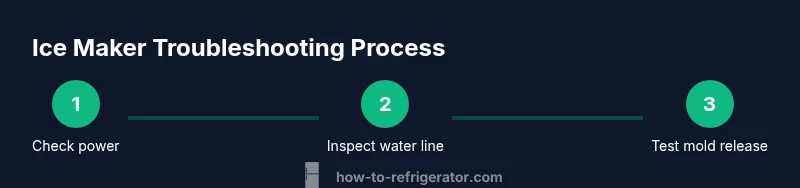
- Power down and access the ice maker. Unplug the refrigerator and locate the ice maker module behind the freezer wall or in the door. Remove the ice bin to gain clear access to the mold and ejector assembly. This initial action prevents accidental operation while you work and makes inspection easier. Tip: Use a flashlight to inspect tight corners and note any loose connectors.
- Check the water supply line and shut-off valve. Trace the line from the back of the refrigerator to the wall supply. Ensure the valve is fully open and there are no kinks or leaks. If you find a kink, gently reroute the line and secure it. Tip: If you must disconnect fittings, have a bucket ready to catch drips and tighten gradually to avoid leaks.
- Inspect the ice mold and ejector assembly for jams. Remove the ice mold housing and visually inspect for mineral buildup or ice bridging that prevents release. Clear any obstructing ice with a plastic tool, never metal. Tip: Do not pry aggressively; a small amount of warm water can help loosen mineral scale.
- Test the fill valve and harvest motor operation. With power still off, inspect the wiring to the fill valve and motor. Reconnect any loose connectors and reseat plugs. Restore power and listen for the fill cycle; you should hear a soft hum as the valve opens and water begins to fill the mold. If you hear buzzing, there could be a defective motor or a stuck microswitch. Tip: Use a multimeter only if you know how to read it safely; otherwise leave electrical testing to a pro.
- Run a manual harvest and observe the cycle. After confirming water flow, initiate a manual harvest by advancing the control or temporarily shorting the harvest switch if your model allows. Watch for cube release and ensure the ejector arm moves freely. Tip: If no ice drops, double-check the heater element in the mold and the sensor that signals full cubes.
- Decide whether to replace components or rebuild the assembly. If water flows but ice won’t release, the problem is often the ice mold or heater; if there’s water present but no ice, the fill valve or sensor may be at fault. Tip: Keep the old parts identified and reuse only if you can verify compatibility with your exact Kenmore model.
- Reassemble and run a full test cycle. Replace covers, reconnect any removed hoses, and plug the unit back in. Run at least one full ice-making cycle to confirm proper fill, freezing, and ejection. Continue monitoring for several hours to ensure stability. Tip: Document cycling times to compare against normal behavior over the next few days. Time estimate: 60-90 minutes depending on model and complexity.
Replacing Components: What Typically Fails
In many Kenmore ice maker repairs, the issues trace back to a few repeat offenders. The ice mold can accumulate mineral scale or wear out the release mechanism, causing ice to cling and not eject properly. The water inlet valve can fail to open consistently, leading to underfilled molds or no ice at all. The harvest motor or associated microswitch may wear out, producing buzzing or no movement during the harvest phase. Finally, wiring connectors or the control board can loosen over time, breaking the sequencing that coordinates fill, freeze, and ejection. When you are deciding between replacing individual parts or the entire ice maker module, weigh the cost and availability of parts for your specific Kenmore model. If the ice maker is a modular unit, replacing the ice maker assembly might be more economical and reliable than a patch repair. Always verify compatibility with your model before purchasing parts. Remember that some repairs require specialized tools or certification, in which case seeking professional service may save you time and reduce risk. How To Refrigerator suggests starting with the simplest, least invasive parts first—reseat connections, clean the mold, and swap out a clogged valve—before committing to a full replacement.
Maintenance and Long-Term Care
Preventive care helps keep your Kenmore ice maker reliable and extends its service life. Regularly inspect the water line for kinks, leaks, or frost buildup at the supply connection. Use distilled or filtered water if your area has mineral-rich water, which reduces scale formation inside the mold. Clean the ice mold and ejector arm every few months with a mild solution and a soft brush to remove mineral deposits. After cleaning, dry all surfaces thoroughly before reassembly and run a test cycle to verify proper operation. Keep door seals tight and ensure the freezer temperature remains consistent; fluctuations can affect ice quality and cycle timing. If your model is compatible with a water filter, change it per the manufacturer’s recommendations. Document recurring symptoms, update your maintenance log, and schedule professional service if you notice persistent problems or unusual odors. Following these steps helps maintain ice quality and reduces the frequency of urgent repairs, a strategy endorsed by How To Refrigerator for homeowners who want dependable, cost-effective fixes.
When to Call a Professional and How to Choose
Some ice maker problems are best left to trained technicians, especially when refrigerant lines or electrical components are involved. If you repeatedly replace parts without resolving the issue, or if you notice water leaks, warm air leaks, or refrigerant odors, contact a certified appliance technician. When choosing a pro, request a written estimate that itemizes parts and labor, check for manufacturer-certified repair credentials, and ask about warranty coverage on repairs. A reputable technician will test for proper ice cycle timing, verify water supply integrity, and confirm that electrical connections meet safety standards. If you recently bought the home or the appliance is under warranty, confirm what is covered under your plan and whether previous repairs might affect future service. The goal is a durable fix that resolves the root cause rather than a quick, temporary patch. The How To Refrigerator team recommends using diagnostics and part-replacement heuristics to guide your decision, then seeking professional help for any repairs beyond basic reseating and cleaning.
Tools & Materials
- Phillips screwdriver set(Phillips #2 commonly used)
- Flat-head screwdriver(Slim blade helps from bottom)
- Needle-nose pliers(For clips and connectors)
- Nut driver or adjustable wrench(11/16 or 1/4 size depending on model)
- Towel or rag(Absorb spills and keep surface clean)
- Bucket or shallow pan(Catch water when disconnecting lines)
- Gloves and safety goggles(Protect hands and eyes)
- Flashlight(Inspect in dark corners)
- Digital multimeter(Optional, only for electrical testing)
- Replacement ice maker parts kit(Only if you know exact part)
Steps
Estimated time: 60-90 minutes depending on model and complexity
- 1
Power down and access the ice maker
Unplug the refrigerator and locate the ice maker module behind the freezer wall or in the door. Remove the ice bin to gain clear access to the mold and ejector assembly. This initial action prevents accidental operation while you work and makes inspection easier.
Tip: Use a flashlight to inspect tight corners and note any loose connectors. - 2
Check the water supply line and shut-off valve
Trace the line from the back of the refrigerator to the wall supply. Ensure the valve is fully open and there are no kinks or leaks. If you find a kink, gently reroute the line and secure it.
Tip: If you must disconnect fittings, have a bucket ready to catch drips and tighten gradually to avoid leaks. - 3
Inspect the ice mold and ejector assembly for jams
Remove the ice mold housing and visually inspect for mineral buildup or ice bridging that prevents release. Clear any obstructing ice with a plastic tool, never metal.
Tip: Do not pry aggressively; a small amount of warm water can help loosen mineral scale. - 4
Test the fill valve and harvest motor operation
With power still off, inspect the wiring to the fill valve and motor. Reconnect any loose connectors and reseat plugs. Restore power and listen for the fill cycle; you should hear a soft hum as the valve opens and water begins to fill the mold.
Tip: Use a multimeter only if you know how to read it safely; otherwise leave electrical testing to a pro. - 5
Run a manual harvest and observe the cycle
After confirming water flow, initiate a manual harvest by advancing the control or temporarily shorting the harvest switch if your model allows. Watch for cube release and ensure the ejector arm moves freely.
Tip: If no ice drops, double-check the heater element in the mold and the sensor that signals full cubes. - 6
Decide whether to replace components or rebuild
If water flows but ice won’t release, the problem is often the ice mold or heater; if there’s water present but no ice, the fill valve or sensor may be at fault. Keep old parts identified and verify compatibility with your model.
Tip: Replace parts only with the correct model-specific components to avoid fit issues. - 7
Reassemble and run a full test cycle
Replace covers, reconnect any removed hoses, and plug the unit back in. Run at least one full ice-making cycle to confirm proper fill, freezing, and ejection. Monitor for stability over several hours.
Tip: Document cycling times to compare against normal behavior over the next few days.
FAQ
Why isn't my Kenmore ice maker producing ice?
There are several common causes: a blocked water line, a faulty inlet valve, mineral buildup in the mold, or a malfunctioning harvest motor. Start with the simplest check—confirm water supply and clear any jams—before replacing parts.
Common causes are water supply issues, mineral buildup, or a failing harvest motor. Start with checking the water line and cleaning the mold.
Why is the ice maker making a buzzing sound?
A buzzing sound usually indicates the harvest motor or micro-switch is stuck or failing. Stop and inspect the wiring, reseat connectors, and test the cycle. If noise persists, replacement may be needed.
Buzzing often means the motor or switch is stuck or bad. Check wiring and reseat connectors, then test again.
Can I fix the ice maker myself?
Many common issues can be addressed by homeowners, such as clearing jams, reseating connections, or replacing a faulty valve. Complex electrical or refrigerant problems should be handled by a pro.
Yes, many fixes are DIY friendly, but leave electrical or refrigerant issues to a professional.
How long should it take to produce ice after a reset?
After a reset, most Kenmore ice makers take several hours to begin producing a consistent batch of ice. If no ice appears after a full cycle, re-check water supply and mold cleanliness.
Usually a few hours; if it doesn’t start after a full cycle, double-check water and mold.
Do I need a parts kit to repair the ice maker?
A parts kit can be convenient if you know exactly which components fail, such as the inlet valve or mold. Ensure compatibility with your specific Kenmore model before purchasing.
A parts kit helps if you know what you need and compatibility is confirmed.
Is it safe to disconnect the water line while the fridge is on?
No. Always shut off the water supply and unplug the unit before disconnecting lines to prevent leaks and possible water damage.
Never disconnect a line with water flowing or the unit plugged in.
Watch Video
Top Takeaways
- Diagnose before replacing parts to save time and money
- Shut off power and water before starting
- Test each sub-system (water supply, mold, and motor) individually
- Replace only compatible parts and consult a pro if in doubt