How to Use Refrigerator Temperature Control
Learn how to set and verify your fridge and freezer temperatures for safety, quality, and energy savings. This comprehensive guide covers ideal ranges, testing with a thermometer, common mistakes, seasonal tweaks, and when to call a pro.


You will learn how to correctly set and verify your refrigerator temperature to keep food safe, reduce energy use, and prevent frost buildup. This guide covers ideal ranges, how to test with a thermometer, and common adjustment mistakes. How To Refrigerator experts walk you through step-by-step checks, seasonal tweaks, and when to call a professional.
How refrigerator temperature control works
Temperature control in a refrigerator is a balance between the thermostat, compressor, evaporator, and vent system. The thermostat senses interior temperature and signals the compressor to turn on or off. When the temperature rises, the compressor starts cooling; when it falls to the set point, the compressor stops. Modern units usually provide a dial or digital readout. The exact mechanism varies by model, but the principle remains the same: colder settings trigger longer cooling cycles while warmer settings shorten them. According to How To Refrigerator, consistent cycling keeps food at safe temperatures and reduces energy waste. For homeowners, understanding this loop helps diagnose why a dial number may not perfectly match the actual temperature, especially if the door is left open or vents are obstructed. In short, your temperature control is a feedback loop: sensors read, the system adjusts, and you maintain stability inside the fridge and freezer compartments.
Ideal temperature ranges and why they matter
Food safety guidelines consistently point to keeping the fridge at about 37–40°F (3–4°C) and the freezer at 0°F (−18°C). Why these numbers? Bacteria grow more slowly near these temperatures, while food quality like crispness and color stays better. The How To Refrigerator analysis shows that even small fluctuations—think a few degrees—can shift risk levels and compromise shelf life. Setting the fridge too cold wastes energy and can cause frost buildup in some models; setting it too warm invites spoilage. If you routinely stock long-keeping leftovers or dairy products, err on the lower end of the range without going below freezing. Always adjust based on your actual measured temperatures rather than dial position alone. Remember: temperature is more important than the exact dial number, and consistency beats occasional overshoots.
How to test and set your fridge temperature accurately
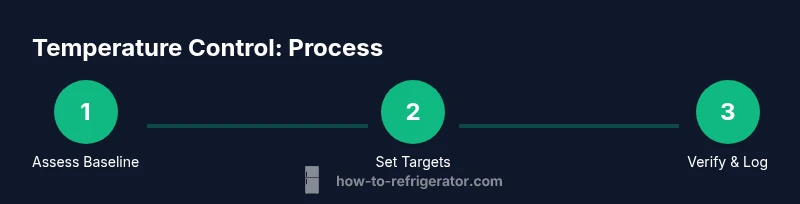
Begin by locating your thermostat controls. Place a standard thermometer in the center shelf, away from the door seal and walls, and wait 24 hours for a stable reading. If your unit has a numeric dial, use a reference chart to map the dial position to approximate temperatures, then fine-tune with minor adjustments. Digital readouts are simpler: set to 37–40°F for the fridge and 0°F for the freezer, then recheck after a day. If the thermometer reads differently, adjust the dial or digital setting and re-test. Keep a log of readings across a week to identify any drift, and avoid drastic changes that shock the system. After achieving stable readings, verify that several shelves share a similar temperature to ensure uniform cooling. This approach minimizes cold spots and ensures food safety across stored items.
Common mistakes and how to fix them
Leaving the door open for prolonged periods is the top culprit. If you notice frequent door openings, your interior temperature will rise. Overpacking can block vents and trap warm air; rearrange items to allow air circulation. Placing hot or warm foods directly into the fridge raises temperatures temporarily; cool items to room temperature first. Position shelves to ensure air can circulate around tall containers. A dirty gasket or blocked vents can also degrade cooling; clean seals and clear the vent paths. Finally, remember that external factors like a warm kitchen or recent power outages can affect readings; re-test after conditions normalize. By addressing these mistakes, you’ll keep temperatures stable and energy use predictable.
Seasonal adjustments and energy efficiency tips
During hot summer months, lean toward the cooler end of the recommended range to compensate for frequent door openings and warm room temperatures. In cooler seasons, the appliance can run more efficiently with maintenance and clear airflow. Keep the condenser coils clean and unobstructed—dust reduces heat transfer and forces the compressor to work harder. Ensure door seals remain tight; replace worn gaskets to prevent warm air leaks. Use the recommended temperature settings consistently rather than episodic tweaks; this steadiness saves energy and reduces wear on the compressor. If your refrigerator includes an energy-saving mode, consult the manual and compare energy usage before and after activation.
Safety, maintenance, and when to call a pro
Never tamper with high-voltage components or the condenser coils if you’re not comfortable; unplug the unit before vacuuming coils or removing panels. Regular maintenance includes cleaning gaskets, vents, and coils, and calibrating thermometers annually or after service. If you notice persistent not-cold conditions, unusual ice buildup, or buzzing noises from the compressor, stop using the unit and call a qualified appliance technician. While many adjustments can be done by homeowners, refrigerant handling and major electrical work require trained personnel. By keeping up with routine checks, you prevent emergency fridge failures and prolong the appliance’s life.
Authority sources
Federal health agencies provide guidance on safe refrigerator temperatures and best practices for keeping food safe. Use these references to corroborate your setup:
- https://www.cdc.gov/foodsafety/keep-food-safe.html
- https://www.fsis.usda.gov/food-safety/safe-food-handling-and-preparation/keep-food-safe
- https://www.energy.gov/energysaver/keep-your-refrigerator-running-efficiently
Tools & Materials
- Digital fridge thermometer(Place in the center of the fridge, away from walls and doors; use a second one in the freezer if possible.)
- Notepad or digital log(Record daily readings for 7–14 days to spot drift.)
- Owner's manual or model-specific chart(Helpful for mapping dial positions to temperatures.)
- Clean cloth(Use to wipe door seals and vents for accurate readings.)
Steps
Estimated time: 2 days
- 1
Locate thermostat controls
Find the temperature controls for the fridge and freezer. If you have a dial, note its current position; if you have a digital display, take a screenshot or write the current temperature. This step establishes your baseline before any adjustments.
Tip: If you can’t tell which way is colder on a dial, test by moving one notch and waiting 24 hours. - 2
Place a thermometer and establish baseline
Position a fridge thermometer in the middle shelf away from the door and walls. Wait 24 hours to obtain a stable reading. For the freezer, place a second thermometer and repeat the waiting period.
Tip: Avoid placing thermometers near the door or vents where heat leaks skew readings. - 3
Set the fridge to the target range
Aim for 37–40°F (3–4°C) in the fridge. If your unit is digital, adjust to the target range and record the reading. If you have a dial, move in small increments and retest after 24 hours.
Tip: Make small changes to prevent overshooting the target temperature. - 4
Set the freezer to the target range
Set the freezer to 0°F (−18°C) and confirm with the freezer thermometer after 24 hours. If readings differ from the set point, adjust in small steps and recheck.
Tip: Avoid freezing-weather surprises by testing in a dry, ventilated space. - 5
Re-check and confirm stability
After both compartments read within the target range for a full day, verify across multiple shelves to ensure even cooling. Log any drift for future reference.
Tip: If one shelf runs warmer, rearrange contents to improve air circulation. - 6
Establish a maintenance routine
Create a simple schedule to re-test temperatures monthly or after big changes (new groceries, power outages, or door malfunctions). Keep doors closed, reduce heat load, and clean gaskets periodically.
Tip: A quick monthly check prevents bigger problems later.
FAQ
What is the recommended fridge temperature?
Most guidelines recommend keeping the fridge at 37–40°F (3–4°C) for safety and quality. Use a thermometer to verify, as dial readings can be imprecise.
Aim for 37 to 40 degrees Fahrenheit in the fridge, and verify with a thermometer.
How long should I wait after changing settings?
After adjusting, wait at least 24 hours to allow the temperature to stabilize and to obtain an accurate reading with a thermometer.
Wait 24 hours before checking the new setting with a thermometer.
Should I trust the dial or thermometer?
A thermometer provides an accurate measurement; dials can be off due to calibration, load, or door openings. Use the thermometer as the baseline.
Use a thermometer for accuracy; dials can be off.
What if the freezer is cold but the fridge isn’t?
Check for airflow obstructions, door seal integrity, and vents. If still not cold after cleaning and testing, a professional inspection may be needed.
Check vents and seals; if it still isn’t cold, call a pro.
Can temperature settings impact energy use?
Yes. Very cold settings waste energy; a stable, moderate temperature uses less energy while keeping foods safe.
Yes, keep temperatures steady to save energy.
When should I call a professional?
If temperatures remain off after checks, or you hear unusual noises or see frost buildup, contact a trained appliance technician.
Call a pro if readings stay off or you hear unusual noises.
Watch Video
Top Takeaways
- Set fridge at 37–40°F (3–4°C).
- Set freezer at 0°F (−18°C).
- Test with a thermometer and wait 24 hours between changes.
- Keep gaskets clean and vents clear for consistent cooling.
- Regularly re-check temperatures to prevent drift.