How to Use Refrigerator Compressor: Step-by-Step Guide
Learn how to safely use and troubleshoot your refrigerator compressor. This guide covers safety, locating the compressor, coil care, diagnosing issues, and maintenance tips to keep your fridge cooling efficiently.


Steps to use your refrigerator compressor safely: 1) Locate the compressor behind the lower back panel; 2) Listen for normal cycling, and feel for warm discharge near the condenser; 3) Keep coils clean and unobstructed; 4) Maintain proper temperature settings; 5) Recognize warning signs and when to call a pro. Avoid touching electrical components; unplug before service.
What the compressor does in a fridge
The compressor is the heart of the refrigeration cycle. It compresses refrigerant gas, raising its pressure and temperature so that the hot, high-pressure gas can release its heat in the condenser coils. As the gas releases heat, it condenses into a high-pressure liquid, then travels through the expansion device where it becomes a low-pressure, cold liquid. This liquid enters the evaporator, absorbing heat from the fridge interior and cooling the space. The compressor then draws in the resulting low-pressure gas to start another cycle. In a typical household fridge, the compressor cycles on and off to maintain the set temperature, and it should run relatively quietly with occasional short cycles. A healthy compressor is a sign of proper airflow, clean coils, and a sealed refrigeration system. When the compressor struggles, you may notice longer running cycles, warmth near the back, or rising energy use. The How To Refrigerator team emphasizes that addressing upstream causes—like dirty coils or a leaky door seal—often improves compressor performance more than replacing parts.
Safety and initial considerations
Before touching the appliance, prioritize safety. Unplug the fridge to prevent electric shock, and if you must work near the back panel, wear insulated gloves and eye protection. Do not touch exposed wires or terminals. Work on a dry surface and avoid standing on damp floors. If you notice a strong burning smell, melted insulation, or sizzling sounds, stop immediately and call a licensed technician. Remember that many refrigerant and electrical components carry stored energy even after unplugging; treat the system with respect and follow the manufacturer’s service manual when available. How To Refrigerator’s guidance prioritizes safety and minimal risk while performing maintenance tasks.
Locating the compressor and condenser coils
In most top freezers and standard refrigerators, the compressor sits at the bottom rear of the appliance, behind a protective access panel. The condenser coils run along the back or underneath the unit, radiating heat to the surrounding air. To inspect them, unplug the fridge and pull it away from the wall if you can do so safely. Remove the back panel carefully, noting any screws or clips. Inspect the coils for dust, pet hair, and other debris. A clogged coil forces the compressor to work harder, increasing noise and energy consumption and shortening its life. Ensure the area around the coils has adequate clearance for airflow and that the fan, if present, is unobstructed and functioning properly.
Diagnosing common symptoms and their meaning
If the fridge isn’t cooling, note whether the freezer is cold. A non-cooling fridge with a warm condenser area often points to coil or thermostat issues, not just a failed compressor. Listen for unusual noises like buzzing, grinding, or rattling, which could indicate loose parts, a failing fan, or a compressor problem. If the compressor runs constantly or short-cycles rapidly, it may be overheating or fighting a refrigerant imbalance. Frost buildup on the evaporator can also hide underlying airflow problems. Use these symptoms to guide a structured check: coils, door seals, thermostat setting, and defrost system. The goal is to isolate the root cause before deciding between cleaning, component replacement, or professional service.
Cleaning and maintaining condenser coils for efficiency
Dusty condenser coils reduce heat transfer efficiency, causing the compressor to work harder and use more energy. Start by unplugging the unit, then use a coil brush or a soft, static-free brush to remove surface dust. A vacuum cleaner with a brush attachment can help pull dust from deep between the fins. Wipe the exterior panels with a damp cloth and mild soap if needed. After cleaning, reassemble and plug in the unit, letting it stabilize for a few hours before testing. Regular coil cleaning, at least twice a year in dusty environments, can significantly reduce load on the compressor and extend overall life.
Electrical checks and connections you can safely perform
Careful visual inspection of the power cord and the main power outlet can reveal obvious problems like cracks, scorch marks, or loose plugs. If you are trained, you can use a multimeter to test for proper voltage at the outlet; do not attempt electrical testing while the unit is plugged in. Check for loose wiring connections inside the access panel and ensure that all connection points are dry and tight. If you notice damaged insulation, burnt smells, or melted components, discontinue use and contact a professional. Never bypass safety devices or disable overload protection in an effort to “fix” a problem.
Energy efficiency tips to reduce compressor load
Maintaining efficient operation starts with correct temperature settings: refrigerators typically perform best around 37-40 F (3-4 C) and freezers around 0 F (-18 C). Avoid placing hot foods directly into the fridge, and minimize door openings during peak heat hours. Ensure door seals are intact and clean—the tiniest air leak makes the compressor work harder. Position the fridge away from heat sources like ovens or radiators, and provide adequate clearance for air circulation around the back and sides. Regular coil cleaning and a well-sealed door are two of the most cost-effective ways to reduce energy consumption and prolong compressor life.
When to call a professional: safety and warranty considerations
If basic maintenance does not restore cooling or if you detect refrigerant smells or leaks, contact a licensed technician. Refrigerant handling and certain electrical work require certification and can be hazardous. If your unit is under warranty, check coverage for compressor-related failures and service calls. Attempting to repair high-voltage components or charging the refrigerant system yourself can void warranties and create safety risks. For many homeowners, scheduling a professional inspection after simple checks is the safest route to preserve appliance life.
Tools & Materials
- Phillips head screwdriver(For access panel screws on most back panels)
- Flathead screwdriver(Use for prying panels with caution)
- Nut driver / socket set(1/4 inch is common for panel fasteners)
- Multimeter(Only for trained testing of electrical circuits)
- Coil cleaning brush(Fine-tooth brush to reach between fins)
- Soft cloth or microfiber towels(For wiping panels and coils without scratching)
- Mild soap and water(Use sparingly to avoid moisture on electrical parts)
- Safety gloves(Insulated gloves recommended for handling panels)
Steps
Estimated time: 60-90 minutes
- 1
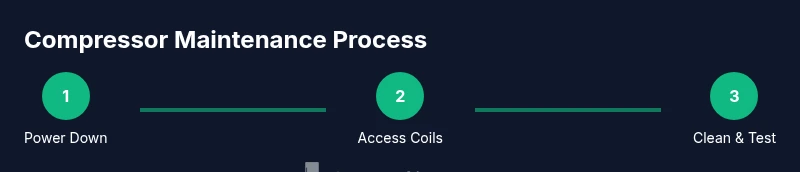
Power down and safety prep
Unplug the refrigerator and put on safety gloves. Confirm the area is dry and free of standing water before you begin any inspection. Take note of the exact model and any warranty stickers in case you need service later.
Tip: Tag a note on the breaker so you don’t accidentally restore power mid-inspection. - 2
Access the compressor
Remove the back access panel using the appropriate screwdriver and nut driver. Gently loosen screws and lift the panel to expose the compressor and condenser coils. Do not touch the compressor terminals or wiring unless you are trained.
Tip: Keep track of screws so you don’t lose parts in the appliance cavity. - 3
Inspect condenser coils for debris
Look for dust, pet hair, and lint around the coils and fins. If you see visible buildup, use the coil brush to loosen debris, then a vacuum to remove it. Ensure the fan is clear of obstructions and spins freely when you gently rotate it by hand.
Tip: Avoid bending fins; use a gentle touch and a soft brush. - 4
Clean the coils and surrounding area
With the unit unplugged, wipe the panels and exposed surfaces with a damp cloth and mild soap if needed. Let everything dry completely before reassembly. Recheck that the coil area is free of moisture, which can cause short circuits if power is restored too soon.
Tip: Drying time is essential; rushing can cause electrical damage. - 5
Check electrical connections
Inspect visible wiring for loose connectors or signs of wear. If you have training, you can use a multimeter to verify voltage at the outlet and continuity in the wiring harness. Do not work with live connections; if anything looks damaged, stop and call a professional.
Tip: Never bypass safety devices or insulation to force a fix. - 6
Verify thermostat and defrost controls
Confirm the thermostat is set within manufacturer-recommended ranges for your model. Check the defrost timer and heater circuit if frost appears on the evaporator. If components feel stuck or nonfunctional, professional service is advised.
Tip: Small thermostat misadjustments can dramatically affect cooling performance. - 7
Test run and observe performance
Replace the panel, plug the unit back in, and allow several hours for stabilization. Listen for abnormal noises and monitor the interior temperature. If temperatures fail to improve or the compressor cycles abnormally, document the readings and seek expert help.
Tip: Give the system time to equilibrate before judging results. - 8
Document findings and schedule next steps
Record the observed temperatures, coil cleanliness, and any noise patterns. Create a simple maintenance log so future inspections can compare progress. If issues persist, schedule a professional evaluation to avoid further damage.
Tip: A maintenance log helps you spot slow degradations before they become failures.
FAQ
What does the compressor do in a refrigerator?
The compressor pumps refrigerant, increasing pressure and temperature so heat can be removed by the condenser. This enables the cycle that cools the interior. A healthy compressor, coil cleanliness, and sealed lines are key to reliable cooling.
The compressor pumps refrigerant to drive cooling. Keeping coils clean and seals tight helps keep it working smoothly.
How can I tell if my compressor is failing?
Common signs include not cooling as well as the freezer not staying cold, unusual or loud noises, the unit running continuously, and excessive energy use. If symptoms persist after basic maintenance, a professional assessment is advised.
If it’s hot inside, runs all the time, or makes strange noises, the compressor may be failing and you should get a pro to check it.
Can I fix a fridge compressor myself?
Some basic maintenance like cleaning coils and tightening obvious connections is safe for a confident homeowner. Most compressor issues involve refrigerant handling, sealed systems, or electrical components best left to a licensed technician.
You can do simple coil cleaning, but refrigerant and internal wiring should be handled by a pro.
How often should I clean condenser coils?
Clean condenser coils at least once or twice a year, more often in dusty environments. Regular cleaning keeps the compressor from overworking and lowers energy usage.
Clean coils at least once a year, more often if your kitchen is dusty.
What safety steps should I take before maintenance?
Always unplug the appliance, dry the area, and wear safety gear. Do not touch live wires, and avoid working near high-voltage components unless you’re trained.
Unplug the fridge and wear protection; never work on live wiring.
When should I replace the compressor vs. repair?
If the compressor is old, repeatedly failing, or refrigerant leaks are present, replacement may be more cost-effective than repeated repairs. A professional can help you weigh the options given your unit’s age and warranty.
If repairs keep failing or the unit is old, replacement is often the better choice.
Watch Video
Top Takeaways
- Understand the compressor's role in the cooling cycle.
- Clean condenser coils regularly to reduce load.
- Always unplug before inspecting electrical components.
- Differentiate simple maintenance from professional repairs.
- Maintain door seals and stable temperatures for efficiency.