Fix Refrigerator Compressor: A Practical DIY Guide
Learn how to diagnose and safely fix common refrigerator compressor issues. This expert guide from How To Refrigerator covers tools, step-by-step actions, safety tips, and when to call a pro for not-cooling problems.


Goal: diagnose and safely fix common refrigerator compressor issues. This guide walks you through essential checks, safe DIY steps, and clear when-to-call-a-professional signals. You’ll need basic tools, a safe workspace, and patience. If you’re uncomfortable with electrical testing or refrigerant handling, stop and contact a pro. The How To Refrigerator approach focuses on practical, beginner-friendly fixes for the keyword fix refrigerator compressor.
Understanding the compressor's role in a refrigerator
The compressor is the heart of your refrigerator's cooling system. It takes refrigerant gas, compresses it to high pressure, and moves heat from the fridge interior to the condenser. When the compressor struggles, you may notice warm air, uneven cooling, frost, or unusual noises. According to How To Refrigerator, a healthy compressor should cycle on and off smoothly with the thermostat and doors closed. Regular maintenance—keeping coils clean, seals tight, and nothing obstructing airflow—reduces strain on the compressor and helps it last longer. This section explains how the compressor fits into the overall system and which symptoms indicate possible faults, so you can decide whether a DIY fix is practical or if professional service is needed.
Diagnosing common problems to fix refrigerator compressor
Several issues can mimic a failing compressor, so start with safe, basic checks. First, confirm the unit is getting power and the outlet is delivering adequate voltage. Next, inspect condenser coils for dirt and debris; dirty coils force the compressor to work harder. Listen for the compressor's start-up sounds: a rattling, buzzing, or constant running can indicate a relay, capacitor, or overload problem. If you notice excessive heat at the compressor or a noticeable refrigerant leak, you may be facing more serious faults. How To Refrigerator notes that many failure signs stem from electrical components rather than the motor itself. Always test with proper precautions and replace any burned wiring or damaged parts only if you have the right skills.
Safe, practical fixes you can try
- Unplug and wait: Disconnect the fridge and wait at least 5 minutes to allow capacitors to discharge. This reduces shock risk. 2) Clean the condenser coils: Vacuum or brush away dust using a soft brush. Clean coils help the compressor run cooler. 3) Check the door seals and airflow: Ensure doors seal tightly and the freezer is not overstuffed; restricted airflow makes the compressor work harder. 4) Inspect the start relay or capacitor: If you can safely access them, reseating or replacing a faulty relay can restore startup performance. 5) Test the electrical supply: Using a multimeter, verify that the outlet is delivering the correct voltage and that the cord plug has no damage. 6) Reassemble and test: After reseating connections, plug in and listen for normal cycling; do not run the unit longer than needed if you hear persistent issues. If noises persist or temperatures fail to recover, discontinue and seek professional help.
When to replace vs repair
Not every compressor issue is worth repairing, especially if the unit is older or if refrigerant handling is involved. If the compressor repeatedly overheats, cycles abnormally, or there are frequent refrigerant leaks, replacement often becomes more cost-effective than a repair. Also consider the fridge’s age, energy efficiency, and availability of parts. A professional assessment can help you weigh the upfront cost against potential future problems. In many cases, a sealant-free repair or a motor replacement can extend life by months to a couple of years, but this depends on the specific model and parts available.
Preventative maintenance to extend compressor life
Schedule regular checks to prevent compressor strain. Clean condenser coils every 3–6 months, ensure adequate airflow around the appliance, and avoid placing hot items inside the fridge. Maintain temperatures within the manufacturer-recommended range (typically around 37–40°F for the fresh food compartment and 0°F for the freezer). Keep gaskets clean and replace damaged seals promptly. If you hear buzzing or humming that’s louder than usual, address it early before it accelerates wear.
Tools & Materials
- Flathead screwdriver(Small pry tool if needed for accessing covers)
- Phillips screwdriver(For accessing panel screws)
- Nut driver set(Size varies by model)
- Multimeter(Voltage and continuity checks)
- Safety gloves(Protect hands from sharp edges)
- Safety goggles(Eye protection when working near coils)
- Soft brush / coil brush(Cleaning condenser coils)
- Vacuum with hose attachment(Helpful for deep cleaning coils)
- Cleaning cloths(Wipe surfaces after work)
- Flashlight(Inspect hard-to-see areas)
Steps
Estimated time: 60-120 minutes
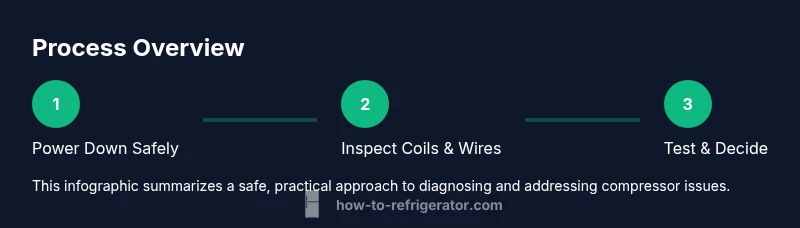
- 1
Power down safely
Unplug the refrigerator from the wall outlet and, if accessible, switch off the dedicated circuit at the breaker. Wait at least 5 minutes to allow any residual charge in the start components to settle before you touch wiring. This reduces the risk of electric shock.
Tip: Use a non-contact voltage tester at the plug to confirm no live current before handling wires. - 2
Access the compressor area
Remove the service panel if your model allows it, using the appropriate screwdriver. Keep track of screws and note any connectors or relays to reseat correctly later. Visualize the entire compressor area to identify loose wires or obvious damage.
Tip: Take a photo of wiring before disconnecting anything to aid reassembly. - 3
Inspect condenser coils and airflow
Locate and examine the condenser coils and the surrounding space. If coils are dusty or blocked, unplug the unit and clean them with a soft brush and vacuum. Poor airflow causes the compressor to work harder and may masquerade as a motor fault.
Tip: Aim to clean coils from top to bottom to avoid stirring dust back into the fins. - 4
Check electrical connections
With the unit unplugged, gently reseat any loose connectors on the start relay, overload protector, and thermostat harness. Look for signs of wear, corrosion, or melted insulation. If a connector is damaged, do not reuse it; replace it.
Tip: Only handle electrical components if you are confident; otherwise skip to step 6 to avoid unsafe work. - 5
Test with a multimeter
Plug in carefully and use a multimeter to verify outlet voltage and continuity of the compressor circuit as per your model’s wiring diagram. If voltage is inconsistent or a circuit component is open, repair or replace the faulty part before testing again.
Tip: Record voltage readings and compare to the model’s spec sheet. - 6
Evaluate the result and plan next steps
If the compressor starts and cools normally, monitor performance for a day. If cycling is erratic, temperatures don’t stabilize, or noises persist, do not push the appliance further and contact a professional.
Tip: Document symptoms, dates, and any parts touched to share with the tech.
FAQ
What are common signs that a refrigerator compressor is failing?
Common signs include warm interior temperatures, unusual buzzing or humming, frequent cycling, and ice buildup. These can indicate electrical faults, a faulty start relay, or a leaking refrigerant circuit. If symptoms persist after basic checks, a professional assessment is advised.
Look for warm food, odd noises, and frequent cycling. If it keeps happening, get a professional assessment.
Can I fix a refrigerator compressor myself?
Some basic maintenance, like coil cleaning and checking connections, is doable for a cautious homeowner. More complex repairs—electrical testing beyond basic checks or compressor replacement—should be performed by a licensed technician due to safety and refrigerant handling requirements.
Basic fixes are possible if you’re careful, but major repairs should be left to a pro.
Is it safe to touch the compressor?
The compressor area can contain sharp edges and electrical components. Always unplug the unit first, wear protective gear, and avoid opening sealed refrigerant lines. If you see refrigerant leaks or damaged insulation, stop and call a pro.
Only touch it after unplugging and using safety gear; refrigerant leaks require a pro.
How long will a repaired compressor last?
Lifetime varies with model, usage, and maintenance. A professional repair can extend life by months to a couple of years in some cases, but deterioration accumulates with age and wear.
It depends on the model and how well you maintain it; expect a potential extension of months to a couple of years.
What should I do if my fridge isn’t cooling after a fix?
First, recheck power and temperature settings. Ensure coils are clean and seals intact. If cooling still fails, the compressor or refrigerant circuit may require professional service.
If cooling doesn’t come back after a fix, check basics and call a pro if needed.
When should I replace instead of repair the compressor?
Consider replacement if the unit is old, refrigerant handling is involved, or repair costs approach or exceed a practical percentage of a replacement. An appliance professional can help quantify the break-even point.
Replacement is often smarter if the fridge is old or repair costs are high.
Watch Video
Top Takeaways
- Inspect coils and seals to reduce compressor strain
- Unplug before any inspection and use proper safety gear
- Use a multimeter to verify electrical supply
- Know when to replace vs. repair for cost efficiency