How to Test Fridge Temperature: A Step-by-Step Guide
Learn how to test fridge temperature accurately using a calibrated thermometer. Follow a practical, step-by-step method to verify the ideal range, interpret readings, and maintain consistent cooling.


Goal: verify your fridge stays safe and fresh by confirming interior temperature with a calibrated thermometer. Place the thermometer on the middle shelf away from the door, wait 5-10 minutes, then read the reading. Compare to the recommended range of 37–40°F (3–4°C); adjust the thermostat if needed and recheck after 30-60 minutes.
Why Test Fridge Temperature
According to How To Refrigerator, testing fridge temperature is a simple, practical step that helps protect food safety and reduce waste. A steady interior temperature ensures dairy, meats, and produce stay out of the danger zone long enough to keep quality high. When temperatures drift, bacteria can multiply faster, shelf life shortens, and leftovers become risky to consume. Homeowners who regularly check fridge temperature build a reliable baseline and catch issues before they become costly problems. This section explains why testing matters, how to read readings, and how to set up a robust test you can perform without specialized equipment. You’ll learn how ambient room conditions, door openings, and load size can affect readings—and how to account for them in your plan. As you work through this guide, you’ll see practical, actionable steps you can take today. The How To Refrigerator team emphasizes simple, repeatable checks that fit a busy household schedule.
What Is the Ideal Fridge Temperature?
The widely accepted target for most home refrigerators is 37–40°F (3–4°C). At this range, perishable foods stay out of the danger zone long enough to slow bacterial growth without risking freezing liquids like milk and juice. Keep in mind that not all zones inside the fridge stay exactly the same; the back wall can be a touch colder than the front. For many units, the built-in temperature gauge isn’t perfectly accurate, so using a dedicated thermometer is the best way to verify temperature is consistently within range. How To Refrigerator’s team notes that small fluctuations are normal, but persistent readings outside the 37–40°F band should be addressed promptly to protect food safety and energy efficiency.
Tools and Preparation
Before you start, gather a reliable thermometer designed for fridge use and a notepad to log readings. If you don’t have a dedicated fridge thermometer, a high-quality kitchen thermometer can work temporarily, but avoid submerging or placing it near the door seal where it will read inaccurately. Calibrate any thermometer according to the manufacturer’s instructions before the test. Clear a shelf to place the thermometer where it won’t be blocked by jars or large items, and try to minimize door openings during the test. This reduces environmental variation and yields a more accurate picture of typical conditions. The goal is to establish a repeatable process you can repeat weekly or monthly, depending on usage and seasonal changes. As you prepare, remember that a clean, well-lit fridge makes it easier to position the thermometer correctly and take reliable readings.
Step-by-Step Test Process (Overview)
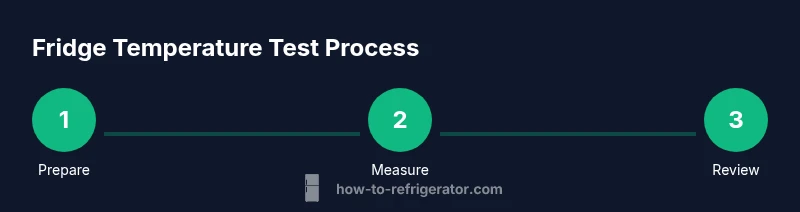
The following overview outlines the practical steps you’ll perform, along with how to interpret results. A more detailed, step-by-step guide with time estimates is provided in the dedicated STEP-BY-STEP block. In short: prepare the fridge and thermometer, place the thermometer correctly, take multiple readings across zones, log results, make any adjustments, and re-test to confirm stability. The process is uncomplicated and designed for homeowners, with safety and accuracy as the top priorities.
Tools & Materials
- Calibrated fridge thermometer(Prefer a device with a remote sensor or a dial/prop sensor specifically rated for fridge use.)
- Batteries (if required by thermometer)(Keep a fresh set on hand in case the unit dies during testing.)
- Notepad and pen(For logging readings across zones and times.)
- Clean cloth(Wipe any spills before placing the thermometer to avoid interference.)
- Clock or timer(To track how long readings sit before taking a measurement)
Steps
Estimated time: 20-40 minutes
- 1
Prepare the fridge and thermometer
Clear a small area on a middle shelf, away from the door, and ensure the thermometer is calibrated. If you’ve recently changed the temperature, allow the fridge to settle for at least 15 minutes before taking readings.
Tip: Close the door as much as possible during the test to minimize ambient heat gain. - 2
Place the thermometer correctly
Position the thermometer in the center of the shelf, not directly against a wall or near bottles that skew air flow. If using a probe, place it away from the door so it samples typical interior temperatures.
Tip: Avoid placing the device near the door seal where warm air enters. - 3
Take measurements across multiple zones
Record readings from the center shelf, top shelf, and a few inches from the back wall. Each zone can read differently, so a single spot may not reflect the whole fridge.
Tip: Wait 5-10 minutes after placement to allow the thermometer to stabilize. - 4
Log readings and compare to target
Write down each zone’s reading and compare against 37–40°F (3–4°C). Consider converting to Celsius if you’re more comfortable with metric units.
Tip: If readings are consistently outside range, note the trend rather than a single outlier. - 5
Adjust thermostat if needed
If most zones read above or below the target, adjust the fridge thermostat by small increments. Wait 15-20 minutes, then recheck the readings.
Tip: Make small adjustments; large changes can overshoot the target. - 6
Re-test to confirm stability
After adjustments, repeat the test across the same zones to confirm readings stabilize within the 37–40°F band.
Tip: Document the final readings and date for ongoing tracking.
FAQ
What is the ideal fridge temperature for safety and quality?
Most food safety guidelines advocate 37–40°F (3–4°C) for the main compartment. This range slows bacterial growth while avoiding freezing liquids like milk. If readings drift, inspect door seals, vents, and load balance.
Aim for 37–40°F inside the fridge to slow bacteria and maintain quality. Check seals and airflow if readings drift.
How long should I wait after placing the thermometer before reading?
Allow 5–10 minutes for the thermometer to stabilize and reflect the air temperature, especially if the door has been opened recently.
Wait about 5 to 10 minutes to get a stable reading after placement.
Can I use a regular kitchen thermometer to test fridge temp?
A kitchen thermometer can work in a pinch, but fridge-specific thermometers are generally more accurate for ambient air temperature sampling. Calibrate any thermometer before use.
A kitchen thermometer can work briefly, but a fridge thermometer gives better accuracy for interior temps.
What should I do if readings vary by zone?
Some variation is normal. Focus on the average across zones and ensure the bulk of readings fall within 37–40°F. Check door seals and airflow if discrepancies persist.
If zones differ, aim for readings clustered around 37–40°F and check seals for consistency.
How often should I repeat fridge temperature tests?
Test at least monthly, or after changing the thermostat, grocery loads, or ambient temperatures. Keep notes to track trends over time.
Test about once a month or after major changes and keep a log.
What if my fridge is in a hot garage or sunny kitchen?
Extreme ambient temperatures can affect readings. If you must keep a fridge in a hot area, use an external thermometer and consider relocation or insulation options.
In hot areas, readings can drift. Use a reliable thermometer and try to minimize heat exposure.
Watch Video
Top Takeaways
- Test fridge temps regularly for safety and quality
- Maintain 37–40°F (3–4°C) inside the fridge
- Use a calibrated thermometer rather than the built-in gauge
- Record readings and adjust gradually
- Retest to confirm stable temperatures