How to Test a Fridge: A Homeowner's Step-by-Step Guide
Learn how to properly test your fridge, diagnose cooling issues, and verify safe operation with a clear, step-by-step guide designed for homeowners.


This guide shows you how to test a fridge to confirm cooling performance, temperature stability, and safety. You’ll verify interior temperatures with a thermometer, check door seals, inspect the defrost system, listen for unusual noises, and confirm that the condenser coils and fans run correctly. Essential tools are a thermometer, a flashlight, and a notebook for results. By the end, you’ll know if your fridge is performing within normal ranges or needs service.
What this test covers for your fridge
A thorough fridge test evaluates several core functions that affect safety, food quality, and energy costs. You will assess cooling performance in both the refrigerator and freezer compartments, confirm temperature stability over a reasonable period, inspect door seals for leaks, check airflow around vents, and verify the defrost system operates as intended. Additionally, you will listen for abnormal noises from the compressor or fans, look for frost buildup, and ensure condenser coils stay clean enough to dissipate heat effectively. This broad approach helps homeowners distinguish between a simple door- seal issue and a deeper mechanical fault. It also provides a baseline you can reuse during routine maintenance.
According to How To Refrigerator, establishing a baseline with controlled, repeatable checks makes it easier to notice even small performance changes. Environmental factors—such as room temperature, how often you open the door, and the amount of food inside—will influence readings, so document conditions each time you test. Having a log helps you spot trends over weeks or months and can prevent unnecessary service calls. The goal is to determine if the fridge is cooling within expected ranges, maintaining safe temperatures, and operating without undue noise or frost.
Temperature targets and measurement basics
Understanding target temperatures is essential before you begin measurements. Most food safety guidelines recommend keeping the refrigerator compartment at about 37–40°F (3–4°C) and the freezer at 0°F (-18°C). While a built‑in thermostat provides a quick read, the most accurate method is to use an independent thermometer placed inside the main compartment. For a reliable reading, insert the thermometer away from the door seals and vents, ideally in the center of the shelf nearest the back wall
During testing, allow time for stabilization after any thermostat adjustment or door opening. If readings are off, note potential causes such as warm ambient conditions, heavy meal loads, or frequent door openings. Record all readings with timestamps so you can compare over different days and usage patterns. If the temperature is consistently outside the target range for several hours, further investigation into airflow, seals, or the compressor may be warranted.
Preparing and safety considerations
Safety comes first when testing a fridge. Start by unplugging the unit if you need to access the rear coils or interior panels to inspect seals and airflow. If you must keep the fridge running for measurements, do not exceed a reasonable monitoring period and avoid touching electrical components. Clear the area around the fridge to prevent obstruction and ensure there is adequate clearance from walls or cabinets for airflow. Use a flashlight to inspect coil area and the gasket around each door edge; look for cracks, splits, or debris that could obstruct a proper seal. Maintain dry hands and avoid standing water near the power source. If you see any damaged wiring or exterior damage, stop and call a qualified technician rather than attempting repairs yourself.
Step-by-step temperature verification
Place a digital thermometer in the center of the fridge, away from the cooling vents. Close the door and wait 15–20 minutes for the temperature to stabilize, then record the reading. Repeat the same process in the freezer compartment. If you have multiple shelves, take readings from a few representative spots to catch uneven cooling. If the temperature drifts outside target ranges, adjust the thermostat in small increments and recheck after 15–20 minutes. Document all readings and any adjustments. By comparing fridge and freezer readings against guidelines, you can gauge whether airflow is balanced and whether a thermostat or sensor may be faulty.
Inspecting seals, airflow, and defrost system
Examine door gaskets for cracks or bending that could prevent a tight seal. A simple test is to close the door on a piece of printer paper or a dollar bill; if it slides out with minimal resistance, the seal may be failing and needs replacement. Inspect the condenser coils for dust and debris; dusty coils reduce cooling efficiency. If accessible, gently vacuum or brush coils without disconnecting wiring. Check for water pooling or frost accumulation along the defrost drain in the freezer—this can indicate a clogged drain or defrost heater issue. Regularly cleaning coils and ensuring the drain is clear helps maintain efficiency and prevents unexpected failures.
Recognizing common fridge faults from test results
If temps are consistently too high but seals look good, the compressor or fans may be struggling. Listen for abnormal buzzing or grinding noises that could indicate a failing fan motor or compressor. Frost buildup in the freezer, unusual odors, or excessive condensation can signal defrost problems or refrigerant issues, which require professional service. If warming occurs only after long door openings or heavy loads, you may simply need to redistribute items to improve airflow or adjust the internal temperature. In every scenario, keep a detailed log of symptoms, times, and readings. That record will be invaluable when explaining the problem to a technician.
What to do next: when to fix yourself vs call a pro
Many minor issues—like dusty coils or a slightly leaky door seal—can be addressed by a confident homeowner using simple tools and replacement parts. When in doubt, start with the easiest fixes: seal leaks, clean coils, and confirm temperatures after adjustments. If you observe persistent high temperatures, unusual noises, frost, or electrical smells, schedule service promptly. Always follow safety guidelines when working near electrical components, and if you’re uncomfortable with handling refrigerant or exposed wiring, contact a licensed technician. Regular checks can extend the life of your fridge and prevent food spoilage, but serious mechanical faults require professional diagnosis and repair.
Authority and maintenance guidance
To ensure your testing aligns with best practices, review official guidelines on temperature control and safe food storage. As you test, rely on evidence gathered with a thermometer rather than guesswork. If you identify a fault beyond basic maintenance, the How To Refrigerator team recommends consulting a qualified appliance technician to avoid voiding warranties or compromising safety. Keeping a maintenance log, scheduling periodic checks, and using proper tools will help you catch issues early and keep your fridge running reliably.
AUTHORITY SOURCES
- https://www.energy.gov/eere/buildings/articles/keep-your-refrigerator-running-efficiently
- https://www.nist.gov/topics/thermometry
- https://www.fda.gov/food-safety_changing/keep-food-safe-food-storage-refrigeration
Tools & Materials
- Digital fridge thermometer(Place in center of fridge and in the freezer; ensure it can read down to -20°C and up to 50°C)
- Flashlight(Inspect condenser coils and door gaskets behind panels)
- Notebook and pen(Record readings, conditions, and adjustments)
- Timer or clock(Track stabilization times for accurate readings)
- Soft cloth and mild cleaner(Clean dust from coils and gaskets without disassembly)
- Screwdriver (flat-head and Phillips)(Only if you need to remove access panels for inspection)
Steps
Estimated time: 60-90 minutes
- 1
Prepare the testing area
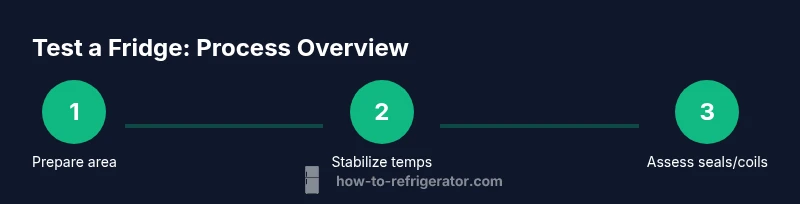
Move items away from the fridge to ensure good airflow. Confirm there is at least 2 inches of clearance on the sides and back. Remove bulky items from in front of vents and behind the doors to prevent airflow obstruction. This setup helps you get accurate temperature readings and a clear view of seals and coils.
Tip: Clearance matters; poor airflow can mimic thermostat problems. - 2
Safety first: power down for access
If you need to inspect the rear coils or door gaskets closely, unplug the unit and wait a few minutes for any stored capacitors to discharge. Do not touch electrical components with wet hands. If you must test while powered, take extra precautions and avoid panel removal unless necessary.
Tip: Always unplug when inspecting internal components. - 3
Place thermometer and stabilize
Insert the thermometer mid-height inside the fridge and near the back, away from the door vent. Close the door and wait 15–20 minutes for the temperature to stabilize. Record the reading in your log along with the ambient room temperature and door-open frequency.
Tip: Position near the center for representative readings. - 4
Measure fridge and freezer temps
Repeat the stabilization step in the freezer compartment. Compare readings to target ranges: fridge ~37–40°F (3–4°C) and freezer ~0°F (-18°C). If readings differ, note potential airflow or thermostat issues and consider adjustments.
Tip: Take multiple readings at different shelves for accuracy. - 5
Test door seals and airflow
Close the door on a thin piece of paper or a bill; if you can pull it out with little resistance, seal leakage exists. Inspect gaskets for cracks, tears, or deformations. Use a flashlight to check for dust blocking the vents and ensure air can circulate from the back to the front.
Tip: A good seal saves energy and maintains safe temperatures. - 6
Inspect coils and defrost system
Check accessible condenser coils for dust buildup; clean gently with a brush or vacuum. Look for frost buildup in the freezer and ensure the defrost drain is clear. If you see pooling water, you may have a blocked drain.
Tip: Dusty coils reduce cooling efficiency dramatically. - 7
Listen for noises and observe operation
With the unit running, listen for unusual buzzing, rattling, or grinding that could indicate a failing fan or compressor. Note the duration and intensity of any noise, and correlate with cooling performance. A quiet hum is typical; loud or irregular sounds merit further diagnosis.
Tip: Persistent abnormal sounds can preempt bigger failures. - 8
Document results and decide next steps
Compile all readings, observations, and any adjustments into your log. If temps are consistently off or you detect seal, coil, or drain issues, plan troubleshooting actions or call a professional. Keep the log handy for future maintenance.
Tip: A thorough log speeds up service visits and ensures nothing is missed.
FAQ
Why should I test my fridge regularly?
Regular testing helps you catch cooling problems early, maintain food safety, and prevent energy waste. A baseline test shows whether your fridge operates within normal ranges and helps decide if professional service is needed.
Regular testing helps you catch problems early and keep food safe, saving energy and money in the long run.
What is a safe fridge temperature?
A safe fridge temperature is typically around 37–40°F (3–4°C). The freezer should be at 0°F (-18°C). These ranges help ensure food stays fresh and reduces bacterial growth.
Aim for about 37 to 40 degrees Fahrenheit in the fridge and zero in the freezer.
What should I do if temperatures are too high?
If temperatures stay too high after stabilizing, check seals, airflow, and thermostat settings. Clean coils, ensure ventilation, and reduce door openings before considering professional service.
If temps stay high, check the seals and airflow, then clean coils and contact a tech if needed.
How long should I wait for temperatures to stabilize after adjusting thermostat?
Allow 15–20 minutes for a temperature change to stabilize after an adjustment, and recheck readings. If readings remain off, wait longer and note any pattern.
Give the thermostat 15 to 20 minutes to settle after changes, then recheck.
Can I test a fridge without moving it out from the wall?
Some tests can be done without moving the unit, but you should still inspect the back and sides for dust buildup and ensure ambient airflow. If you must access the coils, carefully pull the unit away and unplug before inspecting.
You can do most checks without moving it, but inspect the back and sides and unplug if you access coils.
Watch Video
Top Takeaways
- Test temps in both compartments and compare to targets.
- Seal integrity and airflow are critical to cooling efficiency.
- Document readings to spot trends and avoid guesswork.
- Dust-free coils improve performance and energy use.
- Know when to DIY and when to call a professional.