How to Tell If Your Refrigerator Is Cooling Properly
Learn how to verify your fridge’s cooling, test temperatures, inspect coils and seals, and spot issues early with expert steps from How To Refrigerator.


To tell if your refrigerator is cooling properly, verify the temperature targets, listen for the compressor, and observe airflow from vents. Check foods stay cold within 2-4 hours when placed in, ensure door seals are airtight, and look for frost-free operation. If the fridge runs hot or warm areas persist, investigate common causes like dirty coils, faulty door gaskets, or a failing thermostat.
Understanding what means by “cooling properly”
When homeowners ask how to tell if a refrigerator is cooling properly, they want a clear definition of what good cooling looks like. Proper cooling means the fresh food compartment stays in the low 30s to mid-40s Fahrenheit (approximately 35–38°F is common for many models) and the freezer sits at 0°F. Air should circulate steadily from the rear or top vents, not feel warm near the shelves, and there should be no persistent frost buildup. Consistent cooling supports food safety, preserves texture, and reduces energy use. According to How To Refrigerator, the baseline for most residential fridges is steady temperatures within a narrow range, minimal frost, and reliable door seals.
If temperatures drift outside these ranges, or if you notice frost buildup, it’s a sign the unit isn’t cooling properly and further checks are warranted to identify underlying issues.
How temperature is measured and why accuracy matters
Accurate temperature readings are the foundation of diagnosing cooling performance. Use a dedicated fridge thermometer placed in the center of the main produce shelf, not next to the door gaskets or near the back coils where heat or cold drafts can skew results. Keep the thermometer there for at least 24 hours to account for daily usage patterns (door openings, food loading, and room temperature). Record minimum and maximum readings daily during this period. A thermostat set to a nominal value does not guarantee optimal cooling if airflow or coils are compromised. How To Refrigerator emphasizes using a probe-style thermometer for precise readings and noting ambient room temperatures, which can influence compressor cycling.
For the freezer, place the thermometer in the middle or toward the top third to avoid cold air pooling near the bottom. A stable 0°F (-18°C) is the typical target for most freezers. If your readings differ significantly from these targets, you likely have a cooling issue that warrants a targeted check.
Signs your fridge is cooling properly in daily use
In everyday use, proper cooling shows up as:
- Foods and beverages stay cold when refrigerated without excess condensation or sweating on packages
- No warm spots appear on shelves after the unit has run through a standard cycle
- The compressor runs intermittently with short pauses, not continuously, and the environment feels cool to the touch overall
- The back coils and compressor area are not clogged with excessive dust
- The door seals stay airtight, preventing warm room air from entering when the door is closed
If you regularly observe these signs, your refrigerator is likely cooling as intended. If any of these indicators are missing, it may be time to inspect for airflow, seal integrity, or component wear.
Common issues that can fool you into thinking cooling is fine
Certain problems may masquerade as normal cooling: a warm air pocket on one shelf, a slight ice buildup around the gasket, or a clogged condenser coil that reduces cooling efficiency. A unit can feel cool to the touch while perishable items in the back are warm if air is blocked. Dusty coils reduce heat transfer, increasing compressor runtime and energy use. Faulty door gaskets allow warm room air to seep in, compromising cooling without obvious exterior leaks. In some cases, a malfunctioning defrost timer or thermostat can cause uneven cooling or frost buildup that looks harmless at first glance. How To Refrigerator notes that small issues often compound over time, making early detection important.
How to inspect common culprits (step-by-step visual checks)
Before calling a technician, perform a careful inspection focusing on these areas:
- Door gaskets: Confirm the seal is intact all around; run your hand around edges to feel for air leaks or moisture. A leak can let warm air in and spoil cooling performance.
- Condenser coils: Look for an accumulation of dust and lint on the coils at the back or beneath the unit. Excess buildup acts like insulation, trapping heat and reducing cooling efficiency.
- Airflow: Ensure vents inside the fridge aren’t blocked by groceries. Overpacking can impede cold air circulation, creating warm zones even while the compressor runs.
- Leveling: Check that the fridge sits level so doors seal properly. A tilted unit can cause door gaps and poor seal integrity.
- Temperature settings: Confirm the control is set within the manufacturer’s recommended range, not accidentally set too high or too low. A mis-set thermostat can give the impression of adequate cooling while temperatures drift.
If you notice any of these issues, address them and recheck temperatures after a full cycle. Persistent problems may require professional diagnostics per How To Refrigerator recommendations.
Quick DIY checks you can do today (no disassembly required)
These checks are designed to be simple and safe:
- Clean the condenser coils with a brush or vacuum to improve heat transfer if you see dust buildup.
- Replace door gaskets or temporarily seal with plastic wrap to test for leaks if you suspect an air leak.
- Avoid overfilling the fridge; allow air to circulate, especially around the back and shelves.
- Verify the temperature settings are appropriate according to the user manual, then recheck temps after 24 hours.
- Keep the fridge closed during rechecks to avoid temperature swings and stale air, which can distort readings.
If these steps do not resolve the issue, it’s time to schedule a professional inspection. Remember, safety is paramount when dealing with electrical appliances, so avoid opening sealed parts or touching the compressor directly.
When to call a professional and what to expect
If temperatures remain outside target ranges after performing the above steps, or you notice unusual noises, excessive frost, or frequent cycling, contact a licensed technician. A pro can diagnose refrigerant leaks, faulty thermostats, aging compressors, and other internal issues that require specialized tools. How To Refrigerator recommends documenting observations (temps, noises, door seal condition) so the technician has a clear history to guide their inspection. A professional diagnosis can prevent further food spoilage and help restore energy efficiency.
Maintenance habits to keep cooling on track
To keep cooling performance stable over time, implement regular maintenance:
- Schedule coil cleaning every 6–12 months or as needed based on dust levels.
- Inspect door seals monthly for signs of wear and replace when needed to maintain airtight closure.
- Keep the unit level on its feet or rollers to ensure consistent sealing and compressor load.
- Monitor temperatures weekly for the first month after any adjustment to confirm stability, then monthly thereafter.
- Avoid placing hot foods directly into the fridge and minimize door openings during peak hours to support consistent cooling.
Tools & Materials
- Digital fridge thermometer(Place in the center of the fridge shelf; target 35–38°F (2–3°C) and monitor for 24 hours.)
- Food safety thermometer or probe(Use to verify internal food temps against safety guidelines.)
- Soft brush or microfiber cloth(Gently clean condenser coils and wipe the back grille.)
- Vacuum with nozzle attachment(Help remove dust from coils if accessible.)
- Notebook or digital note app(Record daily temperatures and any observations.)
Steps
Estimated time: 2-3 hours hands-on; 24 hours to establish baseline temperatures
- 1
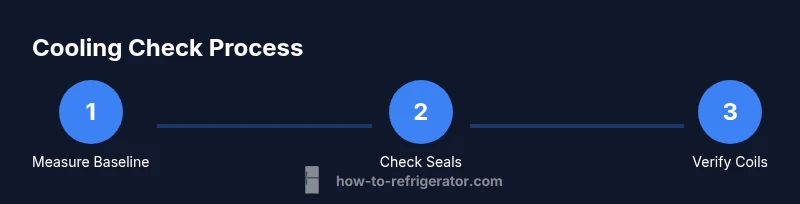
Plan and measure baseline temperatures
Place a digital fridge thermometer in the center of the main shelf and a separate thermometer in the freezer. Leave them for 24 hours to establish baseline readings, noting minimum and maximum temperatures. This establishes whether the unit is currently within target ranges.
Tip: Keep the doors closed as much as possible; frequent opening skews results. - 2
Check door seals for airtight operation
Inspect all door gaskets for cracks, tears, or deformations. Close the door on a piece of paper or a dollar bill at several points; if it pulls out easily, the seal is compromised and needs replacement.
Tip: A poor seal can masquerade as poor cooling by letting warm room air in. - 3
Inspect airflow and vent clearance
Ensure internal vents aren’t blocked by groceries. Rear coils should not be obstructed by piled items near the back. Proper airflow ensures even cooling throughout the compartments.
Tip: Move bulky items away from the vents to restore airflow. - 4
Clean condenser coils and check the back area
If accessible, gently vacuum dust from condenser coils or wipe with a dry brush. Blocked coils impede heat rejection and raise compressor load.
Tip: Do not use water to clean the coils; electricity and moisture can be hazardous. - 5
Verify temperature control settings
Confirm the thermostat is set within the manufacturer’s recommended range. If you recently changed settings, wait 24 hours to confirm stability before drawing conclusions.
Tip: Avoid extreme high or low settings; gradual adjustments are safer. - 6
Monitor for frost and defrost behavior
Inspect for frost buildup in the freezer or unusual icing on the interior walls. Some frost can indicate defrost timer issues or evaporator problems that require attention.
Tip: Defrost dirty coils evenly across the unit; frost buildup reduces cooling efficiency. - 7
Test with real-world loads
Place several commonly stored items (milk, meat, vegetables) at their typical locations. Check after 6–12 hours for signs of cooling and for any warm spots.
Tip: Keep raw meats separate and monitor for cross-contamination risk." - 8
Decide on the next steps
If readings remain outside targets or if noises, leaks, or frost persist after interventions, schedule professional service. Document observed temperatures, times, and actions taken.
Tip: Record dates and readings to share with the technician.
FAQ
What temperatures should a refrigerator and freezer be?
For most homes, aim for 35–38°F (2–3°C) in the fridge and 0°F (-18°C) in the freezer. If temps drift outside these ranges, investigate airflow, seals, and coils.
Aim for 35 to 38 in the fridge and 0 in the freezer; drift means your fridge needs attention.
What if my fridge is not cooling after I cleaned the coils?
If cooling does not improve after cleaning, check the door seals and thermostat settings again, then inspect for frost buildup or unusual noises. If problems persist, call a professional.
If cleaning coils doesn’t help, recheck seals and thermostat, then call a technician if issues keep happening.
How often should condenser coils be cleaned?
Clean condenser coils every 6–12 months or more often in dusty environments; dirty coils reduce efficiency and increase cooling time.
Clean coils about twice a year, or more often when your home is dusty.
Can a fridge be cooling properly but food still spoil?
Yes. Poor air distribution or overheated shelves can cause uneven cooling even if the overall temperature seems ok. Check airflow and relocate items as needed.
Even with the right temps, bad airflow can ruin some foods. Check vents and placement.
Is it safe to DIY every fridge issue?
Many issues are safe to diagnose with basic tools (thermometers, seal checks). For refrigerant leaks, electrical faults, or compressor problems, hire a professional.
DIY is fine for basic checks, but call a pro for refrigerant or compressor problems.
Watch Video
Top Takeaways
- Verify fridge temps (35–38°F) and freezer (0°F).
- Check seals, airflow, and coil cleanliness first.
- Document readings to guide any repair.
- DIY checks can fix many issues but when in doubt, call a pro.
- Regular maintenance prevents cooling problems and preserves safety.