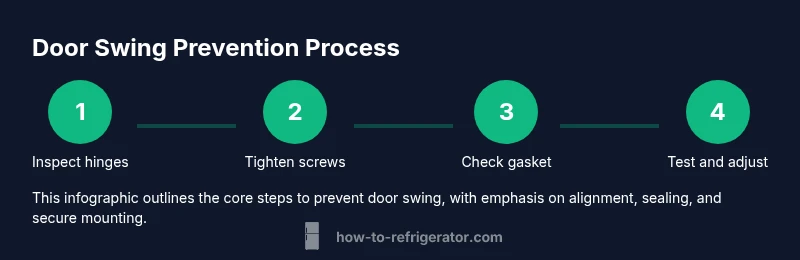
How to Stop Refrigerator Door from Swinging Open
Learn practical, step-by-step methods to stop a refrigerator door from swinging open. From hinge alignment to gasket checks, this How To Refrigerator guide covers quick fixes, safety tips, and when to call a pro.


To stop a refrigerator door from swinging open, start by inspecting hinge alignment and the door gasket, then tighten screws or adjust shims as needed. If the door still shifts, add a door stop or magnetic catch. Most homes solve this in 20–40 minutes with basic tools. According to How To Refrigerator, proper alignment and a good seal are the most reliable fixes.
Why the Door Swings Open
A refrigerator door that swings open isn't just a nuisance; it can waste energy, cause frost buildup, and stress the hinges. The most common culprits are misalignment of the door, sagging hinges, a worn or compressed gasket, or an uneven floor that tilts the appliance. Before you reach for power tools, note that even a few millimeters of misalignment can let the door swing out with the slightest nudges from family activity. In many kitchens, the problem is a simple one that you can fix without moving the fridge. Start by visually inspecting the hinges at the top and bottom, then check whether the door meets the cabinet frame evenly when closed. If the latch catches the frame unevenly, the door won’t stay put and will begin to swing open.
Quick Diagnostics You Can Do at Home
Start by cleaning the gasket and the sealing surfaces with a damp cloth; dirt or dried food can prevent a tight seal and cause the door to drift open. Then check the hinge screws: are they tight? Use a screwdriver to snug them without over-torquing. Place a level on the top edge of the door; if the door is visibly tilted, you may have framing or leveling issues. Look at the bottom hinge for extra play; wear in the hinge pins can also create movement. If you can’t see obvious wear but the door still swings, move the fridge slightly away from the wall and re-test. How To Refrigerator Analysis, 2026, indicates that aligning the door with the cabinet and ensuring a clean seal resolves most cases without replacing parts.
Safety First: What Not to Do
Repairing a fridge can involve sharp screws and electrical components. Do not pry at the door or force it closed with tools. Never loosen screws beyond a quarter-turn, as this can strip threads and create more misalignment. Avoid using household tape to hold a door in place; it can peel residue into the hinge. Do not attempt to bend metal or adjust the compressor area. Always unplug the unit before removing the grate or touching interior components. If the door is extremely hard to move, there may be a larger issue that requires a pro.
Step 1: Inspect the Hinges and Screws
Begin by removing the hinge cover caps to access the screws. Check for loose screws or bent hinge plates. Tighten any loose screws evenly, using the correct screwdriver size to avoid stripping. If a screw won’t tighten, you may need a longer screw, a washer, or a replacement mounting plate. Cleaning the hinge area helps dust and debris avoid jamming during operation. A properly seated hinge provides a stable pivot and reduces door sway.
Step 2: Realign the Door
With the fridge unplugged, loosen the hinge screws just enough to allow the door to shift. Gently lift or tilt the door to minimize gaps and align it so the edge sits evenly with the cabinet frame. Re-tighten screws in a diagonal pattern, starting from the top hinge and moving to the bottom. Check that the door latches cleanly and sits flush when closed. If alignment changes again quickly, you may need a small shim or spacer behind the hinge.
Step 3: Check the Gasket for Wear and Tear
Inspect the door gasket for cracks, tears, or hardening that prevents a solid seal. Clean the gasket surface with warm, soapy water and a soft cloth; dirt can create gaps that encourage movement. If the gasket is permanently deformed or cracked, replacement is usually straightforward and inexpensive. A poor seal lets air bypass the door, causing pressure changes that can make the door feel loose when closed and increase the tendency to swing.
Step 4: Prevent Sagging with Shims or Leveling Feet
If the refrigerator sits unevenly, a slight tilt can enable the door to swing. Use a level to check front-to-back and side-to-side alignment. Place shims behind the bottom hinge or adjust the leveling feet until the toe of the fridge rests evenly on the floor. After making adjustments, recheck the door’s alignment and ensure there’s no rubbing on the door frame. Sagging is common in older homes or after heavy traffic near the kitchen.
Step 5: Add a Door Stop or Magnetic Catch
For persistent sway, install a door stop or magnetic catch that gently holds the door in place. Choose a stopper that aligns with your fridge’s finish and doesn't interfere with doors when open. Install according to the product instructions, typically near the hinge edge. A properly installed stop provides resistance to opening momentum while preserving the door’s seal when closed.
Step 6: Consider a Door Closer If Needed
If your fridge still drifts after all adjustments, a small, fridge-specific door closer can help. These devices attach near the top hinge and apply a controlled closing force. Ensure the closer is compatible with your door thickness and doesn’t over-tighten, which could prevent the door from opening fully when needed for cleaning. Use these only after other options have been tested.
Step 7: When to Call a Pro and Maintenance Tips
If misalignment persists after attempting hinge repair, the frame or hinge mounting points may be worn beyond a DIY fix. A pro can assess frame integrity, hinge compatibility, and door weight distribution. To prevent future swing, schedule quarterly checks: clean gaskets, inspect mounting screws, and verify levelness. Regular maintenance reduces the risk of door swing and extends appliance life.
Tools & Materials
- Screwdriver set (Phillips and flathead)(Have both head sizes available for different screws)
- Torx or hex wrench (as needed)(Only if your hinges use hex/socket screws)
- Screwdriver bit driver with magnetic tip(Helps keep screws seated during tightening)
- Level or carpenter’s square(Check door height and alignment)
- Shim set or small wooden spacers(Used behind hinges if needed for alignment)
- Door stop or magnetic catch (optional)(For extra control over door swing)
- Gasket seal conditioner or replacement kit(Refresh or replace worn gaskets)
- Soft cloth and mild detergent(Clean hinges and gasket surfaces without scratching)
- Gloves(Protect hands when handling metal parts)
Steps
Estimated time: 30-60 minutes
- 1
Inspect hinges and screws
With the fridge unplugged, remove hinge covers and inspect all screws for tightness and any visible wear. Tighten loose screws evenly to preserve alignment. If a screw spins without gripping, stop and consider a replacement mounting screw or plate.
Tip: Keep a photo of the hinge setup before you loosen anything to guide reassembly. - 2
Realign the door
Loosen hinge screws just enough to shift the door so the edge sits evenly with the cabinet. Tilt and reposition using gentle pressure; then tighten screws in a diagonal sequence. Recheck the latch and seal.
Tip: Make small adjustments (1–2 mm) at a time and test by closing the door multiple times. - 3
Check gasket condition
Inspect the gasket for cracks, stiffness, or deformation that prevents a tight seal. Clean the surface and replace if needed. A poor seal can cause air leakage that makes the door feel unstable.
Tip: Apply a light coat of gasket conditioner if replacement isn’t immediately possible. - 4
Address sagging with shims
If the fridge tilts, insert shims behind the bottom hinge or adjust leveling feet until the cabinet sits squarely. Recheck door alignment with a level across the top edge.
Tip: Only place shims where they won’t interfere with door operation or airflow. - 5
Install a door stop or magnetic catch
Mount a door stop or magnetic catch near the hinge to provide gentle resistance against opening momentum. Align to avoid rubbing on adjacent cabinetry.
Tip: Choose hardware that matches your fridge finish for a discreet look. - 6
Test and finalize
Close the door slowly and observe its travel as it nears the closed position. If it still sways, re-check screws, gasket, and alignment. Confirm the door seals smoothly and remains closed without extra force.
Tip: Document settings and reuse them if you move the fridge in the future.
FAQ
Why does my refrigerator door swing open even when the hinges look fine?
Swinging can result from a tiny misalignment, a worn gasket, or an uneven floor. Even small gaps alter pressure and door momentum. Start with hinge tightening, then verify the seal and levelness before moving to more involved fixes.
Swinging doors are usually caused by a small misalignment or a worn seal. Check hinges, gasket, and floor level before moving to more complex fixes.
Can a door that swings affect cooling efficiency?
Yes. If the door is not sealing properly, cold air escapes and the compressor runs longer to maintain temperature. Fixing the seal and alignment helps restore efficiency.
Yes, an improper seal lets cold air escape and makes the fridge work harder, reducing efficiency.
Should I unplug the fridge before starting repairs?
Yes. Always unplug before inspecting hinges, wiring, or touching interior components to avoid shock or shorts. After repairs, plug it back in and monitor performance.
Unplug the fridge before you start. It’s safer and prevents electrical mishaps.
When should I replace the door gasket?
If the gasket shows cracks, deformation, or persistent stiffness after cleaning, replacement is recommended for a proper seal. Gasket kits are usually affordable and straightforward to install.
If you see cracks or it won’t seal after cleaning, replace the gasket.
Is a door closer safe for all fridge models?
Door closers work on many models but may not suit every hinge design. Check compatibility and follow manufacturer instructions to avoid interfering with door operation.
Door closers can help, but verify compatibility with your model.
What if the door still swings after all fixes?
If misalignment persists after DIY fixes, the frame or hinge mounting may be worn. A professional assessment can diagnose frame damage or nonstandard hinge setups.
If it still sways, a professional needs to check the frame and mounting.
Watch Video
Top Takeaways
- Inspect hinges and screws for looseness and wear
- Realign door edges to sit flush with the cabinet
- Check gasket integrity and replace if needed
- Use shims or leveling feet to correct floor tilt
- Add a door stop or magnet for consistent closing