How to Set Temperature in Refrigerator: Step-by-Step Guide
Learn how to set temperature in refrigerator safely and accurately. This step-by-step guide covers ranges, tools, verification, and maintenance to keep food fresh and energy use low. Practical tips from How To Refrigerator.


Goal: Learn how to set temperature in refrigerator accurately and safely. You’ll verify the current setting, locate the thermostat, adjust to the recommended range, test with a thermometer, and monitor for stable cooling. By following these steps, you’ll protect food quality, save energy, and extend your appliance’s life. This quick start helps you avoid undercooling and overcooling while keeping perishables safe.
Why Temperature Matters in Your Refrigerator
Maintaining the right temperature in your refrigerator is essential for food safety and energy efficiency. When you learn how to set temperature in refrigerator properly, you reduce the risk of bacterial growth on perishable items while avoiding wasted energy from running too cold. The How To Refrigerator team emphasizes consistency: abrupt changes or frequent door openings can cause temperature swings that compromise quality and safety. In most homes, a stable fridge temperature around 3–5°C (37–41°F) and a freezer around -18°C (0°F) keeps foods safe and preserves flavors. Use a thermometer to verify actual temperatures at several spots inside the unit and adjust gradually. This ensures even cooling, prevents hotspots, and protects dairy, meat, and produce from spoilage. By the end of this guide, you’ll understand why temperature control matters and how to maintain it over time.
According to How To Refrigerator, a deliberate, measured approach to cooling reduces the chance of spoilage and helps you spot issues before they become problems.
Understanding Temperature Ranges for Food Safety
Food safety guidelines center on two core targets: keep refrigerated foods cold enough to slow bacterial growth and keep frozen foods well frozen. The general rule of thumb is: keep the fridge at about 3–5°C (37–41°F) and the freezer at -18°C (0°F). These ranges aren’t arbitrary; they reflect common-sense limits that balance safety with energy efficiency. If your fridge consistently runs warmer, you may notice faster spoilage, especially for dairy and meat. If it’s too cold, you risk freezing moisture-rich produce or wasting energy. Regularly measuring temperatures helps confirm that the internal environment stays within the safe band. How To Refrigerator recommends checking temperatures in multiple spots—near the back wall, on a middle shelf, and toward the door—to catch uneven cooling.
Tools and Methods: Thermometers, Thermostats, and Panels
Good temperature control starts with the right tools. A calibrated refrigerator thermometer is the simplest and most reliable way to verify actual temps, complementing any built-in digital readouts. If your unit uses an analog dial, you’ll benefit from cross-checking with a thermometer placed on the middle rack. For modern digital panels, ensure the software is up to date and understand how the temperature display translates to real temperature at the food level. When How To Refrigerator walks homeowners through these checks, the focus is on consistency, not heroic adjustments. Keep a small notebook or a note in a phone app to track readings over time and spot gradual drifts before they become problems.
Preparing Your Refrigerator for Temperature Adjustments
Before adjusting, clear clutter from shelves so air can circulate freely. Remove items that skew airflow, like tall bottles stored in one area, and avoid overfilling the shelves. Clean the condenser coils if accessible and ensure the door seals are intact—these steps improve cooling efficiency and reduce strain on the compressor. If your fridge has a crisper that drafts cold air unevenly, consider rearranging contents to promote even airflow. This preparation aligns with best practices from How To Refrigerator and helps ensure that the next adjustment yields a true reading rather than a misleading one caused by imbalance.
Monitoring and Verifying: The Importance of Regular Checks
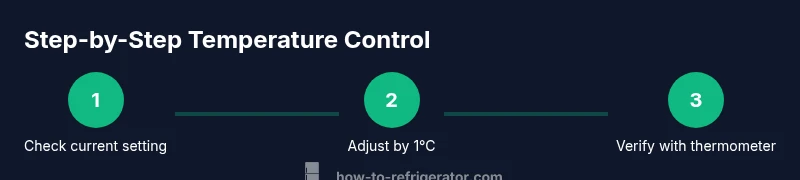
After any adjustment, give the unit time to stabilize. Most refrigerators need several hours to reflect a new setting, but a full 24 hours gives the most reliable read. Place a thermometer in the fridge and a separate one in the freezer, recording readings at the same times each day. When you see the fridge reading within the 3–5°C range and the freezer around -18°C, you know you’ve achieved a stable setting. If readings drift, make small incremental changes—1°C at a time—and recheck after another few hours. This process reduces guesswork and aligns with the methodical approach favored by How To Refrigerator.
Common Pitfalls and How to Avoid Them
Temperature issues are often caused by simple habits: leaving the door ajar, placing hot dishes inside, or stacking items to block vents. Doors that fail to seal properly can dramatically skew internal temperatures. Seasonal changes, such as switching from cooling to heating mode, can also affect readings. If you notice frequent fluctuations, inspect door gaskets, clean vents, and consider relocating large containers away from vents. Remember that temperature control is a balance between proper airflow, door discipline, and consistent settings. How To Refrigerator recommends a routine: measure, adjust gradually, and re-measure after each change.
Long-Term Habits for Consistent Cooling
To maintain consistent temperatures over the long term, set a routine. Check temps weekly for the first month after any adjustment, then monthly as a maintenance habit. Keep the fridge door closed when possible, plan shopping trips to avoid overloading shelves, and defrost as needed to prevent excessive frost buildup that can impede airflow. Consider a periodic cleaning schedule for coils if your model allows access. Adopting these habits helps you sustain the recommended ranges with minimal effort and supports energy savings over time.
Quick Validation Steps After Adjustment
Once you adjust, validate with a multi-location reading: back of the fridge, middle shelf, and near the door. Aim for 3–5°C on the fridge thermometer and -18°C in the freezer. If any area reads outside the target, tweak by 1°C increments and recheck after 6–12 hours. Don’t rush the process—proper cooling requires patience and careful monitoring. This method aligns with How To Refrigerator best practices and reduces the risk of food spoilage due to inaccurate settings.
After Power Outages: Restoring Safe Temperatures
A power outage disrupts all temperature control, and food safety begins with reassessing temperatures as soon as power returns. Allow the unit to stabilize for several hours and verify temperatures at multiple points. If the outage was long, consider a more thorough check than a quick glance at the digital readout. Re-calibrate to the recommended ranges and retest after a full cycle. How To Refrigerator emphasizes patience here; rushing adjustments after a shutdown can mask lingering temperature fluctuations.
Tools & Materials
- refrigerator thermometer(Calibrated, ideally digital; place in the middle shelf away from vents)
- notebook or mobile log(Record date, time, and multiple readings per location)
- owner’s manual(Helpful for model-specific controls and recommended ranges)
- clean cloth or towel(Wipe condensation and keep shelves clear while testing)
- pencil or pen(For quick notes during checks)
Steps
Estimated time: 60-90 minutes
- 1
Locate and inspect thermostat controls
Find the thermostat dial or digital panel and note the current setting. For accuracy, inspect door seals and ensure nothing is blocking air vents. This helps you understand the baseline before making adjustments.
Tip: Take a quick photo of the control panel for reference. - 2
Decide target temperature range
Choose a safe, energy-efficient range: fridge around 3–5°C (37–41°F) and freezer at -18°C (0°F). This gives you a clear target to aim for during adjustments.
Tip: If you have a variable humidity crisper, don’t let it drift into condensation-heavy ranges. - 3
Make a small adjustment
Change the fridge setting by 1°C (or 2°F) at a time. Larger jumps can overshoot the target and complicate stabilization.
Tip: Wait at least 2–6 hours between adjustments to allow the temperature to settle. - 4
Verify with multiple readings
Use a thermometer placed in the center of the fridge and another on a different shelf. Check both compartments to confirm even cooling.
Tip: Record readings to monitor drift over 24–48 hours. - 5
Allow full stabilization
After obtaining readings in range, continue monitoring for another day to ensure stability across usage patterns.
Tip: Avoid heavy loading during this stabilization window. - 6
Document and maintain
Log the final stable temperatures and schedule regular checks. This creates a reliable reference point for future adjustments.
Tip: Set calendar reminders for monthly temp checks.
FAQ
What is the ideal fridge temperature for everyday use?
Most households aim for about 3–5°C (37–41°F) in the fridge and -18°C (0°F) in the freezer. These ranges balance safety and energy efficiency. If you consistently see temps outside these ranges, reassess airflow, door seals, and defrost cycles.
Aim for roughly 3 to 5 degrees Celsius in the fridge and about -18 in the freezer. Check airflow and seals if readings drift.
How long should I wait after changing the temperature before testing?
Allow 2–6 hours for the temperature to stabilize before taking new readings. For best accuracy, monitor over a full 24-hour period.
Wait a few hours for the temperature to settle, then re-check over a full day for accuracy.
Can I adjust temperature while the door is open?
No. Adjust temperatures only with the door closed and the unit at normal operating conditions to avoid inaccurate readings.
Don’t adjust while the door is open—close it first and then make changes.
What should I do after a power outage?
Check both compartments after power returns. If temperatures drift, re-set to the recommended ranges and recheck over the next 24 hours.
After a outage, recheck temps and adjust back to safe ranges.
Is it safe to put warm foods into the fridge after changing temps?
Best practice is to cool foods to room temperature before refrigerating. Placing hot foods can raise internal temps temporarily and slow cooling.
Let hot foods cool a bit before putting them away.
Why do digital displays sometimes mislead about actual temps?
Display readings reflect set points, but actual temps can vary within shelves. Use a separate thermometer to verify real temps.
The display isn’t always spot-on; verify with a thermometer.
Watch Video
Top Takeaways
- Confirm fridge temp in the 3–5°C range and freezer at -18°C.
- Verify with thermometer readings at multiple spots.
- Adjust in small increments and recheck after stabilization.
- Log readings to track changes over time.
- Prevent door-open time and overfilling to maintain stability.