How to Fix the Refrigerator Not Cool
Learn how to diagnose and fix a refrigerator not cooling with a practical, step-by-step guide. Safety tips, tools, and expert insights from How To Refrigerator help homeowners troubleshoot common issues.


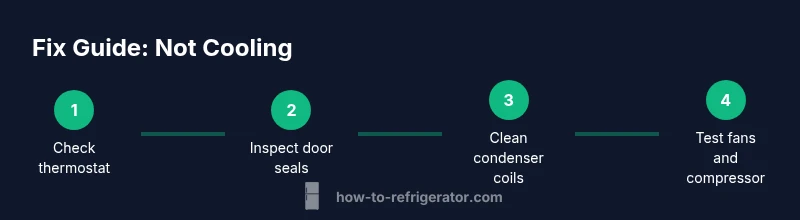
If your fridge won't cool, start by checking the thermostat, door seals, and condenser coils. Then test airflow from the evaporator fan and, if needed, inspect the compressor and start relay. This DIY approach helps you identify simple fixes before calling a pro.
Why your refrigerator isn't cooling
According to How To Refrigerator, many cooling issues start with simple, user-serviceable causes. In most homes, the problem isn't a mysterious failure in the compressor but something you can verify and fix with basic tools. Start by confirming the fridge is plugged in, the outlet is working, and the temperature setting is appropriate. A slight misread on a digital display, or a setting pushed accidentally, can lead to dramatically warmer temperatures inside. Beyond that, consider a few common culprits: a thermostat misadjustment, dirty condenser coils, a worn door gasket, or restricted airflow due to overloading shelves. If the interior is warmer on the upper shelves than the bottom, airflow is likely limited. Remember that safety comes first; never service sealed refrigerant lines yourself.
Common culprits and quick checks
A not-cooling fridge often points to airflow and sealing issues rather than a catastrophic component failure. Check the door gasket for cracks or gaps by closing the door on a thin piece of paper; if you can pull it out easily, the seal is compromised. Inspect the condenser coils (behind or beneath the unit) for dust buildup and clean with a coil brush or a vacuum. Ensure the fan inside the freezer (evaporator fan) is turning when the compressor runs; if you hear no air movement, the fan or its wiring could be at fault. Verify the interior temperature is within the recommended range; a consistently high setpoint reduces cooling efficiency. Finally, confirm there are no obstructions around the vents inside the fridge.
Safety and preparation before repairs
Before taking any action, unplug the unit if you are going to touch exposed electrical components or clear frost. Wear gloves to protect your hands and use a flashlight to inspect hard-to-see areas. Keep a towel handy to catch any water from a defrosted coil or a frost-free drain. Do not attempt refrigerant-related repairs unless you are trained and licensed; dangerous refrigerant handling requires professional calibration and equipment. If you must move the fridge, pull it with assistance to avoid damaging floors or the unit itself. This is not the time for improvisation—follow the steps carefully and keep your power off when accessing the back or bottom panels.
Seasonal maintenance to prevent cooling issues
Prevention is the best fix for a fridge that won't cool properly. Schedule a seasonal inspection of the condenser coils and door gaskets to prevent dust buildup and air leaks. Keep the area around the appliance clear to improve air circulation; blocked vents or clutter can force the compressor to work harder, reducing efficiency. Clean the drain pan and defrost drain to avoid ice buildup that can impede airflow. Replace worn door seals to maintain a tight seal and consistent temperatures. Finally, keep an eye on temperature control settings, especially after power outages or shopping trips that introduce warmer internal temperatures. Regular maintenance reduces the likelihood of not-cooling issues and prolongs appliance life.
How to approach diagnosing and fixed cooling problems
Knowing how to fix the refrigerator not cool involves a methodical approach rather than jumping to part replacements. Start by verifying the thermostat setting is correct and stable. Then check for obvious airflow problems such as blocked vents or dust on coils. After ruling out these simple causes, test the evaporator fan and listen for a steady airflow when the door is closed. If you still don't get cooling, inspect the defrost system and drain to ensure no frost accumulation blocks airflow. If the coil or fan is clogged with dust, clean and reassemble. If all user-serviceable checks fail, consider diagnosing with a professional to prevent refrigerant or compressor hazards.
What to do if it's still not cooling
If you've completed the checks and still see inadequate cooling, you may be dealing with a more complex issue like a failing compressor or refrigerant leak. At this point, the most cost-effective path is to contact a qualified technician. Capture the fridge model, symptoms, and when the issue started to help the technician diagnose quickly. In the meantime, keep the freezer stocked with items that require freezing and monitor the interior temperatures to avoid spoilage. The goal is to prevent losses while you arrange professional service.
Tools & Materials
- Multimeter(Check compressor/start relay and temperature readings.)
- Screwdriver set (Phillips and flathead)(Access panels and electrical connections.)
- Coil cleaning brush(For condenser coils (back/bottom).)
- Soft cloths or microfiber towels(Wipe dust and spills.)
- Vacuum with brush attachment(Remove dust from under unit.)
- Gloves(Protect hands.)
- Warm water and mild detergent(Clean defrost drain and trays.)
- Thermometer(Verify interior temps.)
- Replacement parts (start relay, door seals)(Only if diagnosed.)
Steps
Estimated time: 60-90 minutes
- 1
Check thermostat and temperature
Verify the fridge is set to 37-40°F (3-4°C) and that the display is stable. If the setting has drifted, adjust and recheck after 24 hours. Use a thermometer to confirm actual cabinet temps.
Tip: If you use an external digital thermostat, ensure it is calibrated. - 2
Inspect door seals
Close the door on a thin sheet of paper; if it slides out easily, the seal leaks air. Clean and inspect for cracks or gaps; replace if damaged.
Tip: Clean seals with mild soap and water; avoid harsh solvents. - 3
Clean condenser coils
Locate coils (back or bottom). Unplug the unit, then brush off dust with a coil brush or vacuum. Wipe with a damp cloth and ensure airflow is clear.
Tip: Do this outside when possible to avoid dust inside. - 4
Check evaporator fan
With the freezer panel removed, listen for the evaporator fan running when the compressor is on. If silent, test with a multimeter or check wiring; replace if needed.
Tip: Be cautious around sharp edges; defrost if frost blocks the coil. - 5
Inspect defrost drain and frost buildup
Defrost drains can clog; flush with warm water or a pipe cleaner. If heavy frost persists, allow manual defrost and then recheck.
Tip: Never pour hot water into the defrost drain—use warm water. - 6
Test the compressor/start relay
If the compressor hums but does not cool, the start relay or compressor may be faulty. Use a multimeter to test resistance or swap with a compatible relay.
Tip: Only perform electrical tests if you are comfortable; otherwise call a pro.
FAQ
What are the most common reasons a refrigerator won't cool?
Typically thermostat settings, dirty condenser coils, worn door seals, or a faulty fan or compressor. Start with simple checks before replacing parts.
The main culprits are thermostat settings, dirty coils, door seals, or a faulty fan or compressor.
Can I fix a not-cooling fridge without professional help?
Some checks are safe for homeowners, such as cleaning coils and inspecting seals. Avoid refrigerant handling and electrical work beyond basic safety.
You can handle simple tasks like cleaning coils and seals, but avoid refrigerant work.
How do I test the condenser coils?
Locate the coils, unplug the unit, and clean with a coil brush or vacuum. Ensure coils are dust-free to improve airflow.
Test by cleaning dust off the coils and ensuring airflow isn't blocked.
When should I call a technician?
If you suspect a refrigerant leak, compressor failure, or the issue persists after safe DIY checks, call a licensed technician.
If you hear odd noises, smell refrigerant, or still have no cooling after safe checks, call a pro.
Is frost buildup related to not cooling?
Yes, frost can block airflow. If frost is present, defrost and inspect the defrost system.
Frost can block airflow and cause cooling problems.
Is resetting the fridge a safe fix?
Resetting by unplugging for 5-10 minutes can recalibrate controls. If the issue repeats, seek professional help.
Yes, a quick reset can help, but if it returns, get a pro.
Top Takeaways
- Identify root cause before repairs
- Clean coils to restore airflow
- Check door seals for leaks
- Test fans and compressor before part replacements
- Consult a pro for refrigerant issues