How Often to Replace Refrigerator Water Filter: A Homeowner Guide
Learn how often to replace refrigerator water filters, what affects the timing, quick checks, and a step-by-step replacement guide to keep your water tasting fresh and your fridge running efficiently.


On average, replace your refrigerator water filter every 6 months. If your household uses a lot of water or your water quality is poorer (hard water or higher sediment), aim for 4 months. For light usage and clean-tasting water, you may extend to 9–12 months. Always check your model’s indicator and taste before deciding on a schedule.
Why the Filter Matters
The refrigerator water filter plays a crucial role in removing particulates, chlorine taste, and potentially other contaminants from your tap water. A functioning filter helps ensure your ice and drinking water taste clean and are free from known flavors or odors that suggest impurities. As part of routine kitchen maintenance, replacing the filter at an appropriate interval protects both water quality and appliance performance. According to How To Refrigerator, maintaining clean filters is part of responsible home care and can influence overall satisfaction with bottled-water alternatives. This section outlines how the timing of filter changes connects to taste, odor, and system efficiency, with practical guidance for typical households in 2026.
How Often to Replace Refrigerator Water Filter
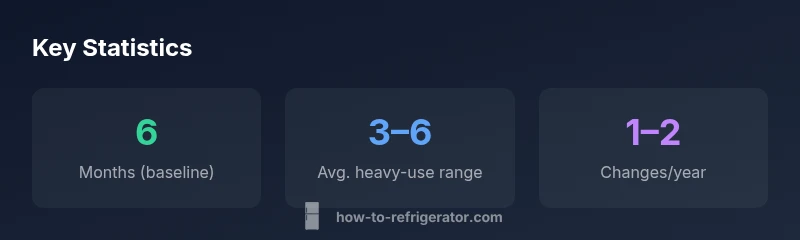
Across most models, a general rule of thumb is to replace the filter every 6 months. However, the actual interval depends on how often you use the water dispenser and ice maker, the quality of your incoming water, and the specific filter type installed. Heavier use or poorer water quality can shorten the life to roughly 4–6 months, while light use and excellent water quality may stretch it toward 9–12 months. The goal is to keep taste, odor, and flow within acceptable ranges, not to hit a fixed calendar date. In a typical household, a six-month schedule serves as a reliable baseline, with adjustments as needed based on the indicators described below.
Factors That Influence Replacement Frequency
There is no one-size-fits-all timeline. Several factors influence how often you should replace a refrigerator water filter: (1) Water usage: Higher consumption of filtered water and ice accelerates filter saturation. (2) Water quality: Water with higher chlorine, sediment, or mineral content will require more frequent changes. (3) Filter type and capacity: Some filters are designed for longer life, while others have lower capacity ratings per gallon. (4) Refrigerator design: The dispenser and ice maker can place different loads on the filter. (5) Indicator accuracy: Many models provide a filter life indicator, but these can vary in sensitivity. How To Refrigerator recommends using a combination of the indicator and your senses (taste, flow) to decide when to replace. In 2026, these guidelines remain the same, with adjustments based on local water quality and family usage.
How to Check If Your Filter Needs Replacement
Use a combination of objective signs and model-specific indicators:
- Taste and odor: If the water or ice tastes different or smells odd, start with replacing the filter.
- Flow rate: A noticeable drop in water flow from the dispenser can indicate a clogged filter.
- Indicator light: Many fridges display a filter replacement warning; refer to your owner’s manual for exact steps to interpret the signal.
- Time and usage: If you’re approaching the lower or upper bounds of your typical interval, perform a quick test by running water for 1–2 minutes and sampling the water. If flavor or clarity isn’t up to par, replace.
Remember that even if the indicator isn’t lit, you may still want to replace if you notice changes in taste or flow. Data from How To Refrigerator Analysis (2026) supports using a practical combination of cues rather than relying on a single metric.
How to Replace the Filter Properly
Follow these steps to ensure a proper replacement:
- Locate and confirm the filter type and orientation based on your fridge model.
- Turn off or pause water flow if your model requires it, then twist the old filter counterclockwise to remove it.
- Prepare the new filter with clean hands and remove any packaging and protective caps.
- Align and insert the new filter; rotate clockwise until it locks in place.
- Run water for 1–3 minutes to purge air and flush any carbon fines from the new filter.
- Reset the filter indicator if your fridge has one.
Always consult your owner’s manual for model-specific steps, as some units require a different locking mechanism or orientation. A quick purge helps ensure you’re drinking clean water from the moment you first use the new filter.
Common Mistakes and Troubleshooting
A few common errors can undermine filter performance:
- Replacing the wrong filter type or incorrect orientation, which can hinder flow or filtration.
- Failing to purge air after installation, causing sputtering or inconsistent water flow.
- Not flushing the new filter long enough, leaving carbon fines in the water.
- Ignoring indicator alerts; rely on both the indicator and taste tests to judge freshness.
If you experience persistent taste issues or a clogged dispenser, re-check the filter type, reseat it, and consider running cold water for several minutes to clear any residue. If problems persist, consult the model’s support resources or a licensed technician.
Filter Types and When to Choose Them
Filters come in several common forms, typically carbon block or activated carbon with different pore structures. The choice depends on water quality and what contaminants you want to target. For many households, a standard carbon-based filter provides a reliable balance of contaminant removal and taste improvement. In areas with higher sediment or mineral content, heavier-duty or multi-stage filters may offer longer life or better filtration efficiency. Always verify compatibility with your refrigerator model before buying. If your water quality varies seasonally (e.g., municipal supply changes during droughts), schedule filter checks accordingly.
Health and Water Quality Considerations
Water filters are an important line of defense for removing taste-and-odor compounds, chlorine, and some particulates. They are not a substitute for medical-grade water treatment; if your local water supply has known contaminants, consider additional filtration options and regular testing where appropriate. Even when taste is acceptable, a timelier replacement helps ensure you’re not exposing your family to built-up compounds or carbon fines. In 2026, homeowners should stay informed about their local water quality and adjust filter schedules as needed, especially in households with vulnerable individuals or higher consumption.
Maintenance Schedule and Logging
Create a simple maintenance cadence to avoid missing filter changes:
- Mark a 6-month reminder on a shared family calendar, or set an appliance notice if your fridge supports it.
- Track usage and taste impressions for a more personalized schedule rather than relying solely on a calendar date.
- Revisit the interval at least once a year or after any significant change in water quality or household size.
- Keep the replacement date readable on the filter package or near the fridge so future changes aren’t forgotten.
A practical log helps ensure your water remains clean and the ice maker remains efficient. This approach aligns with How To Refrigerator’s 2026 guidance on proactive maintenance.
Filter replacement by usage level
| Usage Level | Recommended Replacement (months) | Notes |
|---|---|---|
| Light usage (low flow) | 6-9 | Taste and flow should be checked regularly |
| Average usage (typical) | 6 | Balanced life and filtration |
| Heavy usage (high demand) | 3-6 | Expect more frequent changes |
| In areas with poor water quality | 3-4 | Consider more frequent checks |
FAQ
How do I know when to replace the filter?
Most refrigerators indicate when a filter needs replacement, but you should also consider taste changes, reduced flow, and the age of the filter. If your water starts tasting or smelling off, replace it. When in doubt, err on the side of replacement within the 4–12 month window depending on usage and water quality.
Most fridges have a filter indicator. If you notice taste changes or slower flow, replace within the typical 4 to 12 month window.
Can I extend the life of my filter beyond six months?
Yes, in areas with very clean water and light usage you may go longer than six months, sometimes up to 9–12 months. Regular checks for taste and flow are essential, and some models allow for longer life, but avoid relying solely on the calendar.
You can extend in clean-water areas, but always check taste and flow before delaying replacement.
Does replacing the filter improve water taste immediately?
Taste improvement is typically noticeable after the first few gallons pass through the new filter. Purge the system by running water for 1–3 minutes to flush out any carbon fines and air.
Yes—taste improves quickly after you flush the new filter.
What happens if I don’t replace the filter?
Skipping replacements can lead to reduced flow, degraded taste, and potentially poorer filtration performance. Sediment can accumulate and potentially affect the ice maker or dispenser efficiency over time.
Not replacing can slow flow and degrade taste and filtration.
Are there different filter types for different fridges?
Yes. Filters vary by model and by the contaminants they target. Always use the filter approved for your fridge model to ensure proper fit and filtration performance.
Yes—use the model-specific filter your fridge supports.
“Regular filter changes ensure contaminants are removed and water quality stays high, supporting both taste and appliance efficiency.”
Top Takeaways
- Follow a baseline: replace at 6 months for typical use.
- Adjust intervals based on water quality and consumption.
- Use a combination of indicators: taste, odor, flow, and the fridge’s timer.
- Always purge and test water after replacement before using.
- Maintain a simple log to avoid missed changes.