How Long Refrigerator Power Outage: A Homeowner Guide
Discover how long a refrigerator can stay cold during a power outage, how to protect food, and practical steps to recover quickly after outages.


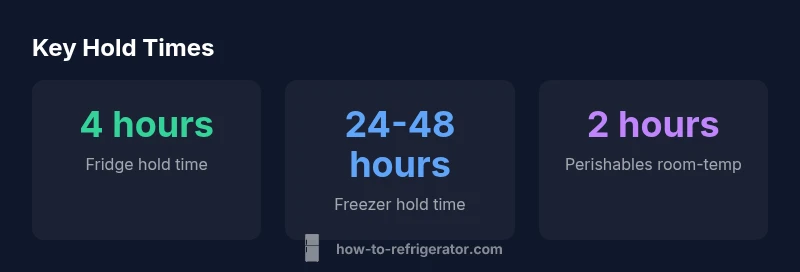
Most standard refrigerators stay within a safe temperature for about 4 hours after a power outage if you keep the doors closed. A full freezer can usually hold its chill for 24-48 hours when kept shut. If outages extend beyond those windows, move perishables to a cooler or a functioning unit and monitor temperatures with a thermometer to determine safety.
Understanding the Time Window During Outages
When the power goes out, time becomes a critical factor for food safety. How long refrigerator power outage lasts isn't a fixed number; it depends on several variables that homeowners can influence. The thickness of the insulation, the size and fullness of the unit, how often doors are opened, the age and condition of the seals, and the ambient temperature all play a role. According to How To Refrigerator, a typical household refrigerator will stay within a safe temperature range (roughly 40°F or below) for about 4 hours if the doors remain closed. A full, well-insulated freezer can often protect its contents for 24-48 hours under the same door-closed conditions. These are general ranges, not guarantees. If you anticipate an outage or know you will be away from home, take proactive measures such as keeping doors closed and setting up a cooler with ice for additional protection. If you have a thermometer in the compartments, monitor temperatures every hour to catch any drift early.
How Long Can a Refrigerator Hold Temperature Without Power?
Time without power is not a fixed value; it varies with how well the appliance is insulated and how much mass remains inside the cabinet. A relatively full refrigerator retains cold longer than an empty one because the dense food mass acts as a thermal buffer. In temperate room temperatures, the temperature inside the fridge may begin to approach unsafe levels after 2-4 hours if the door is opened frequently, while a tightly shut fridge in a cooler room can hold the cold longer. A standard, unopened freezer is more forgiving; even when powered off, a full freezer can stay at 0°F or below for 24-48 hours. If the outage lasts longer, minimal door openings, moving items to the coolest available place (or to an alternate cooler), and using ice packs can buy you valuable time. For precise planning, rely on a thermometer and follow FDA/USDA guidance on safe temperatures during outages. (FDA guidance: https://www.fda.gov/food/buy-store-food-safe-food/food-safety-during-power-outages)
Food Safety During a Power Outage: What to Do
Food safety during a power outage hinges on keeping perishable items out of the danger zone. Start by keeping doors closed as much as possible to preserve the cold air. Use a fridge thermometer to track temperatures; if readings rise above 40°F for more than two hours, plan to discard perishables or move them to a cooler with ice. When outage extends beyond a couple of hours, transfer dairy, meat, poultry, seafood, and leftovers into a well-insulated cooler with ice, or into another functioning refrigerator if available. Do not rely on smell or appearance to judge safety, as spoiled foods can look and smell normal. After power returns, inspect items and discard anything that has thawed and warmed above safe temperatures for an extended period. FDA/USDA guidelines provide a safety baseline that you should follow closely. See official guidance: https://www.fda.gov/food/buy-store-food-safe-food/food-safety-during-power-outages
Step-by-Step: Mitigating Loss and Preventing Waste
- Gather coolers, ice, and blankets to insulate items if power is out. 2) Move the most perishable items into a cooler first (meat, dairy, eggs). 3) Minimize door openings; plan meals using what’s already inside. 4) Check thermometer readings hourly and take action if temperatures rise. 5) If the outage continues, consider relocating items to a neighbor's functioning fridge or an alternate cold storage. 6) When power returns, re-check temperatures and discard foods that have warmed above safe levels. 7) Take stock of what survived to inform future outages and identify opportunities to improve insulation or storage.
Variations by Refrigerator Type and Setup
Different fridge configurations behave differently during outages. Top-freezer and standard models typically lose cold faster than larger French-door units with bigger mass. Seals matter: worn door gaskets let warm air in and shorten hold times. Frost-free models with anti-condensation features may maintain temperatures slightly longer, but the key variable is door usage. A well-filled fridge performs better at preserving cool temperatures than an empty one. If your unit is old or has known seal issues, consider proactive maintenance or professional service to maximize resilience in a power outage.
After Power Returns: Resetting and Checking Food Safety
When electricity returns, reset the internal temperature to recommended levels and slowly bring the compartments back to normal. Start by checking the freezer first; if it’s still icy and cold, you may be good to reorganize. For the fridge, check the dairy and meat first before turning attention to leftovers. Any item that was above safe temperatures for more than two hours should be discarded. Once temperatures stabilize, reorganize to improve air circulation and minimize future door openings. This is a good moment to review your storage practices and ensure a thermometer is accessible in both compartments.
Preventive Measures for Future Outages
Anticipate power outages by placing an emphasis on preventive measures: keep a fully stocked cooler with ice packs, invest in a backup freezer thermometer, and ensure doors seal properly. Consider placing frequently used items in the front for easy access during an outage. Regular maintenance of door seals, condenser coils, and the thermostat can extend hold times and reduce food waste when the power is out. How To Refrigerator recommends creating a simple outage playbook for your household that includes a list of items to move during outages and a quick checklist for food safety.
Hold times during power outages
| Condition | Action/Impact | Typical Time Window |
|---|---|---|
| Fridge (unopened) | Maintains near 40°F; minimize door openings | 4 hours (approx) |
| Freezer (unopened, full) | Keeps frozen for longer due to mass | 24-48 hours |
| Perishables at room temp | Move to cold source or discard after 2 hours | 2 hours |
FAQ
How long can a refrigerator stay cold during a power outage?
It varies, but most households can expect about four hours with the door closed; a full freezer can last 24-48 hours. Monitor temperatures with a thermometer and act if readings rise.
Most fridges stay cold for about four hours if you don't open the door; a full freezer can last 24 to 48 hours. Check temperatures with a thermometer.
Is it safe to eat foods that have been above 40°F for more than two hours?
Per FDA guidelines, perishable foods should be discarded if they have been above 40°F for more than 2 hours. If you’re unsure, err on the side of safety and replace items.
Perishables should be discarded if they were above 40°F for more than two hours.
Should I open the fridge to check foods during the outage?
No. Opening the door lets warm air in and accelerates temperature rise. Check only when needed and rely on a thermometer.
Don’t open the fridge unless necessary; check with a thermometer instead.
What should I do if the outage happens during hot weather?
Prioritize moving perishables to a cooler with ice, or use a neighbor’s fridge. Keep doors closed and limit handling until power returns.
In hot weather, move perishables to a cooler and keep doors shut.
Can I refreeze thawed foods after a power outage?
Refreezing thawed foods is not recommended unless the items remained at safe temperatures and still show signs of ice crystals. When in doubt, discard.
Don’t refreeze thawed foods unless you’re sure they stayed safely cold.
“Outages test both equipment and household planning; with proper precautions, most perishables stay safe for several hours, but always verify temperatures before consuming.”
Top Takeaways
- Keep doors closed to preserve cold.
- Use a fridge thermometer to monitor temps.
- Transfer perishables to ice-filled coolers if outage extends.
- Know hold times for fridge and freezer.
- Discard questionable items after the outage.