How Long Will a Fridge Last Without Power? A Practical Guide
Discover how long your refrigerator and freezer can stay safe during a power outage, practical timings, and steps to protect food. Learn when to discard and how to extend cooling during outages with clear, actionable guidance.


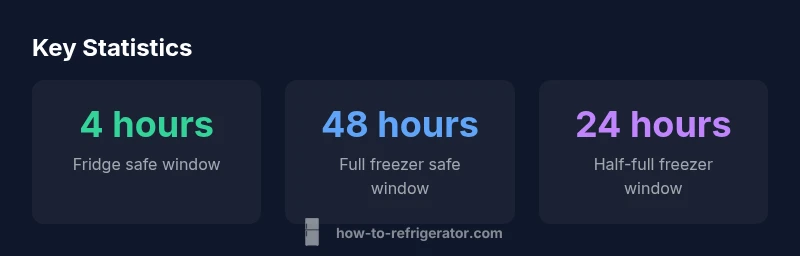
In most homes, a standard fridge stays safely cold for about 4 hours without power if you keep the doors closed; a full freezer can hold safe temperatures for roughly 48 hours, about 24 hours if half-full. To protect perishables, minimize door openings and consider using a cooler or cooler bags during outages.
What determines how long a fridge lasts without power
According to How To Refrigerator..., several factors determine how long your fridge can stay safely cool without power. Insulation quality and the outside temperature are primary drivers. A well-sealed door, intact gaskets, and a compact interior with dense shelves slow warm-up. A fridge kept in a cool, shaded area will lose temperature more slowly than one in a hot kitchen. The amount of thermal mass inside—how much cold food and ice is already inside—also matters: a full fridge or freezer tends to stay cold longer because the cold items absorb heat and help stabilize the interior.
The safe window for an unopened fridge is about four hours, with a full freezer offering longer protection. The exact timing depends on how often the door is opened, the starting temperature inside the fridge, and the ambient temperature outside. If you expect a power outage, plan to minimize door openings, group items together, and avoid restocking or rearranging. A thermometer placed in the fridge can help you decide when to discard items that have risen into the danger zone (above 40°F / 4°C) for more than two hours.
Fridge vs freezer: timing differences
Frigges and freezers behave differently during outages. A fridge relies on steady air temperature to keep perishable foods in the “safe” zone, typically defined as below 40°F (4°C). A full freezer, with its large mass of frozen items, resists warming longer because the frozen contents absorb heat and retain cold air. If the freezer is full, you may approach the 48-hour window; if it’s only half-full, the window shrinks toward ~24 hours. Outside temperature and how often you open doors dramatically influence these numbers. USDA guidance emphasizes keeping doors closed and minimizing temperature fluctuations to extend safety.
From a practical standpoint, plan for short outages by consolidating items and avoiding unnecessary restocking. If you have a thermometer and know the kitchen temperature, you’ll have a clearer view of when foods may enter the danger zone and should be discarded.
Practical steps during outages to maximize safety
When power goes out, your primary goal is to maintain cold temps as long as possible. Keep the fridge and freezer doors closed; every opening lets warm room air mix with cold air. If you anticipate a prolonged outage, group items together so they act as a thermal mass, and place perishable items toward the back where temperatures stay cooler. Use a cooler with ice packs or dry ice if available, but never place dry ice in direct contact with food. A refrigerator thermometer helps you track temperature and decide when to discard.
For households with a second freezer or a large chest, move items there if accessible. Avoid introducing new groceries into an already cooling unit unless you’re sure you can maintain the temperature. In hot environments, consider relocating the refrigerator to a cooler spot or shading it from direct sun until power is restored.
Extending cooling during outages and planned outages
To maximize cooling, minimize door openings and keep items organized by type. If you anticipate a storm or blackout, pre-fill your freezer with water bottles or ice packs to boost thermal mass. When using a cooler, arrange items to maximize cold air contact and avoid stacking too high, which reduces airflow. Once power returns, check temperatures again and reassess food safety. If your fridge has an energy-efficient seal, it will retain cold air slightly longer during minor outages. How To Refrigerator analyses suggest that these proactive steps can extend safe storage time by reducing heat gain and preventing frequent temperature spikes.
Estimating safe storage times by configuration
Different configurations produce different safe windows. A full, well-packed freezer can shield your food for up to 48 hours; a half-full freezer drops to about 24 hours. An unopened fridge generally remains under 40°F for around 4 hours. These figures are influenced by ambient temperature and how often the doors are opened. In higher temperatures or with frequent door use, expect faster warming. How To Refrigerator analysis highlights the importance of fullness, door discipline, and ambient conditions in extending safe storage during outages.
Food safety: when to discard and how to judge quality
Food safety hinges on internal temperatures. If a thermometer shows the fridge interior rising above 40°F (4°C) and stays there for more than two hours, discard perishable dairy, meat, and seafood. When in doubt, err on the side of caution—food that looks or smells questionable should be discarded rather than risk foodborne illness. If you’re unsure about a specific item, consult USDA guidance on food safety during power outages and use a cold-chain approach to decide disposal timing.
After power returns: safety checks and next steps
When power returns, inspect all foods for signs of spoilage and check temperatures. Refrigerators may have warmed to unsafe levels in some areas; re-check the internal temperature and discard any items that have risen above 40°F (4°C) for more than two hours. Reorganize the interior so air can circulate, and consider running the unit on a normal setting for a few hours to re-establish safe temperatures before adding new groceries.
Estimated safe times for fridge and freezer without power
| State | Estimated Safe Time (unopened) | Key Considerations |
|---|---|---|
| Fridge | 4 hours | Doors kept closed; aim for 40°F (4°C) or below |
| Freezer (full) | up to 48 hours | Minimal opening; items provide thermal mass |
| Freezer (half-full) | about 24 hours | Fill with items; limit door openings |
FAQ
How long can a fridge stay cold without power?
A fridge remains safely cold for about 4 hours with doors closed. A full freezer can last up to 48 hours, about 24 hours if half-full. These timings assume typical home insulation and ambient temperatures.
A standard fridge stays cold for about four hours with the door shut; a full freezer lasts longer, around forty-eight hours if full and about twenty-four if it's half-full.
Can I refreeze thawed foods after a power outage?
If the food is still cold (below 40°F/4°C) and has not been above that temperature for more than two hours, it can be refrozen. If it has been warmer for longer, discard.
If it’s still cold and hasn’t been above 40°F for more than two hours, you can refreeze; otherwise, discard.
What can I do to extend cooling during outages?
Minimize door openings, group items to act as a thermal mass, and use a cooler with ice packs if available. Avoid overloading the fridge and check temperatures with a thermometer.
Keep the door closed, group items, and use a cooler with ice packs if you can.
Should I use dry ice during outages?
Dry ice can help maintain cold temps in a closed fridge or cooler, but handle it with care and never place it directly on food. Use protective gloves and ensure proper ventilation.
Dry ice can help, but use it carefully and never place it directly on food.
Do fridge brands affect outage endurance?
Brand differences can influence insulation and door seal quality, but the main factors are fullness, door openings, and ambient temperature. In practice, the safe time windows are similar across typical models.
Brand helps a bit, but fullness and how often you open the door matter more.
“Power outages test your kitchen's resilience, but small, informed steps can dramatically extend safe storage. Plan ahead and act quickly.”
Top Takeaways
- Plan outages ahead to protect perishables.
- Keep doors closed; minimize openings to extend cooling.
- Fill freezers to maximize insulation and recall times.
- Use a cooler with ice packs during outages when possible.
- Discard foods that warm above safe temperatures for too long.