How Long Refrigerator Food Lasts Without Power: Safe Guidelines
Learn how long refrigerator food can stay safe without power, what to do during outages, and how to decide what to keep. Expert guidance from How To Refrigerator.


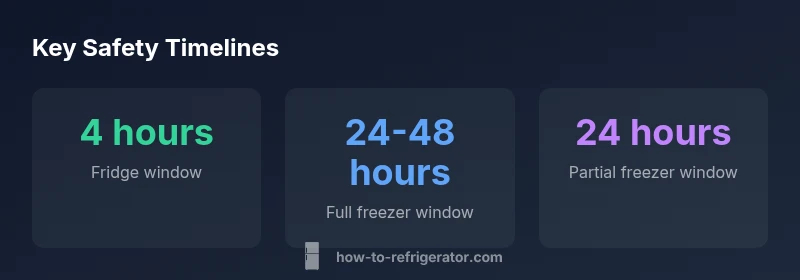
During a power outage, refrigerated foods generally stay safe for about four hours if you keep the door closed. A full freezer can preserve most items for 24 to 48 hours, while a half-full freezer may last around 24 hours, depending on insulation and ambient temperature. After the outage, use a thermometer and discard anything above 40°F (4°C) after the two-hour rule to minimize risk.
how long refrigerator food without power
Power outages can create a stressful scene in a busy kitchen, but having a clear sense of timelines helps you act quickly and reduce waste. how long refrigerator food without power is influenced by door usage, how full the fridge and freezer are, and the surrounding temperature. According to How To Refrigerator, a common baseline is that a closed fridge stays near 40°F (4°C) for about four hours during an outage. A full freezer can maintain safe temperatures for 24 to 48 hours, while a half-full freezer tends to hold for roughly 24 hours. These figures are not guarantees; they depend on insulation, the age of the unit, and how often you open the doors. The How To Refrigerator Team found that monitoring with a thermometer is the best way to assess safety on the fly. If weather is hot or the outage lasts longer than expected, the safe window narrows quickly and you should check foods more conservatively. When communicating with household members, cite these timelines to standardize actions and minimize waste.
To ground the discussion in practical steps, begin by locating the thermometer in the fridge and freezer. Keep the fridge door closed as much as possible and note any changes in temperature. This initial assessment informs which foods are still safe to eat, which should be moved to a cooler, and which should be discarded. In the context of how long refrigerator food without power, these early decisions often determine whether you save meals or toss spoiled items. For families seeking clarity, these guidelines offer a starting point that you can adjust based on your own appliance and climate.
The pandemic-era habit of checking temperatures regularly remains valuable. A fridge that climbs above 40°F for more than two hours flags perishable foods as unsafe. In hot climates, proceed with extra caution and consider moving items to an insulated cooler with ice packs. These practices align with consumer guidance that emphasizes rapid action when cooling systems fail. Finally, remember that every outage is different; use these timelines as a framework, not an inflexible rule.
notesBlockForMarkdownToFlagInPreviewTheFirstParagraphOnlyזש
Quick-reference safety windows for fridge and freezer during power outages
| Scenario | Approx Safe Duration | Notes |
|---|---|---|
| Refrigerator (door closed) | 4 hours | Keeps below 40°F (4°C) if doors stay shut |
| Full freezer (unopened) | 24-48 hours | Unopened items stay cold longer when packed tightly |
| Partial freezer | 24 hours | Time depends on insulation and contents |
| Ambient temp above 70°F | 2 hours | Higher heat shortens safe times |
FAQ
How long can I keep foods safe in the fridge during a power outage?
Typically, foods in a closed fridge stay safe for about four hours after a power outage. If the outage lasts longer, use a thermometer to check temperatures and move items to a cooler or freezer as needed. Perishable items should be discarded if the fridge stays above 40°F (4°C) for more than two hours.
Usually about four hours, then check with a thermometer and act quickly if it rises above 40°F.
Is a full freezer safer than a partially full one during power loss?
Yes. A full freezer retains cold better than a partially full one, typically keeping items safe for about 24-48 hours when unopened. A half-full freezer may protect items for around 24 hours. Keep doors closed and avoid frequent openings to maximize safety.
A full freezer lasts longer; keep doors shut and use a cooler if outages extend.
Should I move items to a cooler or on ice during an outage?
If the outage is expected to last several hours, transferring perishables to a cooler with ice can extend safe storage. Prioritize dairy, meat, and leftovers that spoil quickly. Monitor the cooler regularly and replenish ice as needed.
Yes—use a cooler with ice to buy time for fragile foods.
Can I refreeze thawed food after a power outage?
Only foods that have remained consistently below 40°F can be refrozen safely. If thawed food has been above 40°F for more than two hours, discard it. When in doubt, err on the side of caution to avoid foodborne illness.
If thawed and above 40°F for more than two hours, discard.
What foods are most at risk during outages?
Dairy, eggs, meats, poultry, seafood, cut fruits, and prepared leftovers are most vulnerable. These items should be prioritized or discarded if the outage persists or temperatures rise, while non-perishables remain safe longer.
Dairy and meats are the riskiest—check them first.
What should I do when power returns?
When power returns, check internal fridge and freezer temperatures. If the fridge is still at or below 40°F and the freezer is solidly frozen, you can relabel and reuse items. If there’s any doubt about safety, discard per guidelines.
Check temps, then decide if items can be kept. When in doubt, discard.
“Outages test your planning more than your appliances—tie safety timelines to official guidelines to protect family health.”
Top Takeaways
- Keep fridge doors closed to maximize cold preservation
- Full freezers last longest (24-48 hours when unopened)
- Use a thermometer to verify safe temperatures during outages
- Discard foods that have been above 40°F for more than 2 hours
- Prepare a cooler with ice as a backup during longer outages