GE Slate Refrigerator Repair & Troubleshooting Guide
Learn how to diagnose and fix common problems in a GE slate refrigerator with clear, actionable steps, safety tips, and when to call a pro. Perfect for homeowners seeking practical DIY fixes.


This guide helps homeowners diagnose and fix common problems on a GE slate refrigerator, from not cooling to defrost-drain clogs and unusual noises. You’ll learn how to gather the right tools, follow clear, safe step-by-step actions, and recognize when a professional is needed. With practical fixes, you can restore cooling, reduce energy use, and extend your appliance life.
Understanding GE Slate Refrigerator Basics
A GE slate refrigerator blends modern color and practical performance, but like any appliance it requires regular care. The distinctive slate finish helps hide fingerprints while maintaining a timeless kitchen aesthetic, but it does not change the fundamentals of cooling, defrost cycles, or door-seal integrity. According to How To Refrigerator, homeowners should start with a clear mental model: a GE slate refrigerator is a closed-loop cooling system that relies on proper airflow, a sealed door gasket, clean condenser coils, and a functioning defrost cycle. When one component falters, the whole system can drift toward reduced efficiency and uneven temperatures. For many families, understanding a few core subsystems—compressor operation, evaporator fan, condenser coils, defrost mechanism, and door seals—makes troubleshooting more straightforward and less intimidating. This approach also helps you explain problems to a technician if professional service becomes necessary. The goal is to restore stable temperatures, minimize frost buildup, and preserve food safety in a stylish, low-maintenance appliance.
Common Symptoms and Immediate Checks
Ge slate refrigerators can exhibit a range of common symptoms that you can verify with simple checks. If the interior warm zone or shelves feel warm, start by confirming the thermostat setting is correct and the unit is not overloaded with warm foods. Listen for abnormal noises such as clicking, buzzing, or high-pitched whines, which can indicate a relay, fan, or compressor issue. Frost buildup on the evaporator coils can signal a faulty defrost cycle or a blocked defrost drain. Water leaking inside the fridge or pooling under the unit may point to a clogged defrost drain or a damaged drain pan. Finally, if you notice excessive condensation on the cabinet exterior or doors that don’t seal properly, inspect the door gaskets for wear or deformation. These symptoms share a common thread: airflow disruption or electrical faults that prevent normal cooling.
Diagnosing Defrost Drain and Refrigeration System
Defrost drain clogs are a frequent culprit behind interior frost and water leakage. To assess this, unplug the unit and locate the defrost drain path (usually behind the back wall of the freezer). A blocked drain can cause frost to refreeze and then melt in the fresh food compartment, leading to puddles. Inspect the drain line for visible blockages and use a safe, non-corrosive cleaner or warm water to flush it. If you find ice buildup on the evaporator or frost that rapidly returns after defrost, the defrost thermostat or heater may be faulty. The refrigeration system relies on a balanced cycle: the compressor, condenser, evaporator, and fans must operate in harmony. If one element stalls, temperature control deteriorates. For many GE slate models, checking the seals around doors and drawers can reduce frost formation by limiting moisture intrusion into the freezer.
Safe DIY Fixes You Can Try
Before any hands-on work, unplug the refrigerator and move perishables to a cooler or secondary cold storage. Begin with the simplest steps: clean the condenser coils with a soft brush or vacuum to improve airflow, wipe door gaskets with mild soap and water to restore a tight seal, and ensure the doors close fully without interference. If frost is present, manually defrost the freezer for several hours with the doors closed to allow the ice to sublimate. Check the defrost drain for blockages and clear them with warm water. If the temperature readings remain unstable after basic maintenance, you may need to test the thermostat at the control panel or consult a professional for electrical components. Remember to document observed temperatures and symptom timing to aid diagnosis should you seek help.
When to Replace Parts vs Repair
Some issues are cost-effective to repair, while others warrant part replacement. If the compressor shows signs of failure (persistent warm temperatures, unusual heat, or loud operation), replacement may be costly and requires professional service. Damaged door gaskets or cracked shelves are often cheaper to replace and can restore efficiency quickly. For persistent freezing or uneven cooling that does not respond to simple defrost or coil cleaning, a thermostat, relay, or sensor may need replacement. Compare the estimated repair cost against retailer prices for parts and the age of the unit. If your GE slate refrigerator is nearing the end of its expected life, evaluating a replacement with a model that matches your energy savings goals could be worthwhile.
Maintenance Habits for Longevity
Ongoing maintenance prevents many common problems. Schedule regular vacuuming or brushing of the condenser coils to maintain heat exchange efficiency. Keep the interior clean and dry to reduce moisture buildup that can accelerate frost formation. Check door seals every few months for cracks or loss of elasticity, replacing gaskets when needed to maintain an airtight seal. Use a thermometer to monitor both compartments, aiming for roughly 37-40 F in the fresh food area and 0-3 F in the freezer. Finally, avoid overloading shelves and ensure proper airflow around stored items. Consistent maintenance significantly reduces the likelihood of costly failures and helps your GE slate refrigerator perform at peak efficiency.
Tools & Materials
- Phillips-head screwdriver (#2)(For internal panels and hinge adjustments)
- Flat-head screwdriver(Model-specific fasteners may require it)
- Multimeter(Test switches/thermistors if electrical faults suspected)
- Condenser coil brush(Gently remove dust from coils to improve cooling)
- Soft cloth and mild detergent(Exterior and interior cleaning without harsh chemicals)
- Door gasket replacement (if worn)(Replace only if elasticity is severely compromised)
- Thermometer or fridge temp log(Track temperatures to validate fixes)
Steps
Estimated time: 60-90 minutes
- 1
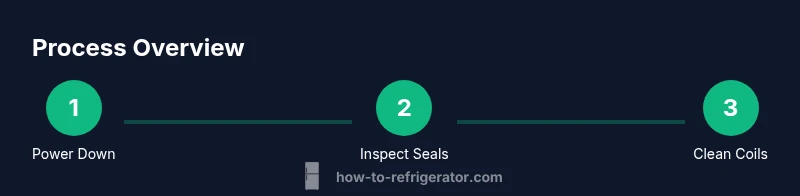
Power down and prep
Unplug the GE slate refrigerator and move perishables to a cooler. This keeps you safe while you inspect panels, coils, and seals. If you must access electrical components, wait until the unit is fully disconnected from power.
Tip: Never work on live electrical parts. - 2
Inspect seals and doors
Check door gaskets for cracks or deformation. Ensure doors close fully and the gasket is sealing evenly around the entire perimeter. A poor seal can cause frost and temperature instability.
Tip: Gasket wear is cheaper to replace than energy waste. - 3
Clean condenser coils
Access the condenser coils (usually behind a rear panel or beneath the fridge) and remove dust using a coil brush or vacuum. Clean coils improve heat rejection and cooling efficiency.
Tip: Do not use water to clean hot components; allow them to cool first. - 4
Flush defrost drain if needed
If you notice frost buildup or water pooling, inspect the defrost drain for blockages. Flush with warm distilled water or a safe cleaner to restore proper drainage.
Tip: Avoid harsh chemicals that could damage plastic drain lines. - 5
Test thermostat and sensors
If temperatures remain unstable, test accessible controls with a multimeter. Replace a faulty thermostat or sensor if readings are out of spec, following the manufacturer’s guidance.
Tip: If you’re unsure about electrical testing, skip to professional help. - 6
Resume operation and monitor
Plug the unit back in, reload perishables, and monitor temperatures for 24 hours. Log readings to confirm stabilization before returning to normal use.
Tip: A short-term temperature spike after servicing is normal; watch for a sustained trend.
FAQ
What is a GE slate refrigerator?
A GE slate refrigerator is a GE appliance finished in a slate color, designed to blend with modern kitchens. It uses standard refrigeration cycles and requires routine maintenance like any other fridge.
GE slate refrigerators are standard GE units with a slate finish, needing regular upkeep just like other fridges.
Why isn’t my GE slate fridge cooling properly?
Several factors can cause poor cooling, including dirty condenser coils, a faulty thermostat, door seals that won’t close, or defrost drainage issues. Begin with basic checks—coils, seals, and settings—before deeper electrical testing.
If it’s not cooling, start with coils and seals before testing electrical parts.
How can I fix a clogged defrost drain in a GE slate refrigerator?
Locate the defrost drain behind the back panel or freezer wall, clear blockages with warm water, and ensure the drain line is free of obstructions. If the problem recurs, there may be a faulty defrost thermostat or heater.
Clear the defrost drain with warm water and check the defrost components if the issue returns.
When should I call a professional for GE slate issues?
If you notice refrigerant smells, unusual noises from the compressor, or repeated cooling failures after basic maintenance, professional service is recommended. Electrical tests beyond basic checks should be left to trained technicians.
Call a pro if you hear strange compressor noises or persistent cooling problems after basic checks.
What maintenance can extend the life of my GE slate refrigerator?
Regularly clean condenser coils, inspect door seals, monitor temperatures, and defrost as needed. Keeping the unit level and away from heat sources also improves efficiency and longevity.
Keep coils clean, seals tight, and temperatures steady to extend life.
Watch Video
Top Takeaways
- Identify root cause before replacing parts
- Maintain seals and coils for optimal performance
- Defrost drain health is crucial for moisture control
- Monitor temperatures after any fix to confirm success